

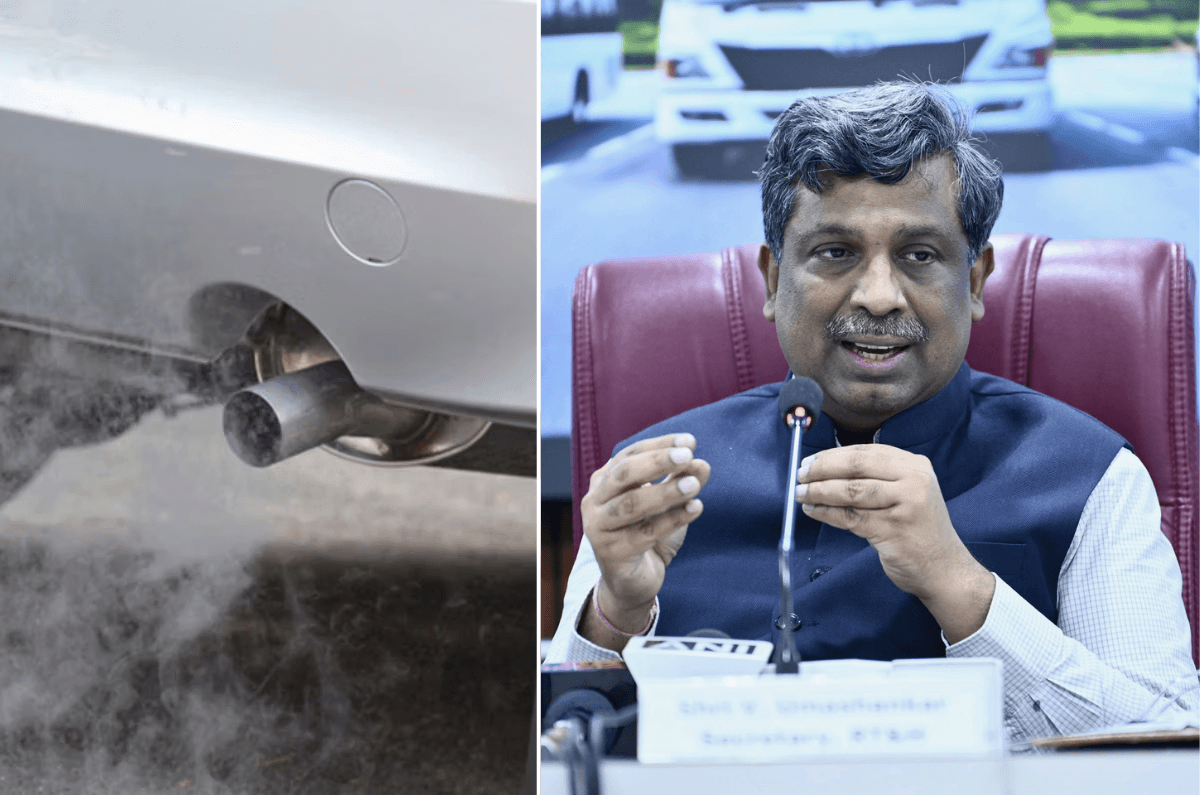
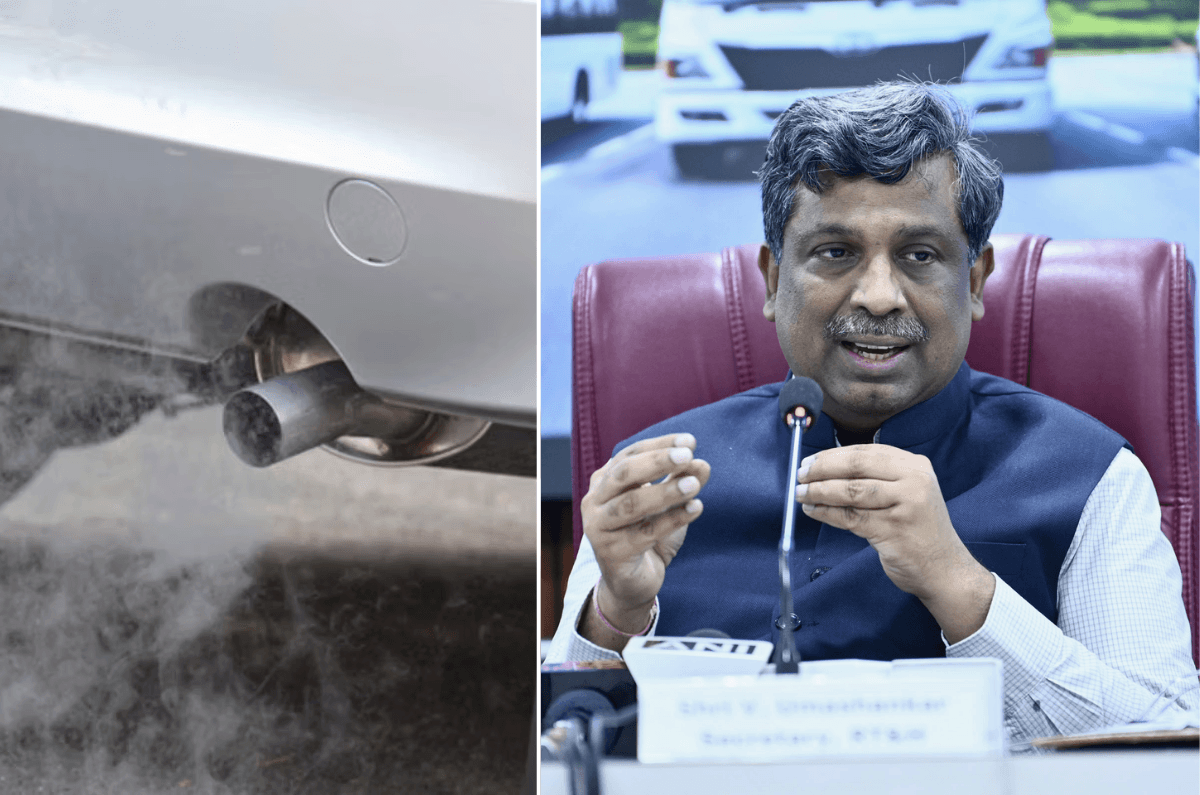
The draft for the next level of Bharat Stage emission standards is ready, according to the secretary for the Ministry of Road Transport and Highways (MoRTH), V Umashankar. “The final consultations are underway. We hopefully should be in a position to bring out the draft in a couple of months’ time for the BS 7 introduction,” he said at the 2026 SIAM Annual Convention in New Delhi.
Bharat Stage norms limit the emissions of pollutants such as hydrocarbons, sulphur and oxides of nitrogen from vehicles. India currently follows BS6 Phase 2 (or BS6.2) norms, which came into effect on April 1, 2023. “I think the industry is also preparing itself for it. The key challenge there would be the timelines,” Umashankar added.
What changes with BS7?
BS7 will put a greater focus on pollution levels from vehicles in real-world driving conditions rather than laboratory testing. Unlike the dramatic transition from BS4 to BS6, the move to BS7 is a natural progression from BS6. This should put relatively less pressure on manufacturers to upgrade their vehicles. Prices may also go up slightly due to the upgrades. Some models could even be discontinued if upgrading them to meet BS7 norms is not financially viable, something that we saw during the move from BS4 to BS6 in 2020.
Bharat Stage emission norms so far
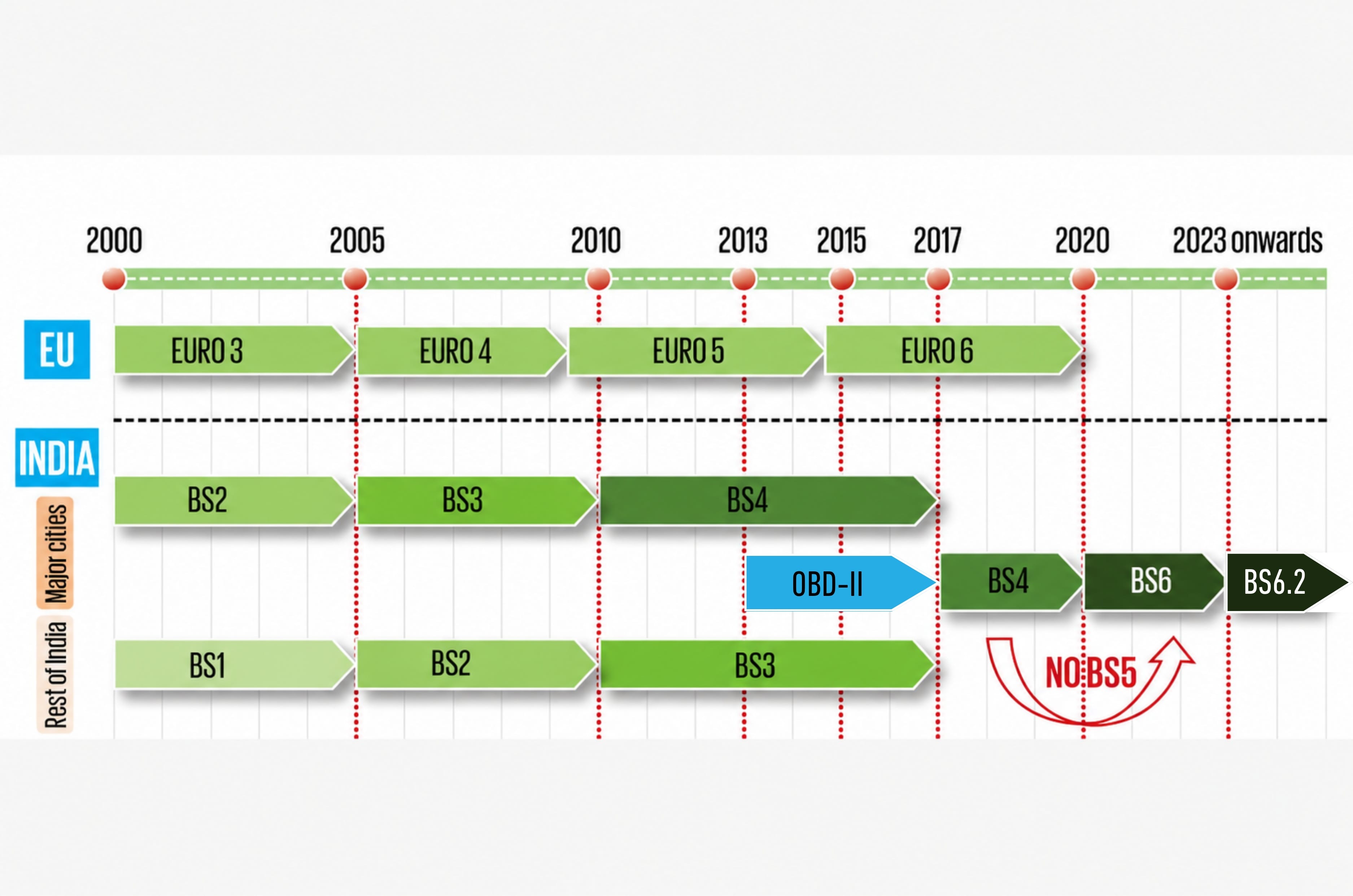
Bharat Stage emission norms were introduced in India in the year 2000 with the implementation of BS1 standards, while also rolling out BS2 across major cities in a phased manner. BS2 was based on European emission regulations, with the main difference being the test cycle’s top speed – 90kph versus 120kph in Europe.
India remained one stage behind Europe until 2010, after which the oil industry could not supply the low-sulphur fuel needed to progress to BS5 before eventually leapfrogging from BS4 to BS6 in 2020.
How are CAFE norms different from BS standards?
Corporate Average Fuel Economy (CAFE) norms deal with overall fuel consumption, specifically the quantity of fuel consumed. Imposed on a carmaker’s entire fleet, and not on an individual model, it’s a limit set on the total emission of carbon dioxide produced. These norms force manufacturers to make more fuel efficient cars, which impacts many other things. Whereas, Bharat Stage norms measure emissions at a vehicular level.
 All you need to know about the Kia Sorento
September 6, 2026
All you need to know about the Kia Sorento
September 6, 2026
 3 reasons to buy the Lexus ES 500e and 2 to skip it
September 6, 2026
3 reasons to buy the Lexus ES 500e and 2 to skip it
September 6, 2026
 Tata Nexon iCNG real world fuel economy tested, explained
September 6, 2026
Tata Nexon iCNG real world fuel economy tested, explained
September 6, 2026
 Opinion: The Konarc is Ather's ticket to the big leagues
September 6, 2026
Opinion: The Konarc is Ather's ticket to the big leagues
September 6, 2026
 2026 Maruti Baleno facelift gallery
September 5, 2026
2026 Maruti Baleno facelift gallery
September 5, 2026
 2026 Maruti Baleno facelift launched at Rs 6.10 lakh
September 5, 2026
2026 Maruti Baleno facelift launched at Rs 6.10 lakh
September 5, 2026
 Palestinian farmers battle settler sabotage to save Hebron crops, livestock
September 6, 2026
Palestinian farmers battle settler sabotage to save Hebron crops, livestock
September 6, 2026
 Trump official says ‘there may not be a nuclear agreement’ with Iran
September 6, 2026
Trump official says ‘there may not be a nuclear agreement’ with Iran
September 6, 2026
 Lamine Yamal and Fermin Lopez star as Barcelona run riot at Valencia
September 6, 2026
Lamine Yamal and Fermin Lopez star as Barcelona run riot at Valencia
September 6, 2026
 German far-right set for big win in eastern state – exit polls
September 6, 2026
German far-right set for big win in eastern state – exit polls
September 6, 2026
 Iran touts military response as US maintains blockade, hits tankers
September 6, 2026
Iran touts military response as US maintains blockade, hits tankers
September 6, 2026
 Far-right AfD wins vote in Germany’s Saxony-Anhalt state: Exit polls
September 6, 2026
Far-right AfD wins vote in Germany’s Saxony-Anhalt state: Exit polls
September 6, 2026