



Suzuki Motor Corporation aims to halve the time it takes to develop a new vehicle by 2030, as it changes how its engineering and manufacturing teams work together. The Japanese carmaker has also set targets to improve development efficiency by 30% and production efficiency by 50%. The development targets are measured against FY20; the production target uses its Manesar plant in India as the benchmark.
- New Maruti Suzuki models and facelifts expected to arrive quicker.
- Carmaker to bring nine new models including seven new SUVs over three years.
- Company targeting annual production capacity of four million units from FY30.
How does Suzuki plan to halve new model development time?
The announcement comes as Maruti Suzuki works to speed up an unusually large product programme. Our sister publication Autocar Professional reported in June, that the company was targeting a reduction in its vehicle development cycle from 48 months to 36 months. It plans to introduce nine new models over three years, including seven SUVs, according to sources familiar with the programme. Maruti’s 36-month goal and Suzuki’s 2030 target have different baselines.
The number of vehicles is only part of the challenge. New models must be developed with a wider choice of powertrains, including petrol, CNG, hybrid, flex-fuel and electric options. Each powertrain adds work for engineering, validation, procurement and suppliers before production can begin.
Suzuki plans to bring those functions into a vehicle programme earlier. Planning, design, production, quality and procurement teams will work in parallel, supported by more digital engineering and greater use of shared modules. The aim is to find problems sooner and reduce the time lost when work has to be passed back between teams. Maruti Suzuki has been moving in the same direction. Autocar Professional also reported that it was expanding simulation and virtual testing, seeking earlier supplier involvement and working to develop components, tooling and manufacturing processes concurrently.
Suzuki develops core technologies in Japan and shares them with Maruti Suzuki, which adapts products for Indian customers and prepares them for production. That arrangement will face a heavier workload as India grows as a manufacturing and export base. Suzuki is targeting annual production capacity of about four million vehicles in the country from fiscal 2030 onward.The company has not disclosed the current group-wide development period against which its 2030 target will be measured.
With inputs from Ketan Thakkar
 6 Improvements the Tata Aeris Gets Over the Tigor
September 25, 2026
6 Improvements the Tata Aeris Gets Over the Tigor
September 25, 2026
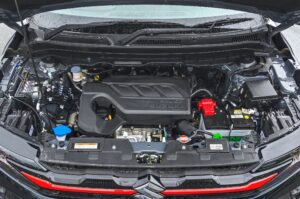 Suzuki developing next-gen turbo petrol engine for India
September 25, 2026
Suzuki developing next-gen turbo petrol engine for India
September 25, 2026
 Ducati Desmo450 SM Image gallery
September 25, 2026
Ducati Desmo450 SM Image gallery
September 25, 2026
 Tata Aeris vs Tigor: Similarities and differences explained
September 25, 2026
Tata Aeris vs Tigor: Similarities and differences explained
September 25, 2026
 Suzuki confirms range extender hybrid with plug-in capability for compact cars
September 25, 2026
Suzuki confirms range extender hybrid with plug-in capability for compact cars
September 25, 2026
 Tata Aeris launched at Rs 5.29 lakh
September 25, 2026
6 Improvements the Tata Aeris Gets Over the Tigor
September 25, 2026
Tata Aeris launched at Rs 5.29 lakh
September 25, 2026
6 Improvements the Tata Aeris Gets Over the Tigor
September 25, 2026
 டேபிள் டென்னிஸில் வெண்கலம் வென்ற இந்தியா.. ஆசிய விளையாட்டில் 20 பதக்கங்களை எட்டி அசத்தல் சாதனை
September 25, 2026
டேபிள் டென்னிஸில் வெண்கலம் வென்ற இந்தியா.. ஆசிய விளையாட்டில் 20 பதக்கங்களை எட்டி அசத்தல் சாதனை
September 25, 2026
 16 Products From Women Designers You Need to Know
September 25, 2026
16 Products From Women Designers You Need to Know
September 25, 2026
 Who Killed Paulina Borsook’s Career?
September 25, 2026
Suzuki developing next-gen turbo petrol engine for India
September 25, 2026
Who Killed Paulina Borsook’s Career?
September 25, 2026
Suzuki developing next-gen turbo petrol engine for India
September 25, 2026
 US backs Elon Musk's bid to overturn €120m EU fine against X
September 25, 2026
US backs Elon Musk's bid to overturn €120m EU fine against X
September 25, 2026