

2 min read
Curiosity Blog, Sols 5029-5035: Back in the Lab
Written by Michelle Minitti, MAHLI Deputy Principal Investigator
Earth planning date: Friday, Oct. 1, 2026
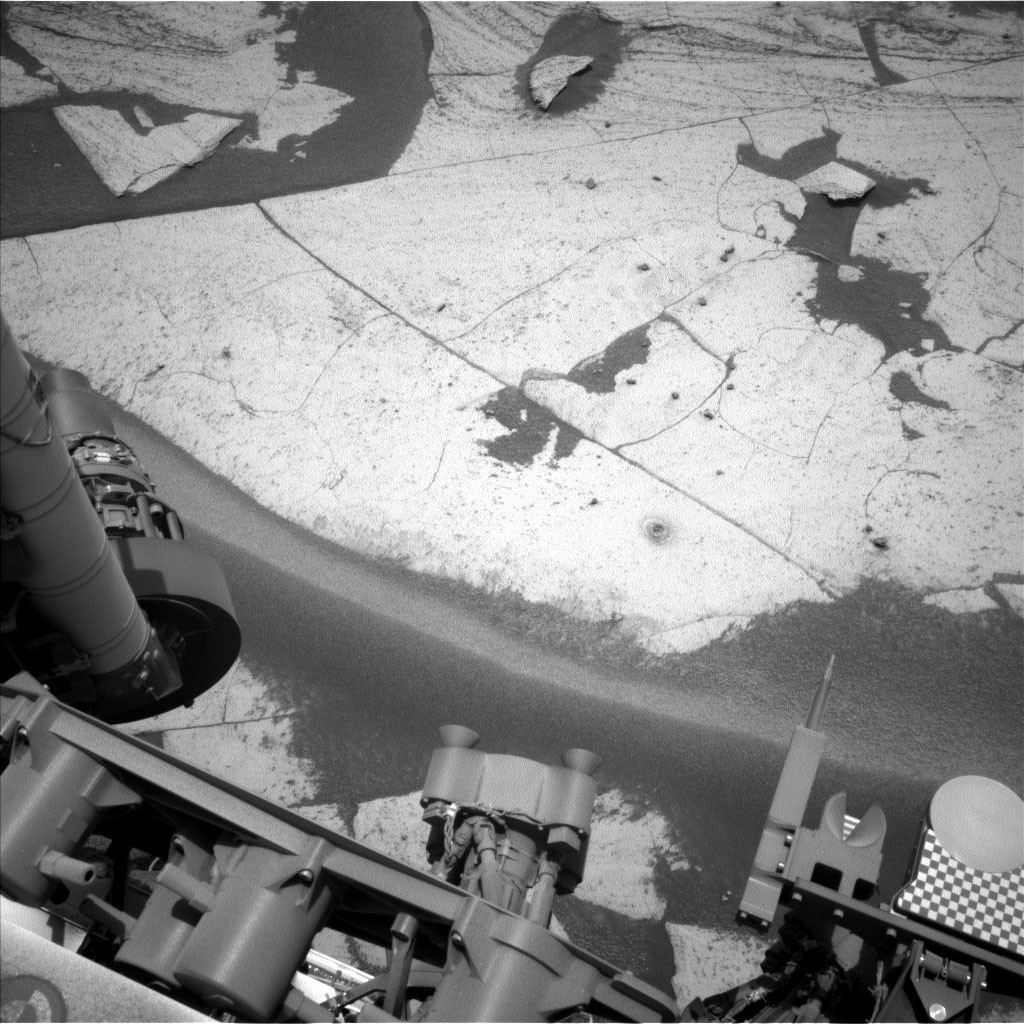
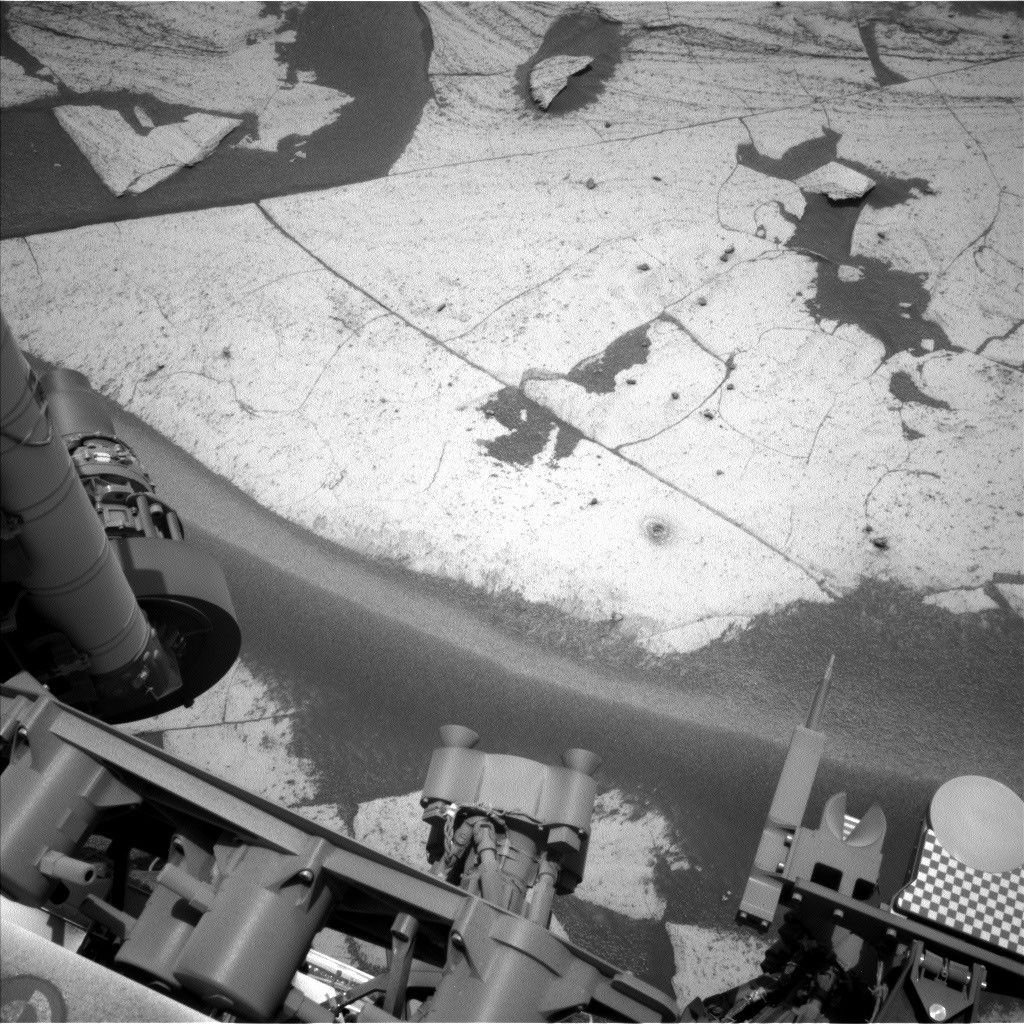
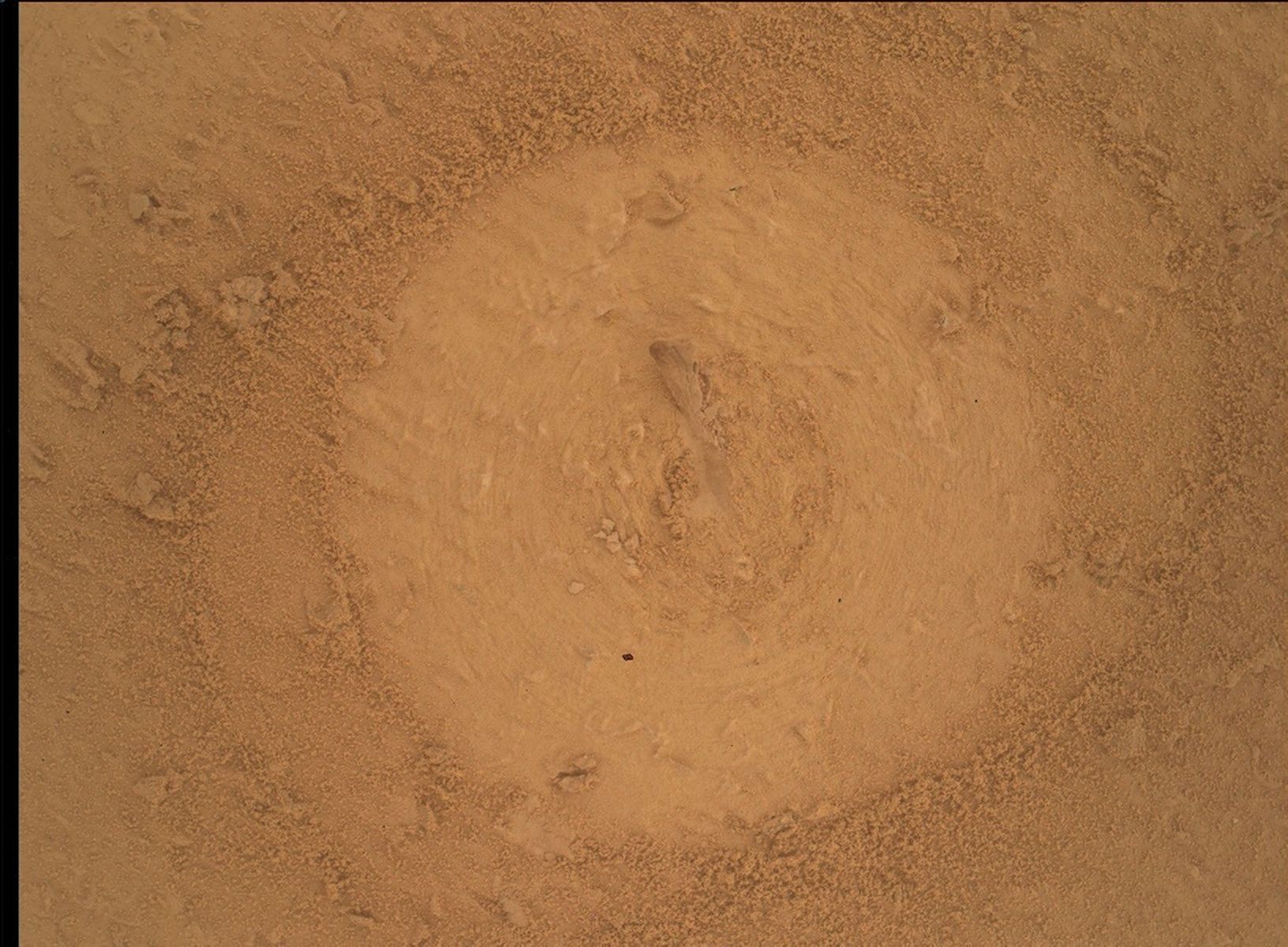
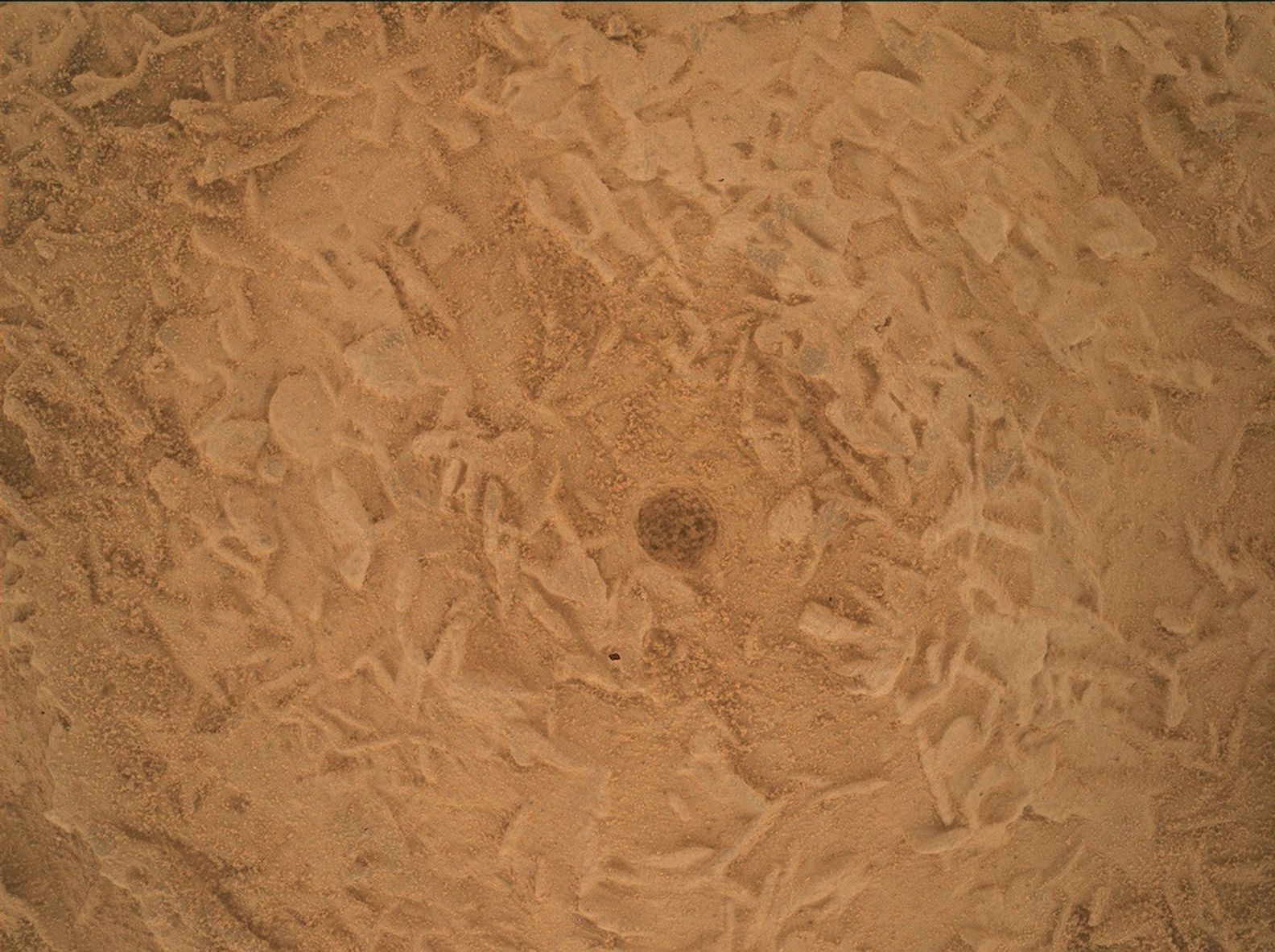
The majority of Curiosity plans involve mosaics from Mastcam and ChemCam, chemistry analyses from ChemCam and APXS, images from MAHLI and MARDI, and systematic measurements from REMS, RAD, and DAN. It is only when we stop to drill that we fully live up to our Mars Science Laboratory designation, using CheMin and SAM to analyze Martian rock. This was one such week, where our focus was wrapping up CheMin analysis of a sample from the “Basque Lakes” drill hole (pictured above), preparing SAM for its analysis, and analyzing the sample with the SAM tunable laser spectrometer (TLS). The CheMin data were key to SAM deciding to analyze the sample at all, and SAM will wait to receive the results from the TLS run (measurement of the volatiles present) to decide if they want to follow up with a separate mass spectrometry analysis next week.
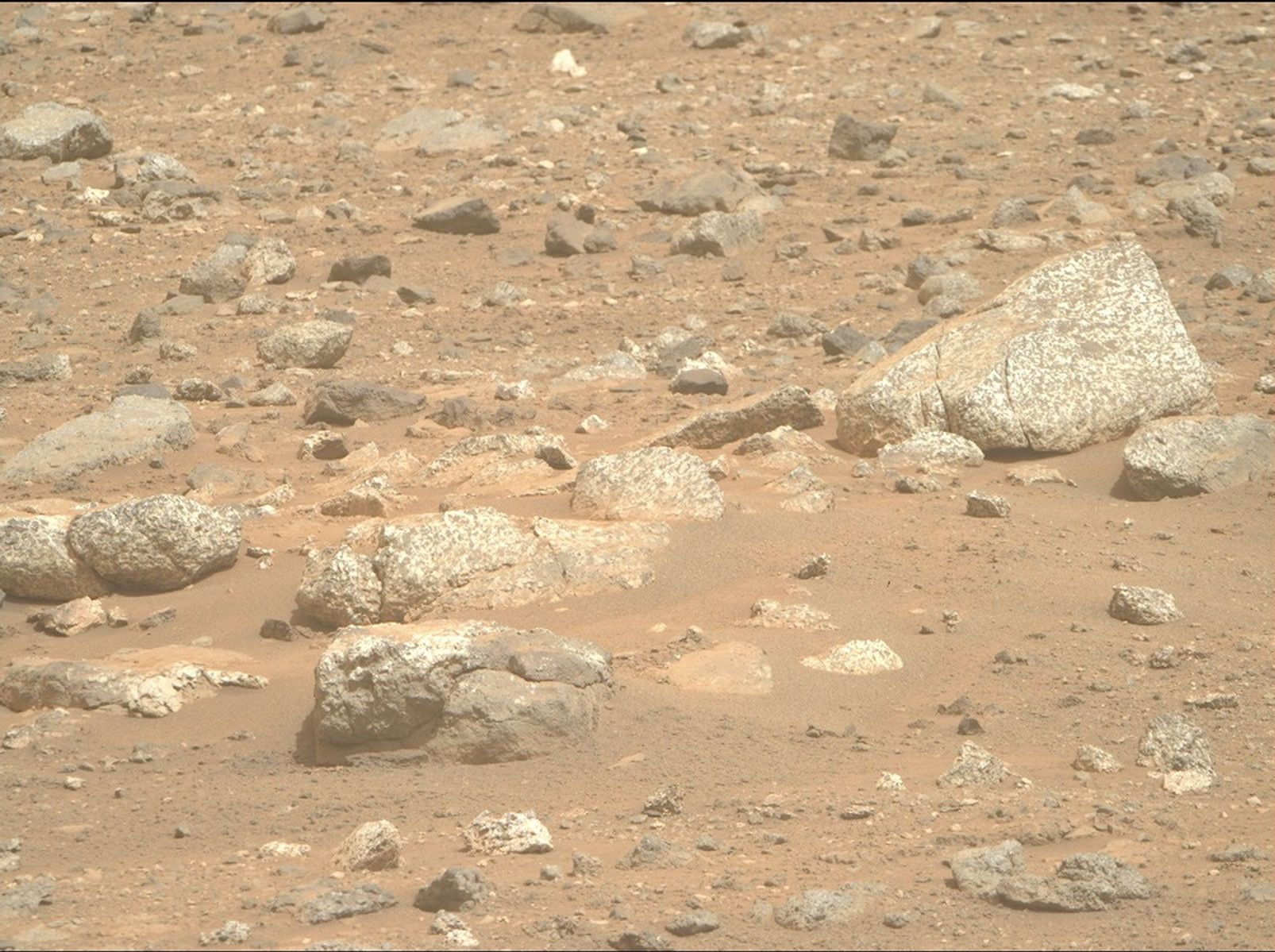
The laboratory activities require a significant portion of the daily power budget of the rover so the rest of the payload largely takes a back seat during drill campaigns, a worthy trade for CheMin and SAM’s valuable data. However, using the power that was available, we gathered data to contextualize our drill location and continued our systematic environmental monitoring. Mastcam acquired a 360-degree mosaic of our surroundings to build a full picture of the geologic setting of the sample. Its color and improved resolution relative to Navcam also guided subsequent science requests, such as more focused Mastcam imaging of structures near the workspace, and ChemCam RMI imaging of the “Cordillera” butte. Mastcam, coupled with Navcam, also planned a series of seven photometry observations spread across fixed times of day. These observations evaluate how the observed spectral characteristics of targets change as the Sun angle on them changes. They help us better interpret images from the rover and from cameras in orbit. ChemCam gathered more chemistry data from the variety of materials in the workspace, from the Basque Lakes drill hole interior, to sand ripples (“French Creek”) covering the bedrock, to loose gray clasts of unknown origin (“Wooley” and “Fireside”) sprinkled across the workspace. Our environmental monitoring activities included regular REMS, RAD, and DAN measurements and Navcam and Mastcam monitoring of dust loading in the atmosphere, cloud activity, and dust-devil activity.

Share
Details
Related Terms
Explore More



 NASA to Cover Northrop Grumman CRS-24 Spacecraft Departure
October 6, 2026
NASA to Cover Northrop Grumman CRS-24 Spacecraft Departure
October 6, 2026
 October 2026 Satellite Puzzler
October 6, 2026
October 2026 Satellite Puzzler
October 6, 2026
 Lunar Grounding Challenge
October 6, 2026
Lunar Grounding Challenge
October 6, 2026
 NASA Glenn Invites Phase 1 Proposals for Aerospace Power Systems Laboratory
October 6, 2026
NASA Glenn Invites Phase 1 Proposals for Aerospace Power Systems Laboratory
October 6, 2026
 Astronomers Solve Cosmic Cold Case with NASA Hubble Data
October 6, 2026
Astronomers Solve Cosmic Cold Case with NASA Hubble Data
October 6, 2026
 NASA’s Curiosity Rover Catches Stunning Martian Dawn
October 6, 2026
NASA’s Curiosity Rover Catches Stunning Martian Dawn
October 6, 2026
 Elon Musk Net Worth: How SpaceX and Tesla helped Musk become a trillionaire again after market rally
October 6, 2026
Elon Musk Net Worth: How SpaceX and Tesla helped Musk become a trillionaire again after market rally
October 6, 2026
 First Atlantic Hurricane of 2026 Seen Threatening US Gulf Coast
October 6, 2026
First Atlantic Hurricane of 2026 Seen Threatening US Gulf Coast
October 6, 2026
 A Court Ruling Killed ‘Click to Cancel.’ NYC Just Brought It Back
October 6, 2026
A Court Ruling Killed ‘Click to Cancel.’ NYC Just Brought It Back
October 6, 2026
 32%, 24%, 52%, 86%: Why these 4 numbers are bad news for Trump before the midterms
October 6, 2026
32%, 24%, 52%, 86%: Why these 4 numbers are bad news for Trump before the midterms
October 6, 2026
 Did you receive $90 from Social Security? Who qualifies for Trump’s Medicare rebate and when it will arrive
October 6, 2026
Did you receive $90 from Social Security? Who qualifies for Trump’s Medicare rebate and when it will arrive
October 6, 2026
 US House bill honours Indian pilot Smit Machchhar after his brave actions thwarted flydubai terror attack
October 6, 2026
US House bill honours Indian pilot Smit Machchhar after his brave actions thwarted flydubai terror attack
October 6, 2026