


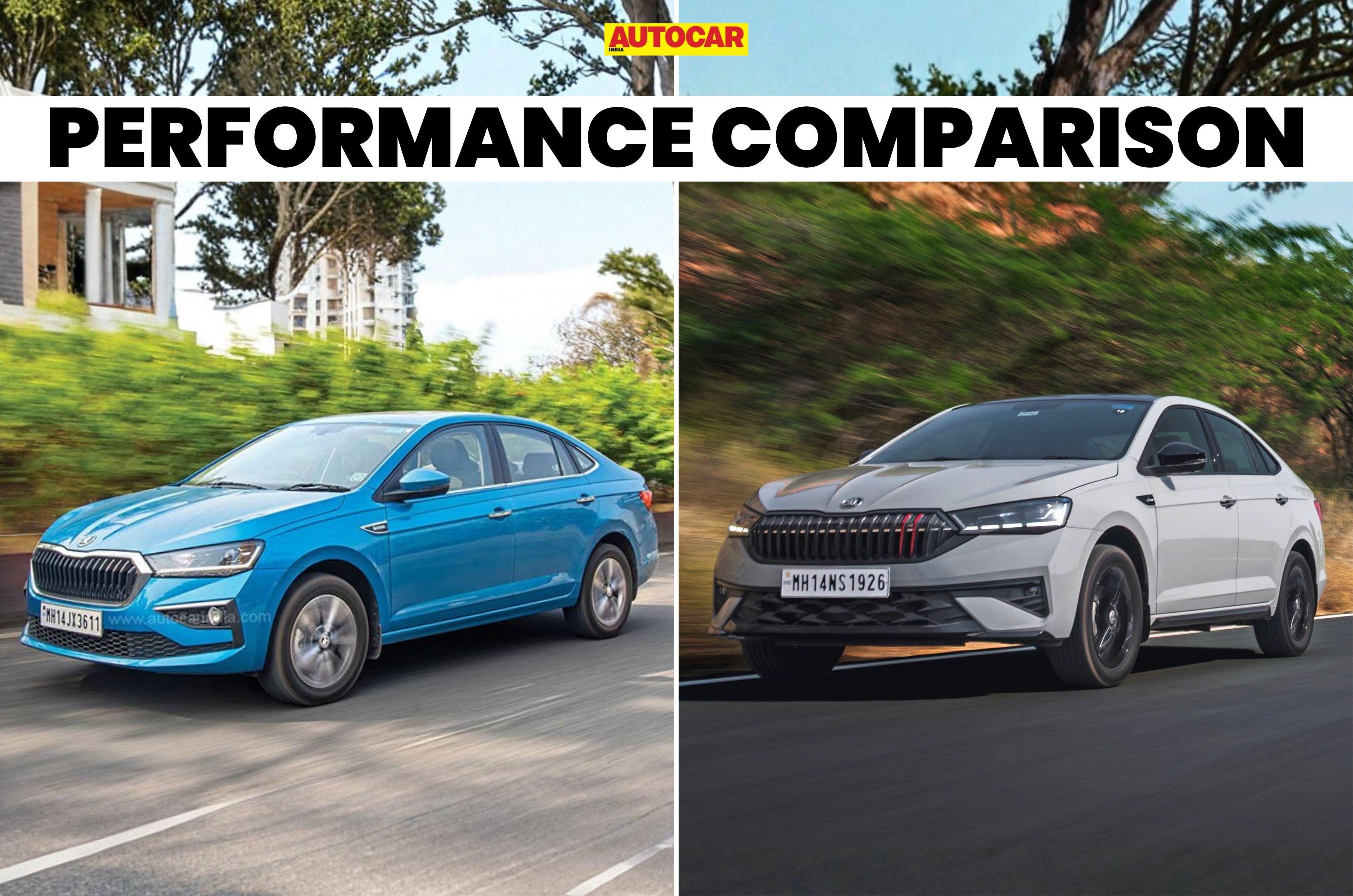
The 2026 Skoda Slavia facelift replaces the outgoing 6-speed torque-converter automatic with a new 8-speed unit for the 1.0-litre turbo-petrol engine. While engine output remains unchanged, our performance tests show how the two gearboxes compare in acceleration.
Skoda Slavia 6AT vs 8AT: Specifications
| Pre-facelift Slavia | Slavia facelift | |
| Engine | 1.0-litre turbo-petrol | 1.0-litre turbo-petrol |
| Power | 115hp | 115hp |
| Torque | 178Nm | 178Nm |
| Gearbox | 6-speed torque-converter automatic | 8-speed torque-converter automatic |
Both versions use the same 1.0-litre turbo-petrol engine, producing 115hp and 178Nm. The main difference is the transmission, with the facelifted Slavia switching to an 8-speed automatic from the 6-speed unit to offer better fuel efficiency.
Skoda Slavia 6AT vs 8AT: Acceleration timings
|
Slavia 1.0 TSI 6AT vs 8AT acceleration times (in seconds) |
||
| Pre-facelift Slavia 1.0 6AT | Slavia facelift 1.0 8AT | |
| 0-20kph | 1.32 | 1.13 |
| 0-40kph | 2.80 | 2.86 |
| 0-60kph | 4.92 | 4.84 |
| 0-80kph | 7.78 | 7.57 |
| 0-100kph | 11.16 | 11.04 |
| 0-120kph | 15.61 | 15.40 |
| 0-130kph | 18.33 | 18.23 |
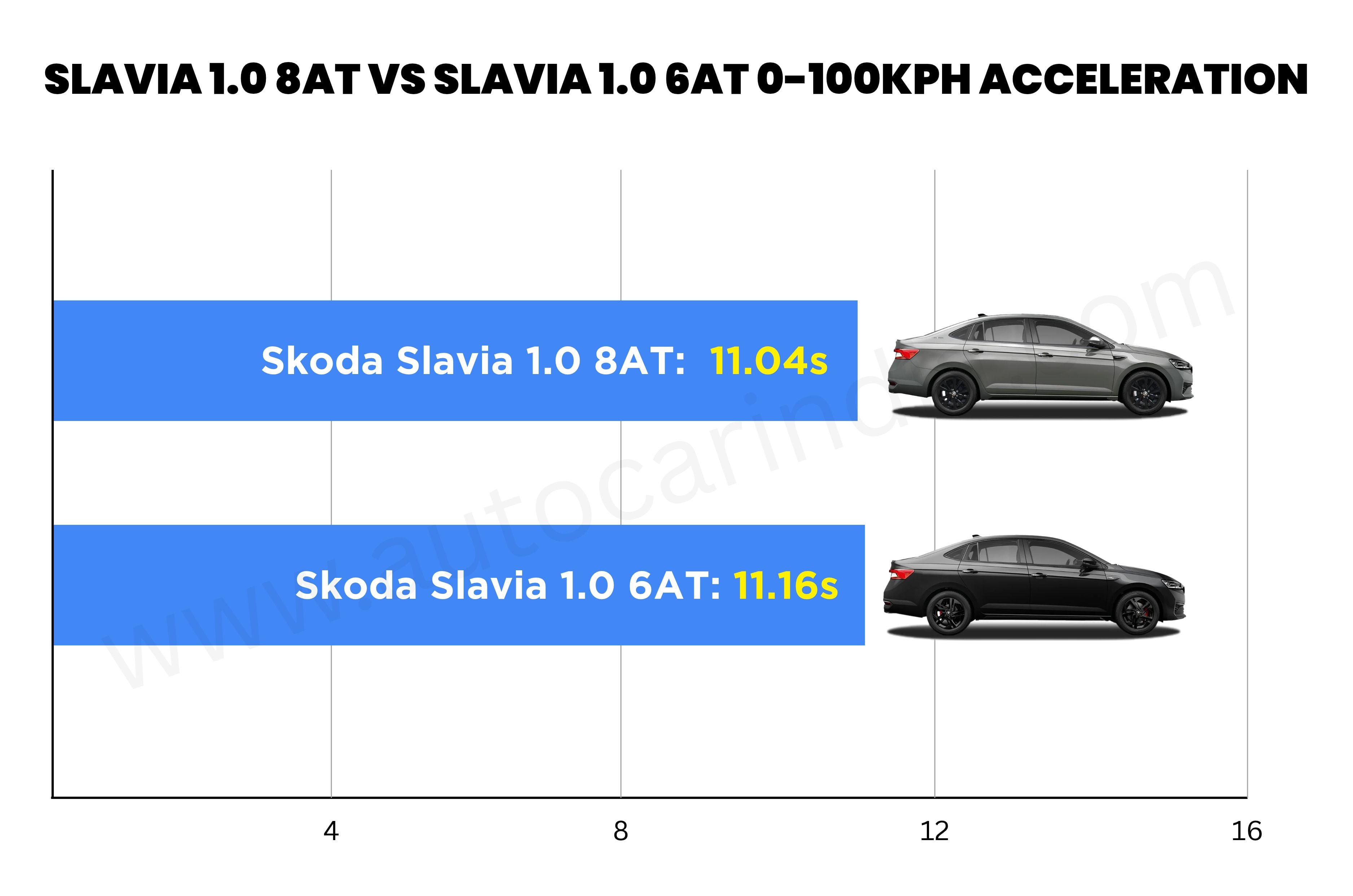
The 8-speed automatic is marginally quicker in the higher-speed part of the acceleration run, although the difference is small. The 8AT reaches 100kph 0.12 seconds sooner than the 6AT. The gap grows to 0.21 seconds at 120kph and 0.10 seconds at 130kph. The 6AT is quicker to 40kph, while the two transmissions are closely matched beyond that point.
Skoda Slavia 6AT vs 8AT: Rolling acceleration timings
|
Slavia 1.0 TSI 6AT vs 8AT rolling acceleration times (in seconds) |
||
| Pre-facelift Slavia 1.0 6AT | Slavia facelift 1.0 8AT | |
| 20-80kph, third gear/kickdown | 6.60 | 6.44 |
| 40-100kph, fourth gear/kickdown | 8.39 | 8.15 |
The two gearboxes are closely matched in rolling acceleration. The 8AT is 0.16 seconds quicker in the 20-80kph run and is also 0.24 seconds quicker than the 6AT in the 40-100kph test. These differences are almost negligible but tell us that with the new 8-speed gearbox, the Slavia is faster.
Autocar India’s testing standards
Before we conduct our performance tests, we check and maintain tyre pressures based on the manufacturer’s recommendations and ensure the car has a full tank of fuel. The car is then tested in a controlled environment with two people on board, and the data is collected via highly accurate GPS-based timing equipment.
 2026 F1 US GP schedule, India timings
October 23, 2026
 Updated Bajaj Pulsar NS200 launched at Rs 1.60 lakh
October 23, 2026
 Tata Sierra EV real world range tested, explained
October 23, 2026
 What to expect from Maserati GranTurismo, GranCabrio facelifts ahead of launch
October 23, 2026
 2026 Maruti Baleno vs rivals: Price, specifications compared
October 23, 2026
 Ultraviolette to launch four new products by end of next year
October 23, 2026
 Green councillors face Labour deadline to disown Zionism policy
October 23, 2026
 Crows can evaluate visual info twice as fast as mammals
October 23, 2026
 Trump says Burnham is 'getting it done' after Jackdaw decision
October 23, 2026
 ICU-வுக்கு சென்ற வெள்ளி விலை.. சும்மாயில்ல பாஸ் 53% சரிவு.. என்டரி கொடுக்க இது நல்ல நேரமா..?
October 23, 2026
 Intel gets waiver after worries fuzzy US ban on foreign-made robots may hit fabs
October 23, 2026
 RFK Jr.’s vaccine injury clinic could damage NIH hospital, board warns
October 23, 2026