

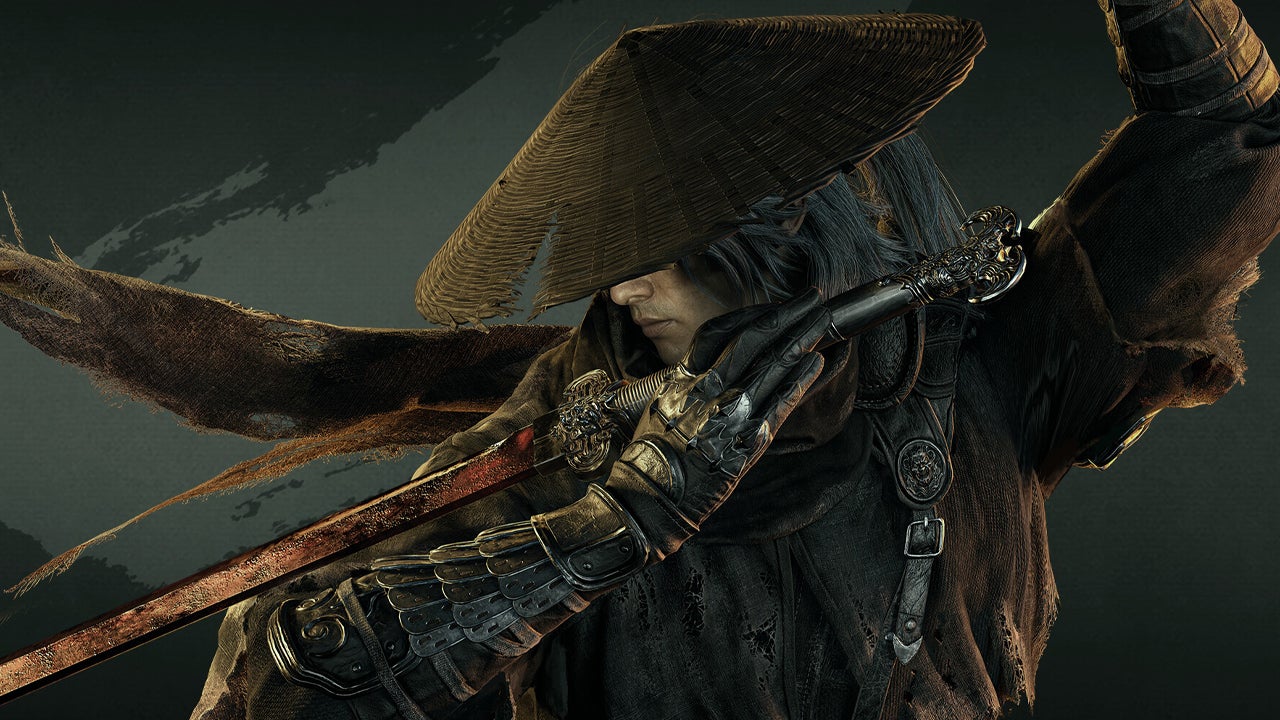

Phantom Blade Zero has spent years looking almost too good to be true, especially coming from a studio that’s best known for its mobile games. That’s why it’s just about the biggest compliment I can pay it that after 50 hours performing picture-perfect kung fu, it’s exactly as fun to play as it looks. This effortlessly smooth action game has some of the most satisfying and well-tuned combat I’ve played in a long time, a surprising number of secrets to discover and quests to complete in each of its beautiful levels, and a neverending supply of clever encounters full of unbelievably awesome moments. Its convoluted story and occasional performance issues may not live up to that incredible action, but it nails just about everything else, and there were only a handful of moments where I wasn’t absolutely thrilled to be slicing my way through the ranks of the Wulin.
Phantom Blade Zero plays like something straight out of a wuxia epic. As a metal-as-hell martial artist of mysterious origins with only 66 days left alive to exact your revenge, you set out on an odyssey across the ruined lands of the Phantom World, facing off against all manner of beast and badass along the way. The story here isn’t Phantom Blade Zero’s strong suit as it tries to do a bit too much, shoving in a whole bunch of mystical jargon, dozens of characters, and a needlessly complex timeline, very little of which ultimately pays off anyway. In the first couple hours alone, so much time is spent toggling back and forth between present day, several years ago, several months ago, and several days ago that I was exhausted by all the exposition before I’d even faced my first real boss fight. That said, there are enough likeable characters along the way, especially your unflappable hero named Soul, that I was usually able to forgive it for occasionally wasting my time with unnecessary flashbacks and lengthy explanations.
Besides, you’ll be spending most of your time exploring the world and squaring off against enemies big and small, and it’s pretty clear that Phantom Blade Zero wants you to spend most of your attention on this part of the adventure. And that’s a good thing, too, because by God is it good. It only took a couple minutes for the precise parry and dodge mechanics to feel natural, and the nuanced but not-overly-complex system of weapons, combos, special abilities, and upgrades are rolled out at an extremely smart pace, all of which are easy enough to slip into like a tailored set of flowing wuxia robes. I’m a complete snob when it comes to the feel and pacing of combat in these types of games, so the fact that this immediately felt like reuniting with an old friend made it instantly compelling, and it’s one of those intangible things that’s very hard to get right.
Even more impressive is that not only does the combat feel good right away, it does so across dozens of weapons, each with their own unique moveset. This game that doesn’t just encourage you to change up your weapon loadout at regular intervals, it actually requires you to mix things up since swapping your active melee weapon is one of the ways you can restore your posture meter with a single button press. And since many enemies, particularly bosses, can instantly drain your posture with certain attacks, you’ll be swapping between different options with regularity, forcing you to commit multiple movesets and special abilities to memory. Conveniently, Phantom Blade Zero makes it extremely easy for you to reclaim and reallocate points invested in leveling up weapons, so there’s rarely any reason to stick with a set loadout anyway – especially since you always seem to find the exact tool you need right before entering an area or encountering a boss where it would come in handy. For example, I noticed that I found a water cannon weapon only a few feet away from an area that led to a fire-based boss. Nice.
Beyond that, you’ll unlock a bunch of additional tools like grappling hooks and bows, which have utility both in combat encounters and outside of them since you can use them to reach certain parts of the map or break through barriers that are otherwise impassable. There are also trinkets that offer interesting buffs, like a significant damage increase when you’re at full health, and a skill tree with perks that let you do things like execute a dodge while in mid-air or increase the number of healing items you can carry. There’s a surprising amount of depth to the things you can upgrade and the ways to customize exactly how your Wulin warrior does his thing, and I spent much more time than I typically do in these kinds of games just testing out different weapons and swapping my equipment around as a result. At the very least, it’s worth doing so just to see the unique execution animations when you finish off trash enemies.
You’ll have plenty of time to try them all out as you get your steps in across Phantom Blade Zero’s eight maps, too. Each one is filled with foes to take down, side quests to complete, chests to loot, and secrets to discover. A surprising amount of the places to go and people to meet are completely missable, including the entirety of a very cool questline that sees you getting trained by none other than Donnie Yen as the mysterious gold-masked man (which is actually one of PBZ’s strongest subplots). While most of the side quests are pretty straightforward missions to go somewhere and collect some stuff for a small reward, they gave me more reasons to spend time exploring every nook and cranny, which I was happy to do. And unlike lots of modern games filled with icons on the screen telling you exactly where to go and what to do, Phantom Blade Zero instead makes use of hand-drawn maps that only give you a vague idea of your location in relation to key landmarks, allowing you to explore and fill in the gaps on your own.
If there’s one thing that consistently mucks up this journey, it’s that Phantom Blade Zero suffers from some pretty bad geometry. Soul gets caught on surfaces all the time, and even the tiniest bumps in the road can stop him dead in his tracks, which is pretty hilarious for a guy who can jump 40 feet in the air while doing 19 backflips. Not only that, there are invisible borders all over the place that make exploration janky at times, especially when platforming sections ask you to get to a specific ledge, only for you to discover there’s an invisible wall and you fall to your death. I died nearly 200 times over the course of my playthrough, and roughly half of those deaths were me falling into a pit or getting caught in the environment until I was able to get myself killed or reload my save file. In one case, I even lost about 20 minutes of progress when my supposed martial master couldn’t escape from some bushes. Oh, and enemies occasionally get stuck in the environment too, which just makes fights where it happens feel so lame.
Despite that, Phantom Blade Zero’s superpower – the magic trick it performs time and time again – is its way of making you feel like you’re the only person in the world badass enough to withstand its utterly insane flurry of swords against godlike monsters like it’s nothing. The truth is that the melee dance of combat encounters is just so finely tuned, with every attack telegraphed just enough to give you exactly the time you need to react, aided by an almost imperceptible musical rhythm that grants you a certain level of precognition for what’s going to happen next. Once I synced up with its tempo, I started anticipating attacks before I consciously registered them, leading me to perfectly block some lightning-quick attack I hadn’t seen before. There’s nothing specifically special about my reaction time or skill with action games – rather it’s a testament to how incredibly well-balanced and smartly designed these unbelievably sick fights are. It’s without question the thing Phantom Blade Zero does best, and it’s an illusion I fell for repeatedly, from the opening sequence all the way to the final battle.
Something I admire about Phantom Blade Zero’s difficulty is how consistently it feels exactly right – not too unforgiving, but it rarely lets you feel like you aren’t in danger of getting your butt kicked. I’m typically someone who relishes a challenge from games like this and so played Phantom Blade Zero on its hardest difficulty exclusively, but found myself beating just about every major boss fight in two or three tries, plus a good chunk that I cleared in one go – and I didn’t mind that one bit! It meant that I rarely saw enough of a boss to know every tool in their murder belt, and refreshingly made me feel like the one to be feared rather than the other way around. It’s pretty damn cool to enter a room and watch a 10-foot-tall badass with an eight-pack swing around a blade and think, “oh, man. This guy’s totally screwed.”
Part of the way this Goldilocks level of difficulty is achieved is due to the interesting decision to not make you repeat phases of a boss fight that you’ve already cleared. If you get through a first phase that just makes the bad guy mad and then get killed after he turns into an even more hulked-out psycho, you’ll pick back up at the top of that second phase. I’ve been known to get annoyed at having to replay the first phase of a boss fight a dozen times just to get another run at the more challenging part, to the point where multi-phase boss fights in general can get on my nerves these days. By removing this annoyance entirely, it got rid of a lot of potential friction with some of these encounters
It also allows for more freedom in how these encounters are designed, like moments where a boss uses a cheap move that one-shots you instantly if you get hit by it. Normally, including insta-kill moves like that is a good way to send me into a rage, but because my progress was almost never set back far enough to bother getting mad about, I felt a lot more lenient toward that kind of thing. I mean, let’s face it, that crazy attack where you get impaled on a giant spear, then set on fire and smashed face-first into the floor probably should kill you right away, so it’s pretty neat that Phantom Blade Zero found a way to make a devastating moment like that exciting rather than irritating.
It’s also incredibly impressive that throughout the 50 hours it took me to reach credits, as I fought dozens and dozens of bosses, I was continually surprised by the creative enemies it threw at me. Sure, there’s the occasional big-guy-with-a-big-axe or dude-with-sword-you-swear-you-fought-already, but these are by far the exception, not the rule. At one point I found myself wearing a lion dancer mask, jumping around on poles to collect heads of lettuce to power up my fire blast, and in another section I fought a posse of warriors who worked together as one unit to throw preposterously intricate attacks my way – the main threat to my life there was getting caught with my guard down because I was too busy cackling. The boss fights are so consistently interesting, memorable, and numerous that I felt utterly compelled to seek out each and every one of them, which led me to turn this first playthrough into a full-on completionist run to avoid FOMO.
When I previewed Phantom Blade Zero a little over a month ago, one of my primary concerns was how it would perform, and thankfully the version I played for this review had a far more consistent performance. The framerate was much steadier, with only a few times I can recall ever noticing issues during combat. That said, there’s one map in particular where the framerate was consistently pretty terrible, specifically on a part of the map where something seems to not be working right. This feels like the type of thing that could pretty easily be identified and fixed, so I’d be surprised if a patch doesn’t arrive at or shortly after launch, but it’s worth shouting out since I suspect there are other lingering issues hiding about.
 Eric Bauza, Voice Acting Legend Behind Bugs Bunny and Daffy Duck, Dead at 46
October 26, 2026
 Dragon Ball Xenoverse 2 Gets Surprise 10th Anniversary Update This Week
October 26, 2026
 Mass Effect's Commander Shepard Actors, Destiny Community Help #SaveMassEffect Petition Cross 200,000 Signatures
October 26, 2026
 X-Men Actor Christopher Abbott Insists His Professor X Is Not in Doomsday or Secret Wars
October 25, 2026
 Clayface Looks Like a Win for the DCU After Earning $43 Million in Box Office Opening Weekend
October 25, 2026
 The Best Deals Today: Xenoblade Chronicles 2, Persona 3 Reload, Dragon Quest III HD-2D Remake, and More
October 25, 2026
 Which variant of the 2026 Hyundai Bayon should you buy?
October 26, 2026
 ECI SIR controversy: Why did UP order scrutiny of Form 6, 7 and 8 entered since April 10? What voters should know
October 26, 2026
 டிரைவிங் லைசென்ஸ் வாங்குவது இனி அவ்வளவு ஈஸி இல்லை… 75% மார்க் கட்டாயமாக்க திட்டம்!
October 26, 2026
 ஏஐ தொழில்நுட்பத்தின் கொடூரங்கள்.. டெக் ஊழியரின் புலம்பல்.. இறுதியில் இதுதான் தீர்வா..?!
October 26, 2026
 Hyundai Bayon image gallery
October 26, 2026
 Hyundai Bayon colours gallery
October 26, 2026