

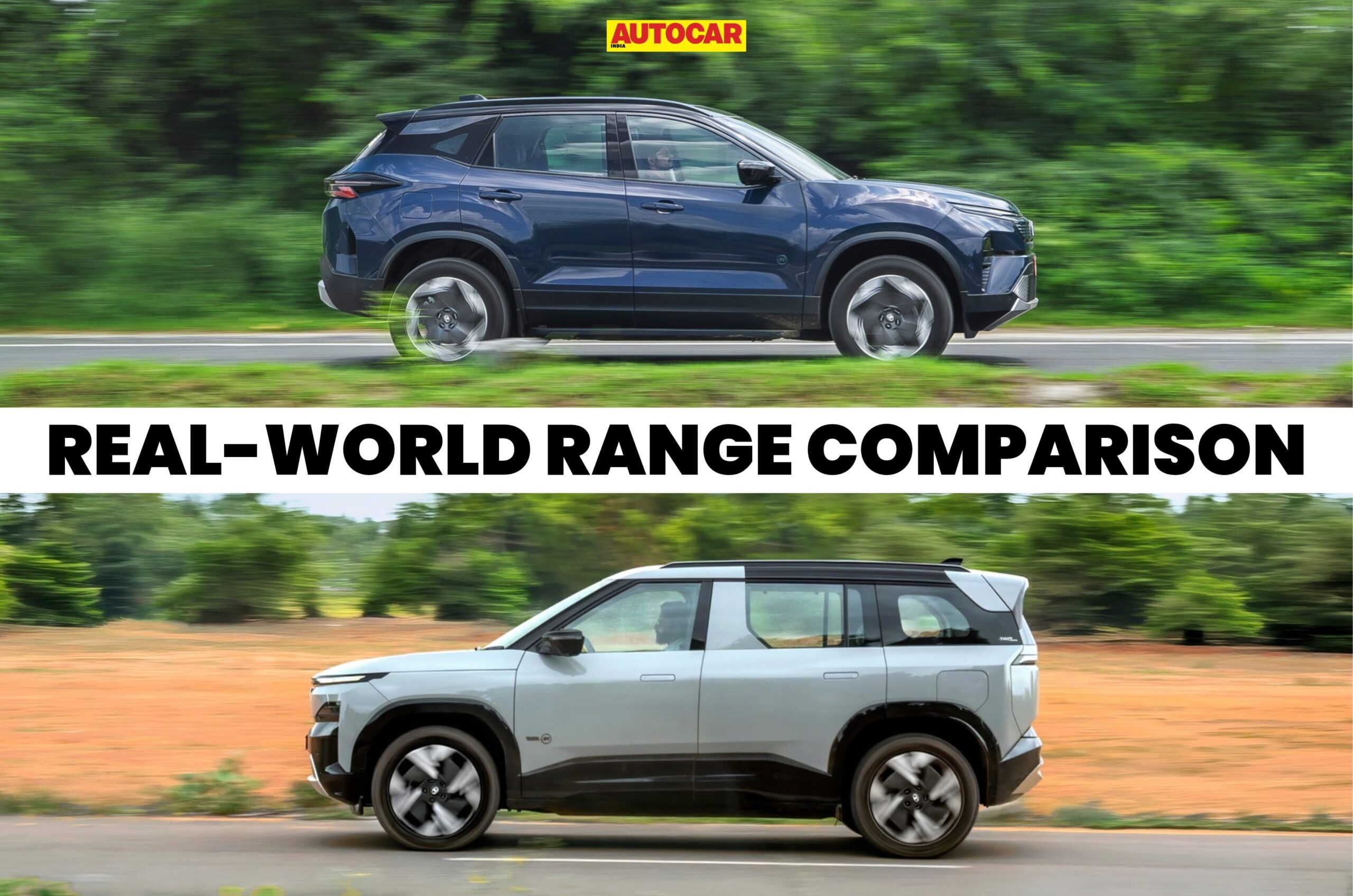
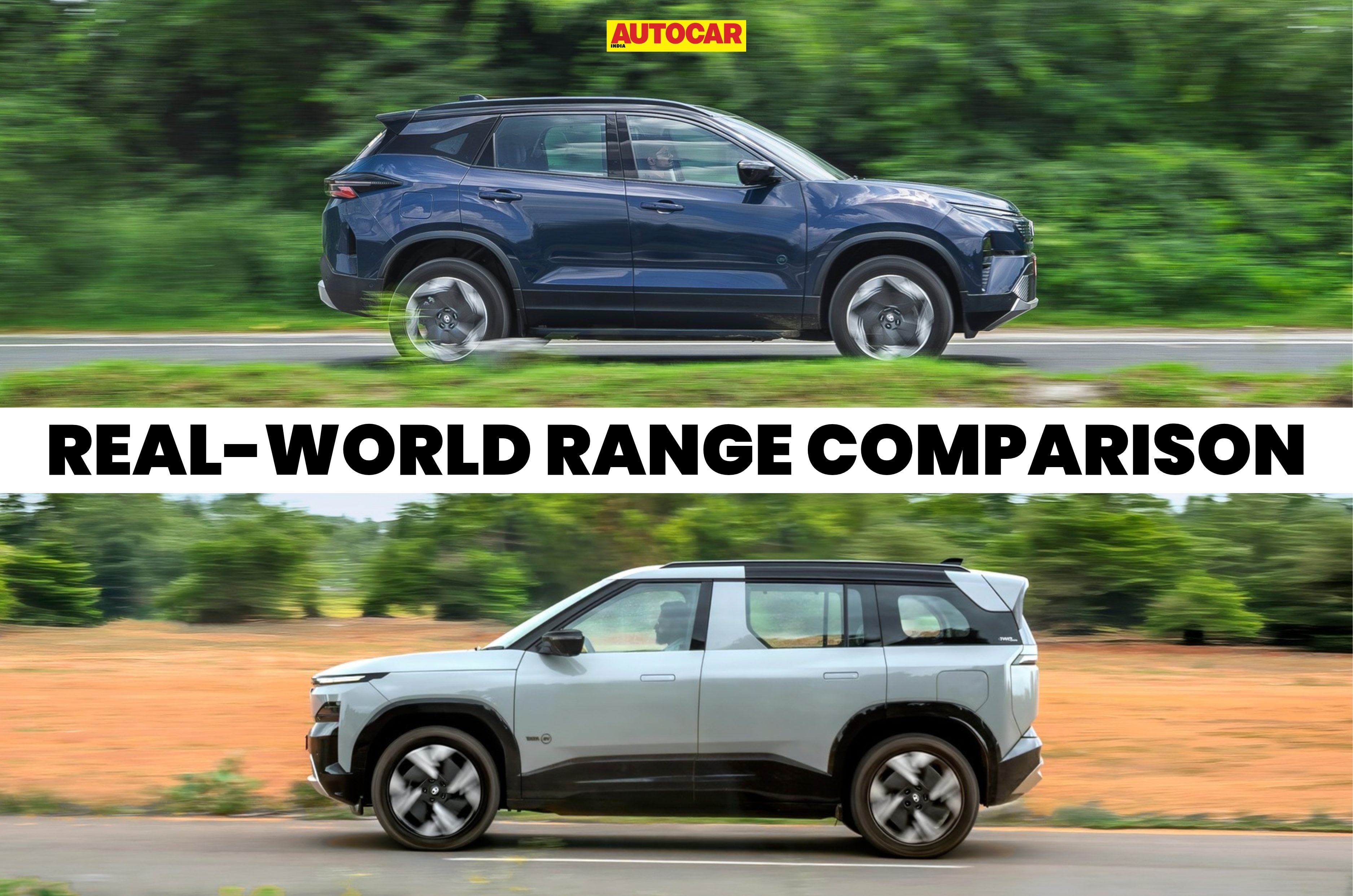
The Sierra EV is Tata’s second all-electric SUV to offer a dual-motor all-wheel-drive (AWD) setup and is positioned below the Harrier EV, which also gets an AWD option. Both SUVs have a 75kWh battery pack, similar motor specifications and a claimed ARAI range of over 600km, but the Sierra EV is smaller and lighter. So, does it deliver better real-world range? We put both to the test to find out.
Tata Sierra EV AWD vs Harrier EV AWD: Specifications, price
Both get the same battery, but the smaller Sierra EV offers higher claimed range
The Tata Sierra EV AWD and Harrier EV AWD get the same 75kWh battery pack, paired with an electric motor on each axle. However, the Harrier EV produces 7hp more than the Sierra EV, while the torque output of both SUVs is identical at 504Nm. The Sierra EV AWD is also 205kg lighter than the Harrier EV AWD. Both electric SUVs support AC charging via a 7.2kW charger, with the Sierra EV taking 10.5 hours for a 10-100 percent charge compared to 10.7 hours for the Harrier EV. Both also support DC fast charging and take less than 30 minutes for a 20-80 percent top-up.
As for the starting price, the Sierra EV AWD is Rs 80,000 more affordable than the Harrier EV AWD. In the top-spec guise, the Harrier EV AWD costs Rs 29.29 lakh, making it Rs 3.30 lakh more expensive than the sole Sierra EV AWD variant.
Tata Sierra EV AWD vs Harrier EV AWD: Real-world range
Sierra EV AWD offers higher real-world range than Harrier EV AWD
The Tata Sierra EV AWD has a claimed ARAI range of 624km, just 2km more than the Harrier EV AWD’s. However, in our real-world tests, the Sierra EV AWD covered 438km, going 37km further than the Harrier EV AWD.
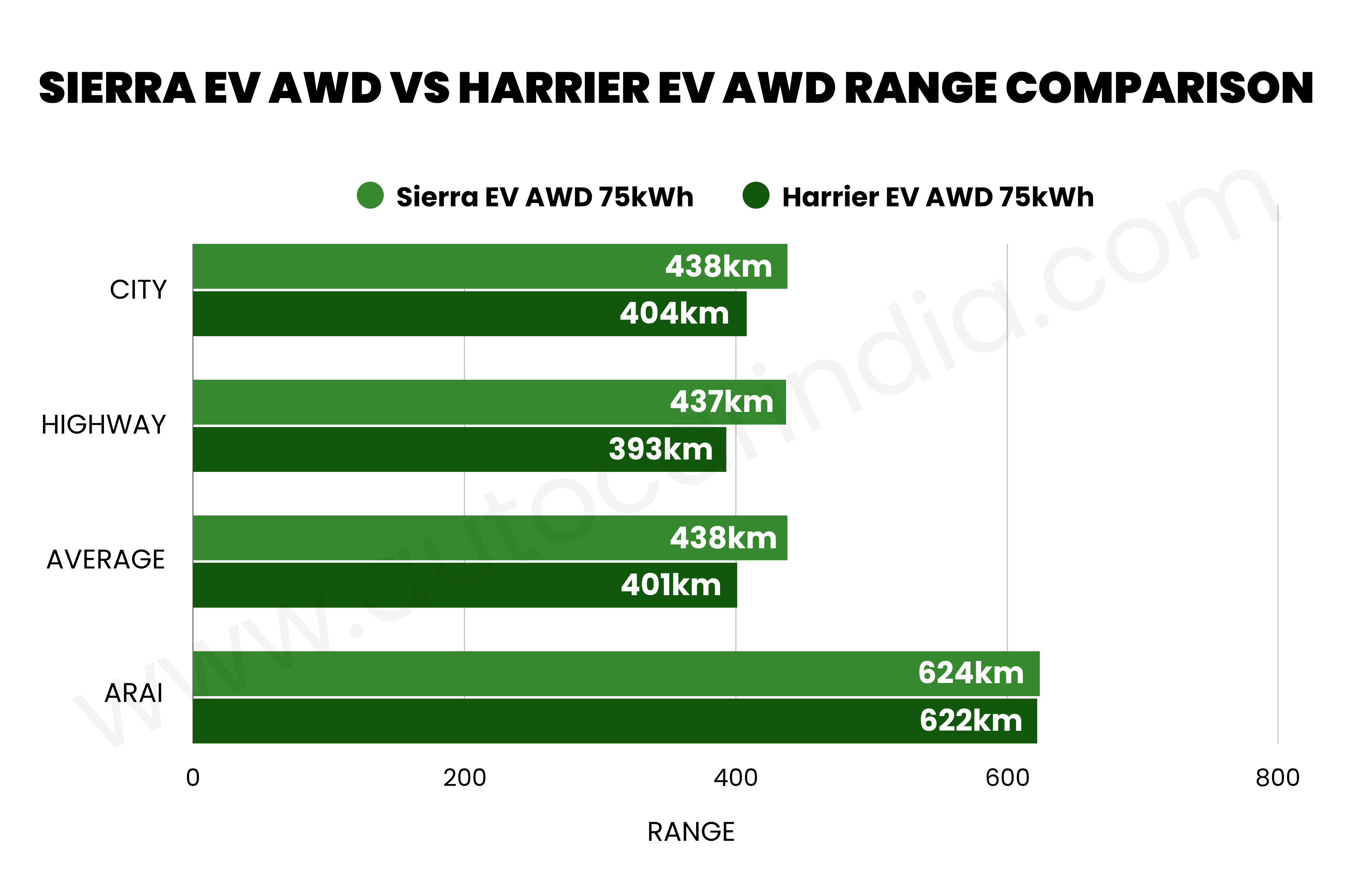
In city conditions, the Sierra EV AWD returned an efficiency of 5.83km per kWh compared to the Harrier EV AWD’s 5.45km per kWh, giving it a 30km advantage in tested range. The gap widened on the highway, where the Sierra EV AWD achieved 5.82km per kWh against the Harrier EV AWD’s 5.24km per kWh, allowing it to travel 44km further. The Sierra EV AWD’s 205kg lower kerb weight could partly explain its better real-world efficiency.
Autocar India’s range testing
For our real-world range test of each car, we begin with the battery fully charged and tyre pressures set as per the manufacturer’s recommendation. We drive the cars on a fixed loop covering both city and highway stretches while maintaining set average speeds. We then calculate the range based on the percentage of charge consumed. The AC is set to 22deg C in auto mode, and other features such as the music system, lights and ventilated seats are used whenever needed, just as a regular user does. This way, these tests are consistent and give a clear idea of what to expect in daily use.
Prices are ex-showroom, India.
 Royal Enfield teases Himalayan 750 ahead of global reveal
October 27, 2026
 Defender 110 prices drop by up to Rs 34 lakh with local assembly
October 27, 2026
 E100 vehicles get regulatory nod as MoRTH amends motor vehicle rules
October 27, 2026
 Hyundai Bayon on-road prices listed in top 5 cities
October 27, 2026
 Mahindra XUV 3XO vs Tata Nexon CNG: Real world mileage compared
October 27, 2026
 Kawasaki Z300 vs Rivals: Price and Specifications compared
October 27, 2026
 Abu Dhabi reveals design for youth concert hall by the late Frank Gehry
October 27, 2026
 Quiz: Kane and who else? Name every men's Ballon d'Or winner
October 27, 2026
 Kane's rise from childhood keeper to the best in the world
October 27, 2026
 OHLAB experiments with colour-blocking and cork in old and new buildings of Terreno Barrio Hotel in Mallorca
October 27, 2026
Chase: We want newbies to approach Bangladesh conditions with open mind
October 27, 2026
Udara replaces injured Nissanka in SL Test squad for Pakistan tour
October 27, 2026