

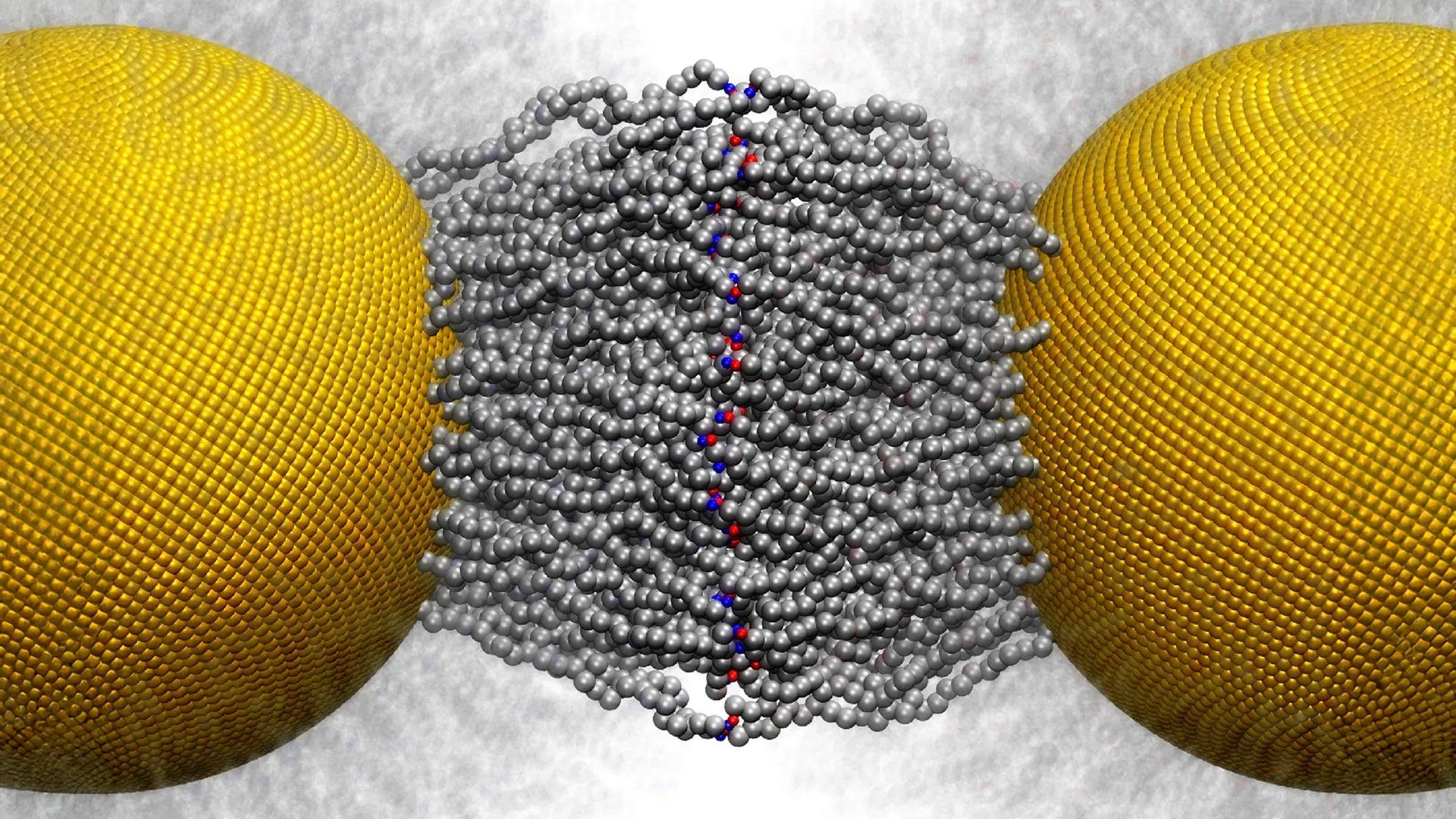
MIT scientists have challenged two decades of conventional thinking by discovering that flexible molecular connections, rather than rigid ones, can unlock entirely new ways to arrange nanoparticles. The breakthrough could lead to a new generation of designer materials with unusual properties and applications in electronics, medicine, and energy.
More in Research
 Scientists just found dinosaur blood that survived 115 million years
November 6, 2026
 Major trial challenges how doctors decide who really needs statins
November 6, 2026
 Five-inch-long beetle larvae are quietly destroying blueberry roots
November 6, 2026
 Don't miss: Meteor showers, fireballs, and a supermoon light up November's night sky
November 6, 2026
 NASA’s Swift telescope falls to Earth after nearly 22 years in space
November 6, 2026
 For decades, we were told to avoid full-fat dairy. New research says otherwise
November 6, 2026
Latest News
 Crusoe sells troubled Wyoming data center project to Google
November 7, 2026
 How Trump’s unconvincing narrative on Iran lost him the US midterms
November 6, 2026
 US urges China to honour Busan trade deal commitments
November 6, 2026
 OpenAI reportedly raises an additional $11 billion at a $1.25 trillion valuation
November 6, 2026
 US Sanctions Eight Canadian Companies Over Iran Transactions
November 6, 2026
Ben Sheppard Longer Absence Is Bad News For Indiana Pacers
November 6, 2026