

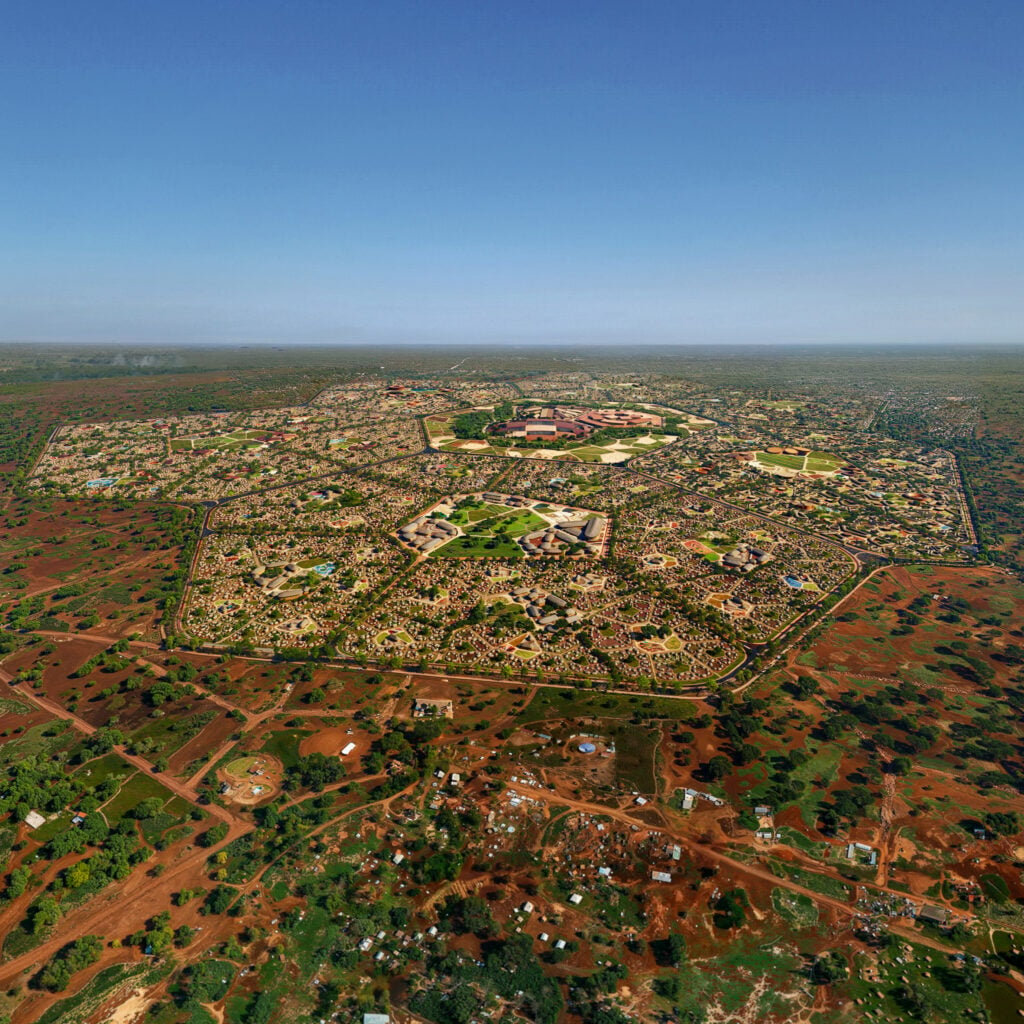
Architecture studio BIG has unveiled plans for Refugee City, a masterplan that reimagines the Bidi Bidi refugee settlement in Uganda as an economic hub.
Developed by BIG in collaboration with social enterprise To.org, the masterplan proposes essential civic infrastructure such as housing, schools and markets for the largest refugee settlement in Africa, home to around 250,000 displaced people.
The initiative was conceptualised as an alternative to short-term aid and charity-led approaches to refugee settlements, providing a “resilient economic model” that empowers displaced communities.
Gallery
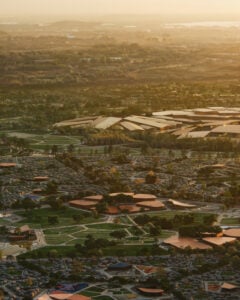

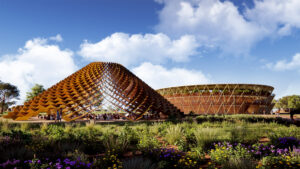
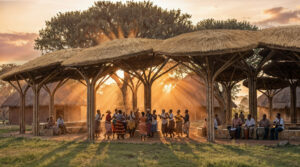
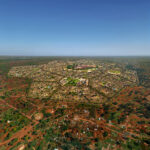
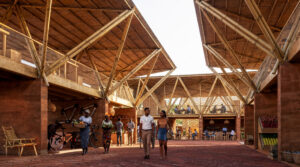
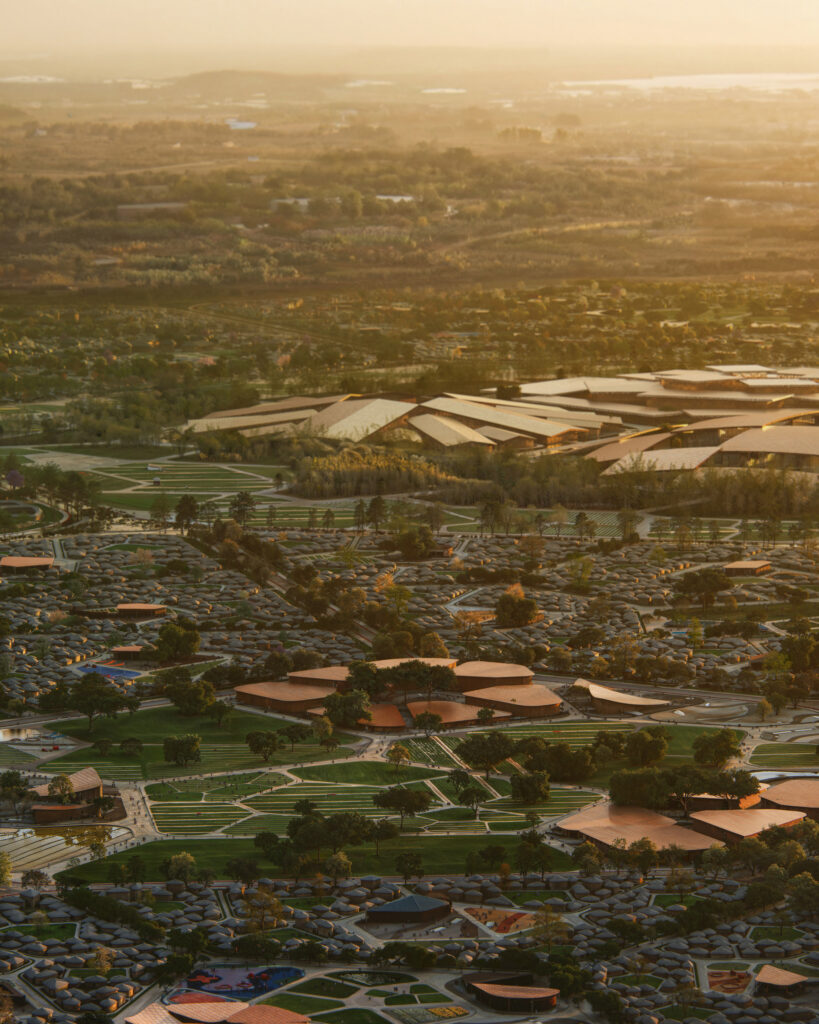
“If the average stay in refugee camps is around two decades, then the term temporary cannot be said to suffice,” said studio founder Bjarke Ingels.
“If we start thinking of cities rather than camps, then charity becomes investments into the future, and if companies can be incentivised to locate their production in refugee cities, then the refugees can be given economic opportunities that they currently long for.”
If completed, the project would sit alongside an existing performing arts centre completed on the site in 2024.
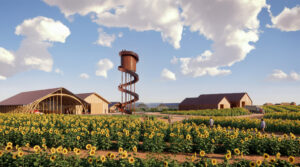
The masterplan is designed by BIG to be “scalable and modular” to facilitate its implementation in other locations.
“We have attempted to design a scalable, phaseable, modular blueprint for a new way to accommodate the global flow of refugees,” Ingels said.
In a bid to allow the city to grow organically, the proposal takes a “fractal approach” – beginning with the establishment of housing units before expanding to neighbourhoods and eventually districts over several years.
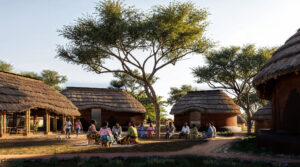
The first phase of the project comprises a prototype single-family housing unit, which is currently being built on the site. Its modular structure was designed to improve existing shelter typologies, while also drawing on local buildings.
Once complete, the unit will function as an operational guesthouse to accommodate international investors and future collaborators on the site.
“The prototype base unit is inspired by local vernacular settlements where homes grow as a sequence of rooms around shared spaces,” To.org co-founder Nachson Mimran told Dezeen.
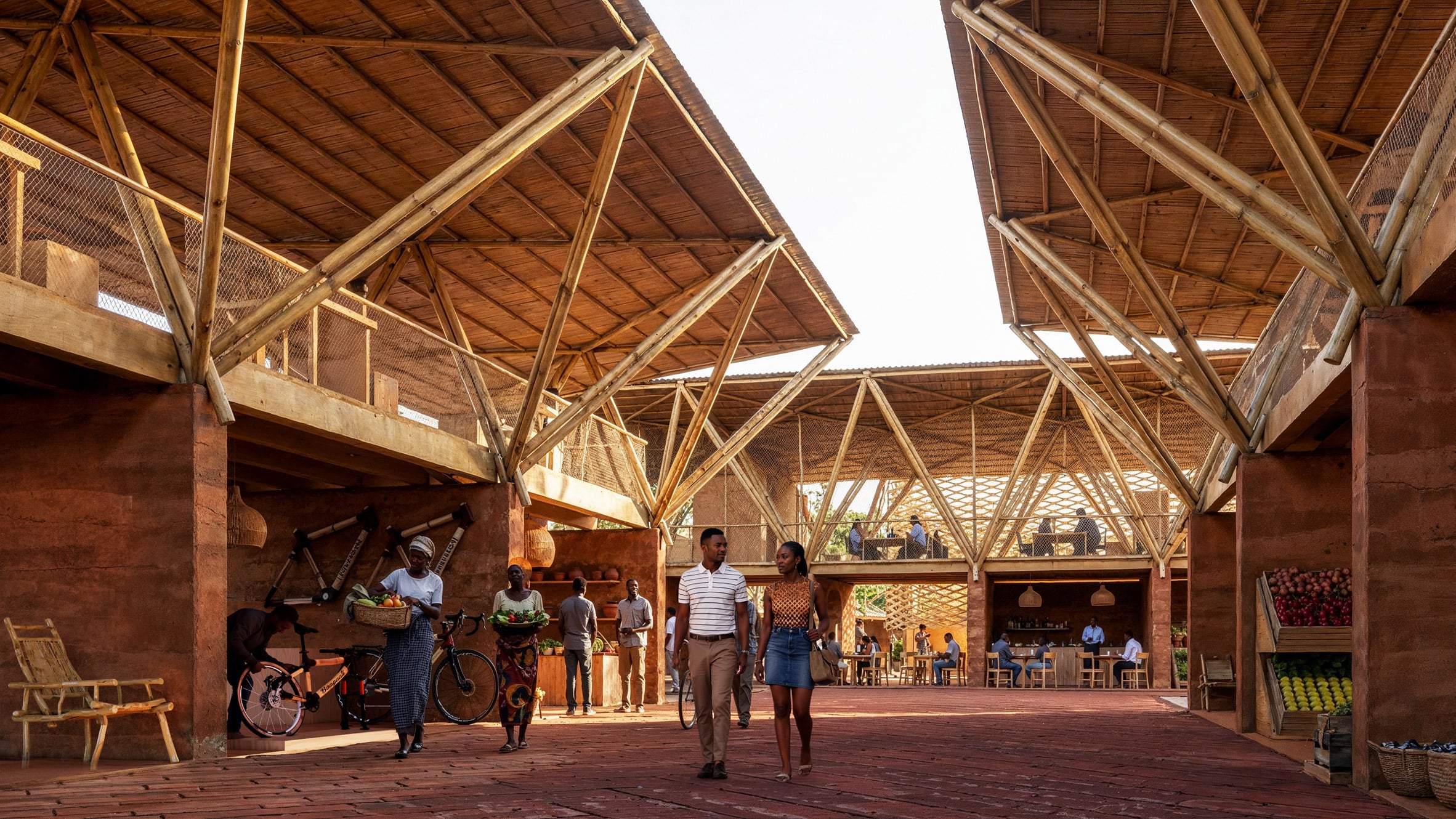
Renders of the city reveal designs for a commercial street lined with markets and built from local materials such as brick and bamboo.
The Bidi Bidi settlement in Uganda was chosen as the site for the inaugural Refugee City because of the country’s 2006 Refugee Act, which grants refugees the right to work and start businesses, freedom of movement, and to acquire agricultural plots within integrated rural settlements.
“There are very few nations offering this unique combination which makes Uganda the ideal location for the inaugural Refugee City,” Mimran said.
The realisation of the full-scale masterplan in Bidi Bidi is dependent on capital investment, while any future initiatives will require host-nation governments to be willing to grant flexibility and legal work rights to refugees.
Other spaces designed for refugees include an easy-build playground for children fleeing war, and wooden refugee beds designed to provide more privacy and dignity.
 Six quietening acoustic products that instil calm in interiors
November 13, 2026
 Ocean liner sunk in Florida to become "world's largest artificial reef"
November 13, 2026
 First Ferrari Style flagship store in New York features metallic facade
November 13, 2026
 Perforated brick walls envelop giant market in Kinshasa by Think Tank Architecture
November 13, 2026
 Polestar Formula 2030 concept car "screams performance"
November 13, 2026
 Was the Cybertruck a flop, or a design success?
November 13, 2026
 Fali Nariman: the corporate lawyer who stood up to power
November 14, 2026
 Brand, Walliams and MAFS: Is this a reckoning for the entertainment industry?
November 14, 2026
 Before Directing the Biggest Success of His Career, Steven Spielberg Almost Made an Alien Horror Movie Instead
November 13, 2026
 Amazon’s new Kindle Colorsoft is a premium e-reader with a premium price
November 13, 2026