

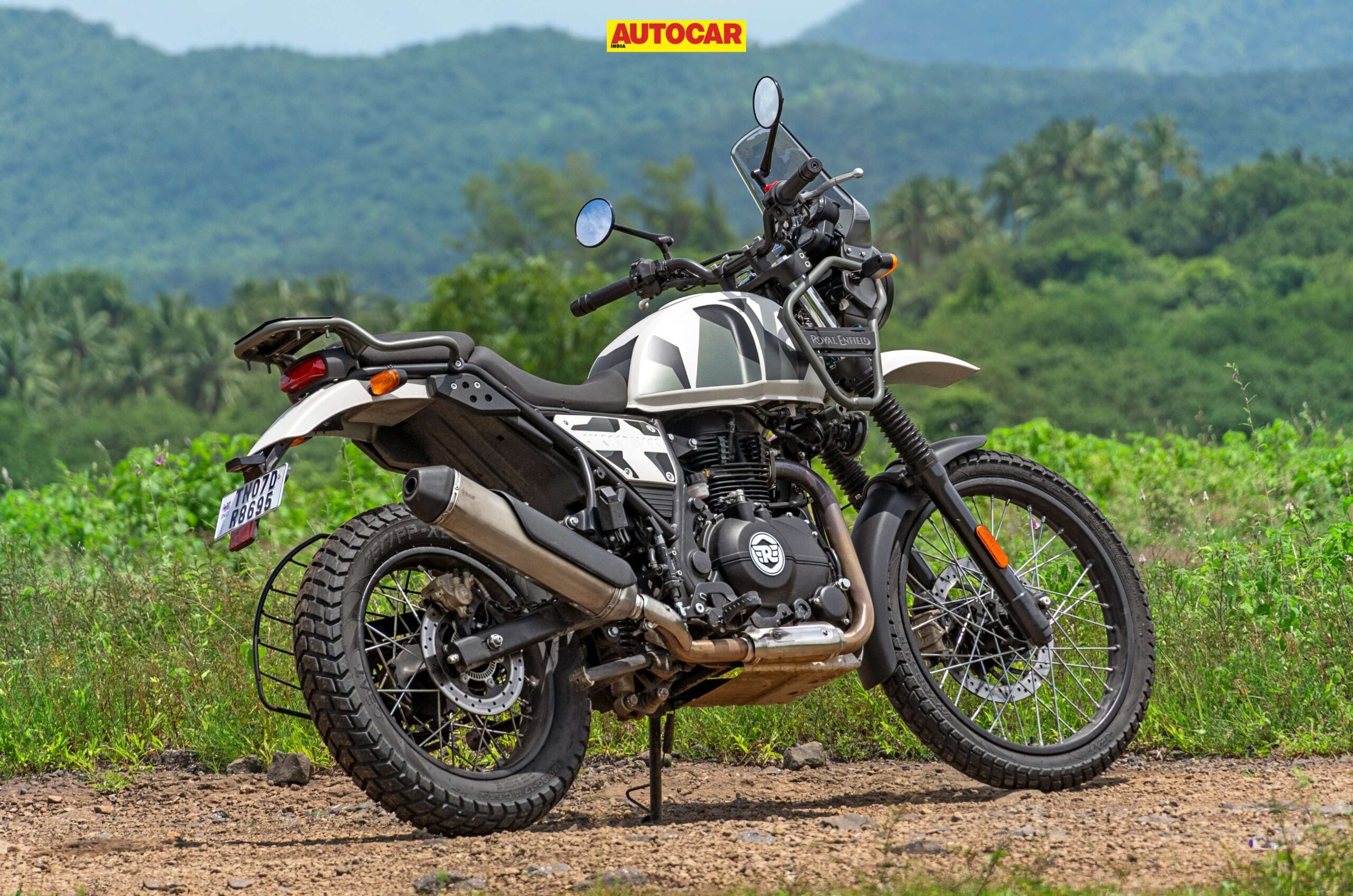
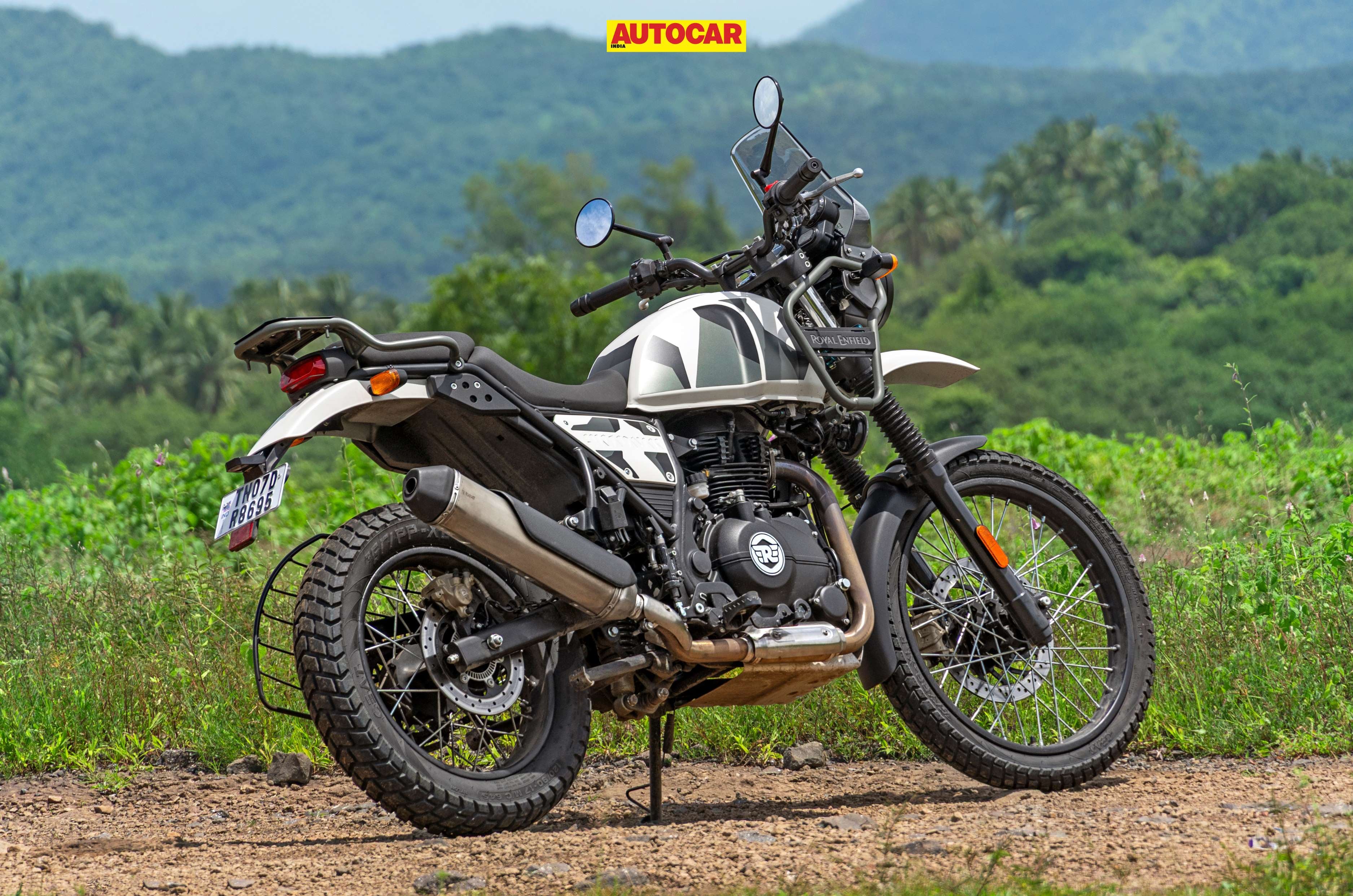
The OG Royal Enfield Himalayan is back, sort of, with the Himalayan 440. Reincarnated with (almost) the same design and underpinnings as before, the 440 is looking to also fix the shortcomings of its predecessor with a more powerful engine and an additional gear for better highway duties. If you’re confused about buying one, or which Himalayan is right for you, let us help.
1. How is the Himalayan 440 different from the Scram 440?
The differences mainly come down to the tyres and suspension. The Scram 440, being a road-oriented motorcycle, has alloy wheels in its top variant and a 19-inch front wheel. The Himalayan, being an off-roader ADV, sticks to wire-spoked wheels for the added robustness during off-roading and has a 21-inch front wheel. The front suspension on the Scram 440 has a 190mm travel, whereas the Himalayan has an additional 10mm travel. Both motorcycles stick to 180mm travel on the rear wheel.
The other differences are mainly in the colours and the lack of a windscreen on the Scram 440. It also gets a slightly different instrument cluster and does not get the tripper navigation pod as standard, like the Himalayan does. Do note that the Scram 440’s base variant – Trail – also sticks to wire-spoked wheels, just like the Himalayan.
2. Does the Himalayan 440 get a slipper clutch?
No, it does not. Royal Enfield has given it to most of the 350s, both the 450s, and all the 650s as standard. This leaves out the Bullet 350, Himalayan 440 and Scram 440 as the Royal Enfields without a slipper clutch.
3. What features does the Himalayan 440 get?
Dual-channel ABS with the ability to turn off the rear ABS is the only rider aid on offer. The Himalayan 440 also gets the tripper navigation pod as standard.
4. Does the Himalayan 440 get tubeless wheels?
No, it does not. Wire-spoked wheels with tube tyres are the only option, and at the moment, Royal Enfield does not offer tubeless-spoked wheels or alloys, even as accessories. It also hasn’t confirmed if the Himalayan 450’s tubeless-spoked wheels could be retrofitted to the Himalayan 440.
5. How’s the LED headlight? Any better than the Himalayan 450?
No, it is the exact same unit. If anything, it is a downgrade compared to the halogen headlight that was available on the Himalayan 411. So if you’re planning a lot of night rides, budget for aux lights.
6. Why are the Himalayan 440 and 450 priced so far apart?
Because they’re completely different motorcycles, despite what the name might suggest. The engine, frame and suspension setups are all completely different between them. The Himalayan 440 is RE’s affordable ADV, with a Rs 2.29 lakh price (ex-showroom, Chennai). It’s lean on the feature set and sticks to a platform that’s effectively ten years old now. But, again, it’s not the feature list the OG Himalayan was known for, and it’s certainly not the reason why it’s been rejuvenated.
The Himalayan 450, on the other hand, is a lot more modern and powerful. It is physically larger but lighter, and almost a lakh more expensive than the 440, with a starting price of Rs 3.08 lakh (ex-showroom, Chennai).
7. Is the suspension adjustable on the Himalayan 440?
No, it’s not, and the answer is common to both Himalayans. Both get adjustable preload for the rear linkage monoshock (completely different units, mind you), but that’s about it. The front suspension isn’t adjustable in any way on either motorcycle.
8. I am planning to tour on my motorcycle. Which Himalayan should I get?
Either one should be great. The 450 is a lot more expensive, but it offers a much more modern package, more power and torque, and is markedly more comfy and spacious. If you get one of the top variants, you also get tubeless rims as standard, with the other variants offering them as an optional upgrade. So, the Himalayan 450 lets you have the convenience of tubeless tyres without compromising on the retro looks.
However, if you prefer to spend the price difference between the two motorcycles on fuel to ride more (Rs 79,000 can buy a lot of petrol!), the 440 should handle touring very well too, especially with the new sixth gear. Just remember to stay on top of your tyre health (because of the tube tyres) and expect to stop for fuel more often because of the smaller 15-litre tank.
9. Will the Himalayan 440 be hassle-free to own?
Reliability concerns with the Himalayan were legitimate when the motorcycle first launched in 2016. However, Royal Enfield has come a long way since then, so we do not expect the Himalayan 440 to be unreliable; especially since the Scram 440 has stayed trouble-free after an engine-related recall in the initial delays. So, assuming you stay on top of your maintenance, you have no reason to expect any trouble from the motorcycle.
 BMW Motorrad Nurburgring Edition image gallery
September 20, 2026
BMW Motorrad Nurburgring Edition image gallery
September 20, 2026
 The real Lawrence of Arabia's last ride retraced in a Mini Countryman JCW
September 20, 2026
The real Lawrence of Arabia's last ride retraced in a Mini Countryman JCW
September 20, 2026
 Royal Enfield Wanderer Waterproof Boots review
September 20, 2026
Royal Enfield Wanderer Waterproof Boots review
September 20, 2026
 What to expect from 2026 Mahindra Thar 3 door facelift
September 20, 2026
What to expect from 2026 Mahindra Thar 3 door facelift
September 20, 2026
 Driving the JSW Tomcar and EX4: Dirt Devils
September 20, 2026
Driving the JSW Tomcar and EX4: Dirt Devils
September 20, 2026
 Jetour T2 review: Is JSW ready for combat?
September 20, 2026
Jetour T2 review: Is JSW ready for combat?
September 20, 2026
 Injured star Miller has 'no doubt' Leeds can secure Grand Final spot
September 21, 2026
Injured star Miller has 'no doubt' Leeds can secure Grand Final spot
September 21, 2026
 Which emergency foods should you stock up on?
September 21, 2026
Which emergency foods should you stock up on?
September 21, 2026
 மக்களே உஷார்!..டெங்குவை விட வேகமாக பரவும் உண்ணிக் காய்ச்சல்…மருத்துவர்கள் எச்சரிக்கை!
September 21, 2026
மக்களே உஷார்!..டெங்குவை விட வேகமாக பரவும் உண்ணிக் காய்ச்சல்…மருத்துவர்கள் எச்சரிக்கை!
September 21, 2026
 Rosberg: Antonelli vs his mind will decide F1 title race
September 21, 2026
Rosberg: Antonelli vs his mind will decide F1 title race
September 21, 2026
 Fisher vs Pirotton: What you need to know for 'golden ticket' fight
September 21, 2026
Fisher vs Pirotton: What you need to know for 'golden ticket' fight
September 21, 2026
 சீனா ராணுவ விதிகளில் கொண்டு வந்துள்ள மாற்றம் போர் தயாரிப்புடன் ஏன் தொடர்புபடுத்தப்படுகிறது?
September 21, 2026
சீனா ராணுவ விதிகளில் கொண்டு வந்துள்ள மாற்றம் போர் தயாரிப்புடன் ஏன் தொடர்புபடுத்தப்படுகிறது?
September 21, 2026