


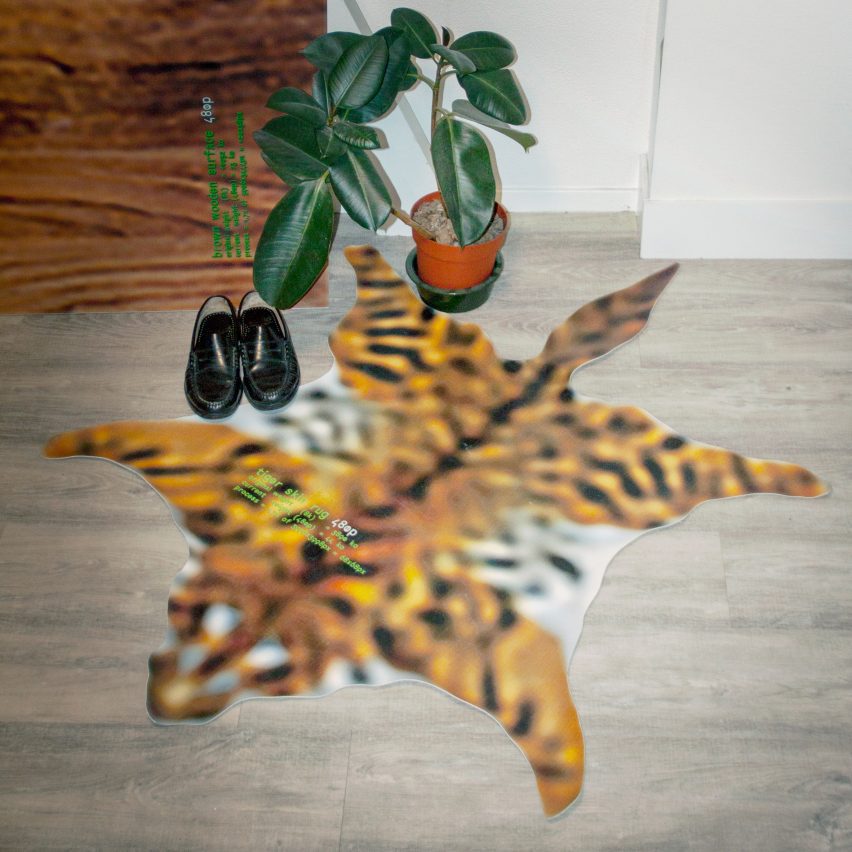
Designer Jonas Hejduk has released a collection of rugs and benches that have ambiguously pixellated aesthetics.
Hejduk‘s focus on deliberately compressed, low-resolution versions of popular furnishings were informed by his childhood fixation with video game graphics.
“Youngsters like myself were already caught in the spiral logic of infinite growth, trained never to tolerate technological stagnation,” Hejduk told Dezeen.
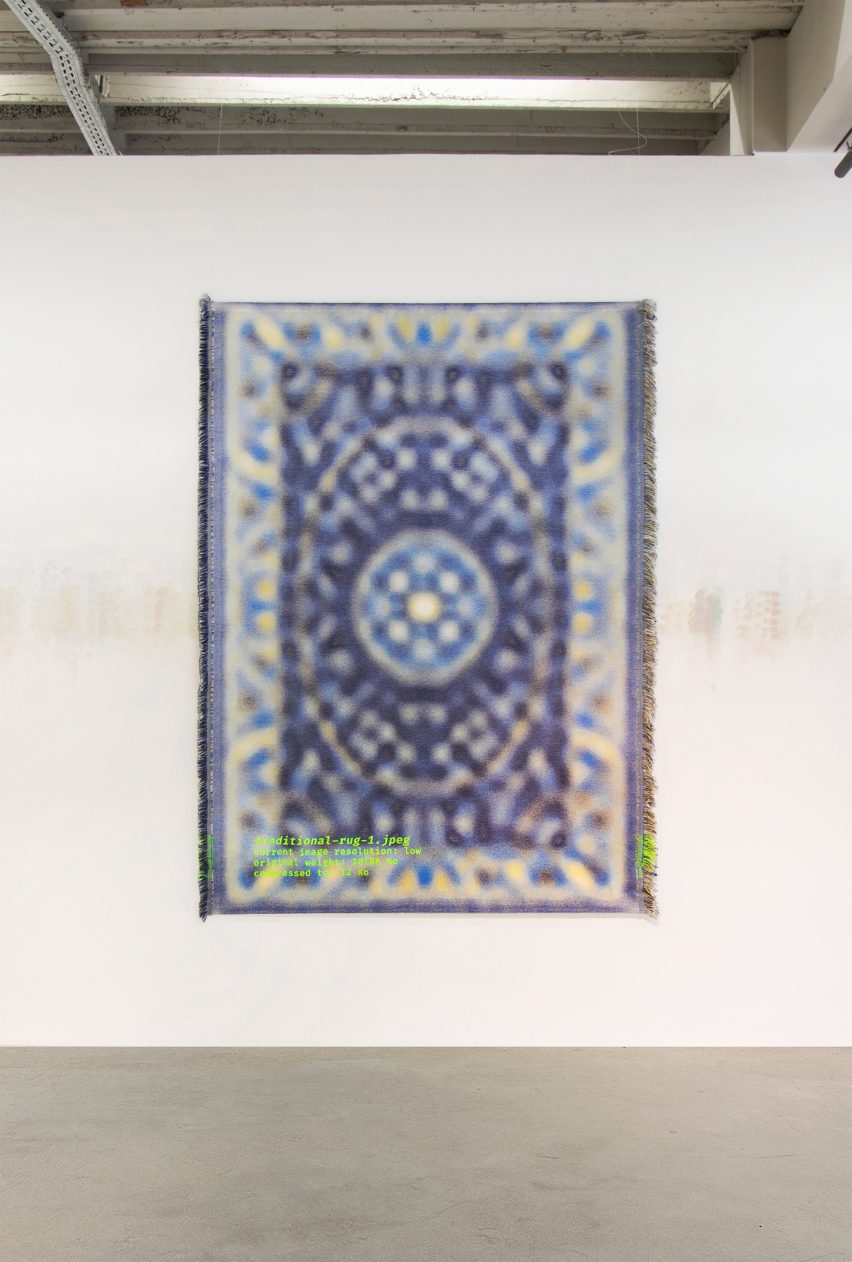
Stools and rugs are among the French designer’s output, each of which were named using computer filename formats.
In the case of the designer’s rugs, the filename, initial file size and post-processing size are woven onto the surface of the piece.
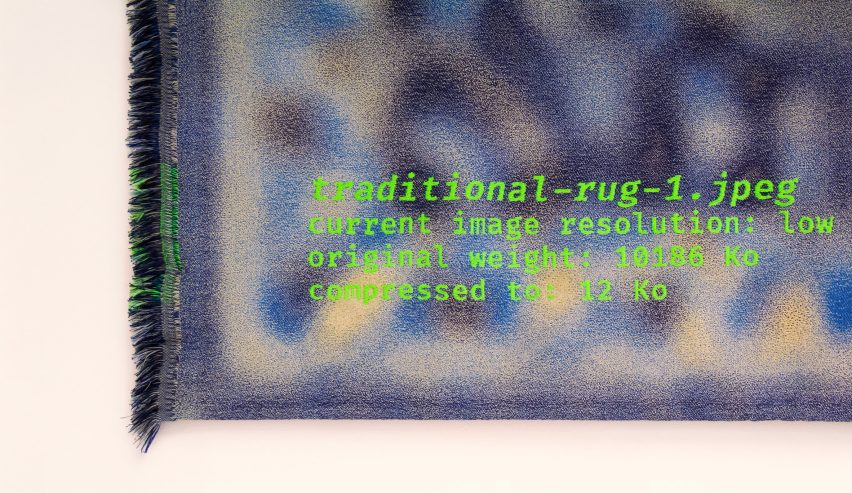
Made from digitally woven wool and cotton jacquard, the designer described the Traditional-rug-1.jpeg as “poetic and gently ironic”.
“Once a symbol of prestige and early global exchange, the Persian rug gradually shifted into a standardised archetype of mass culture and uniformity,” Hejduk told Dezeen.
“Here, it is reduced to its own thumbnail – an enigmatic blurry image of troubled origins, copied and pasted too many times.”
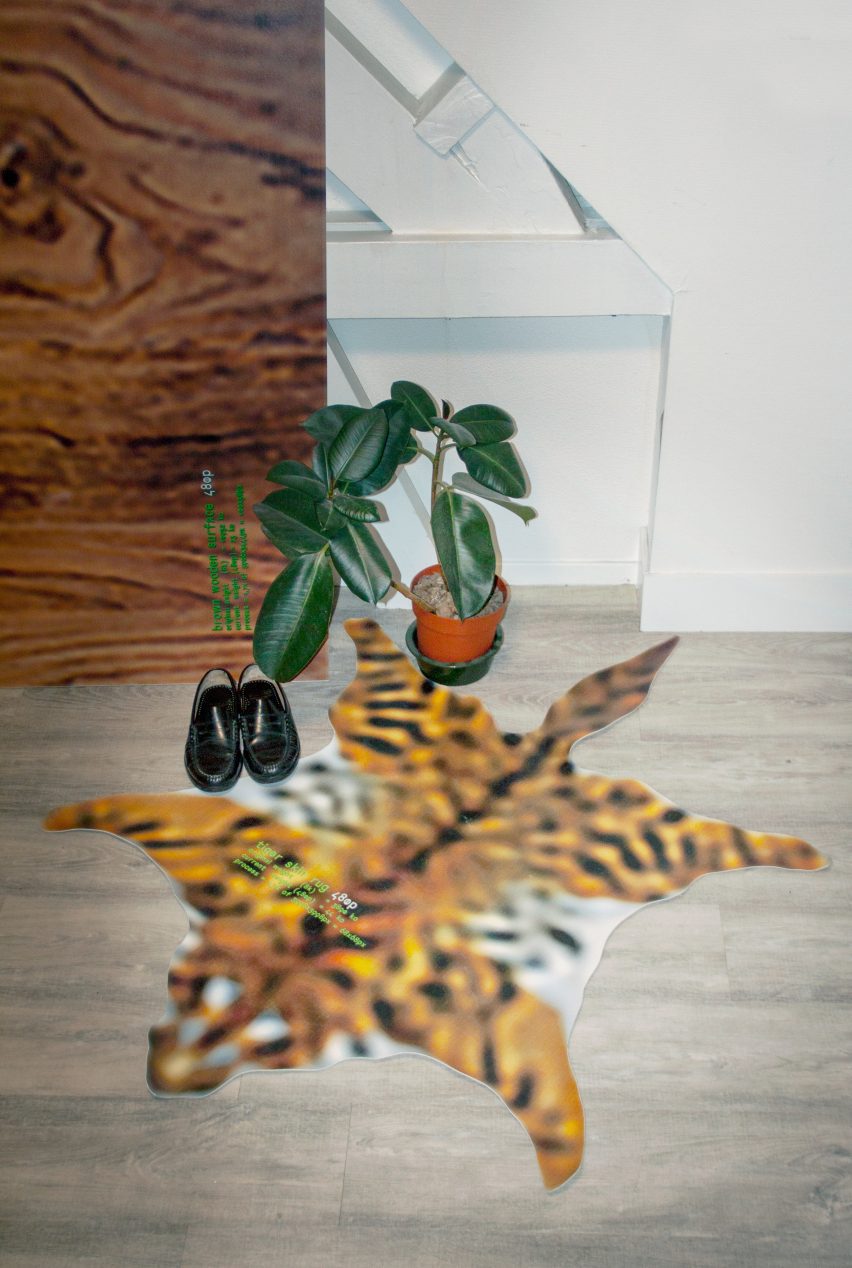
Hejduk’s Tiger skin rug is part of a wider collection called Crash.jpeg, in which the designer explored the contemporary obsession with digital clarity and technological advancement.
“By embracing the ambiguity of the poor image, the collection presents works that are deliberately difficult to photograph and rendered anachronistic to the eyes of social media algorithms: high-definition designs are deliberately sabotaged down to lower resolutions,” said Hejduk.
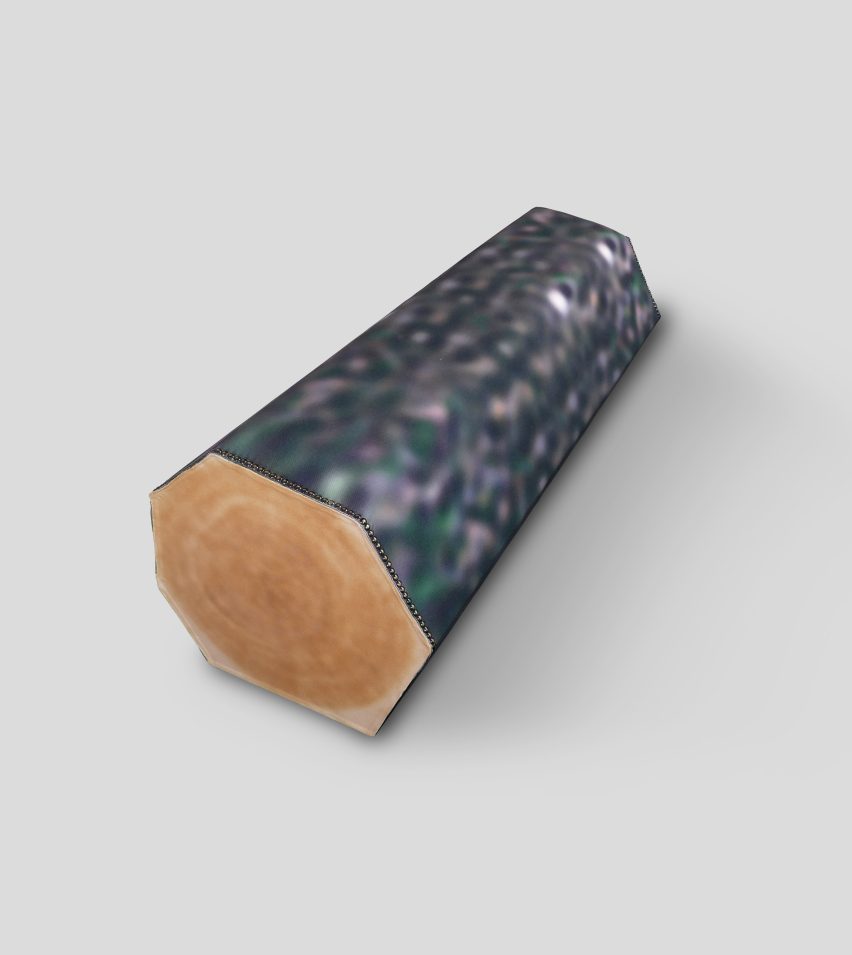
Similarly, Hejduk’s Log-texture-1.jpeg bench recalls the nostalgia of logs as resting places in 1990s video games.
The benches were wrapped in a blurry bark skin with cut-through textures at either end, tacked together with traditional nailhead trim.
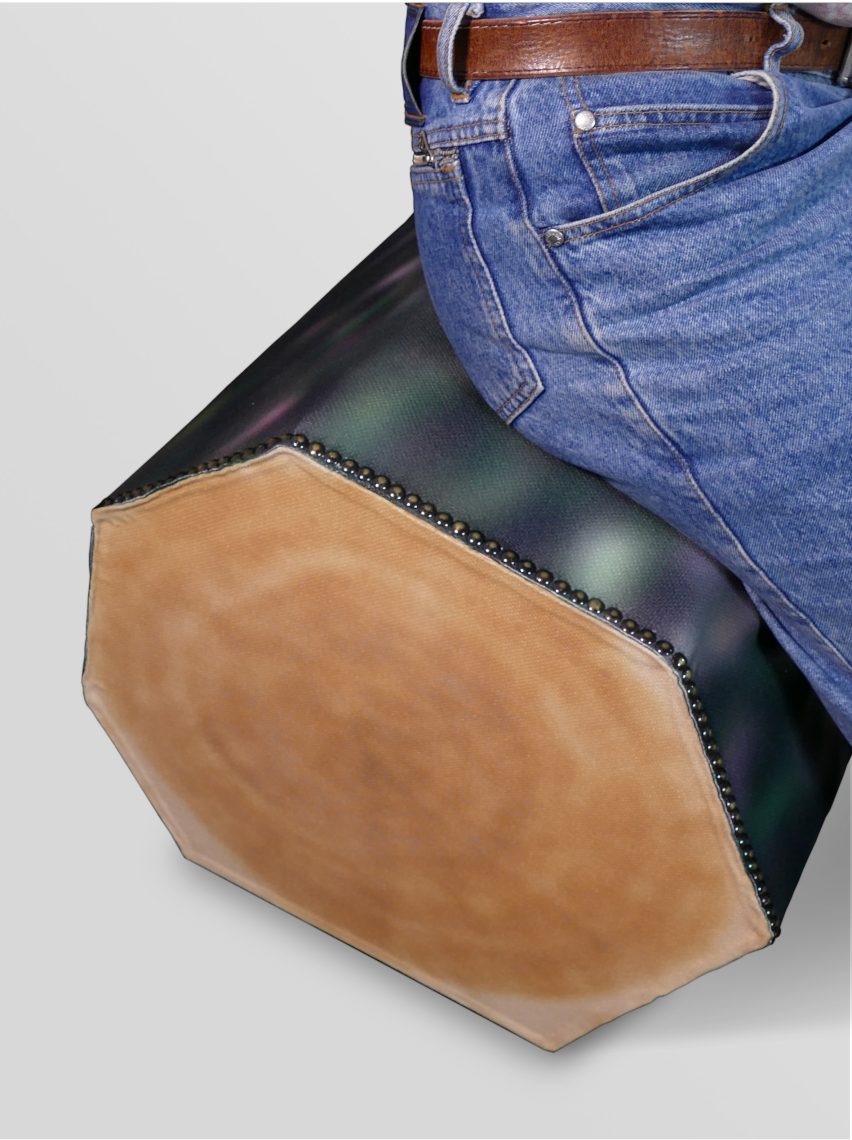
Like many of the designer’s works, the logs act like an optical illusion, contrasting with their surroundings in a jarring way owing to their not-finished-loading appearance.
“Visually, it ‘has no business being there’, and yet, its digital nature conveys an authenticity that brings a smile, far removed from what AI offers in our daily lives,” the designer continued.
In addition to rugs and benches, Hejduk produces similarly blurry ceramics, garments, bed sheets and wallpapers.
“These pieces of furniture are not just ‘designer jokes about 3D’, but objects of mourning and resistance,” said Hejduk.
“Through the physicality of craft and raw materials, they serve as tangible reminders of the unfulfilled promises of digital modernity, all while rejecting the sanitised present that tech oligarchs attempt to impose on us.”
Other products on Dezeen created in rejection of AI include a shirt that prevents the wearer from being picked up by AI video surveillance and a font that cannot be read by AI software.
 STG Design unveils upcoming “unconventional, sinuous” Houston skyscraper
October 20, 2026
 Forbo Flooring spotlights creative possibilities of custom flooring
October 20, 2026
 Rippling water informs wildlife pavilion by Desai Chia Architecture
October 20, 2026
 David Chipperfield Architects builds concrete gallery around singular artwork in Germany
October 20, 2026
 Box 9 used “brick on every surface” in Soho restaurant Kid
October 20, 2026
 Golf clubhouse by Graham Baba nods to farm structures in rural Washington
October 19, 2026
 US envoy to meet Putin in Russia as Zelensky says intelligence sharing 'works now'
October 21, 2026
 Haitian migrants changed this US town – Trump's deportation drive is reshaping it again
October 21, 2026
 France is divided over who to blame for and what to learn from weekend riots
October 21, 2026
 YouTube might be testing hiding the dislike button
October 21, 2026
 Disney+ Sets Japanese Horror Anthology Series ‘Night Tales Club’ With Kiyoshi Kurosawa, Takayuki Yamada
October 21, 2026
 Grab the Tissues, It’s Dedication Night on ‘Dancing With the Stars’: See the Scores, Who Went Home (Updating Live)
October 20, 2026