

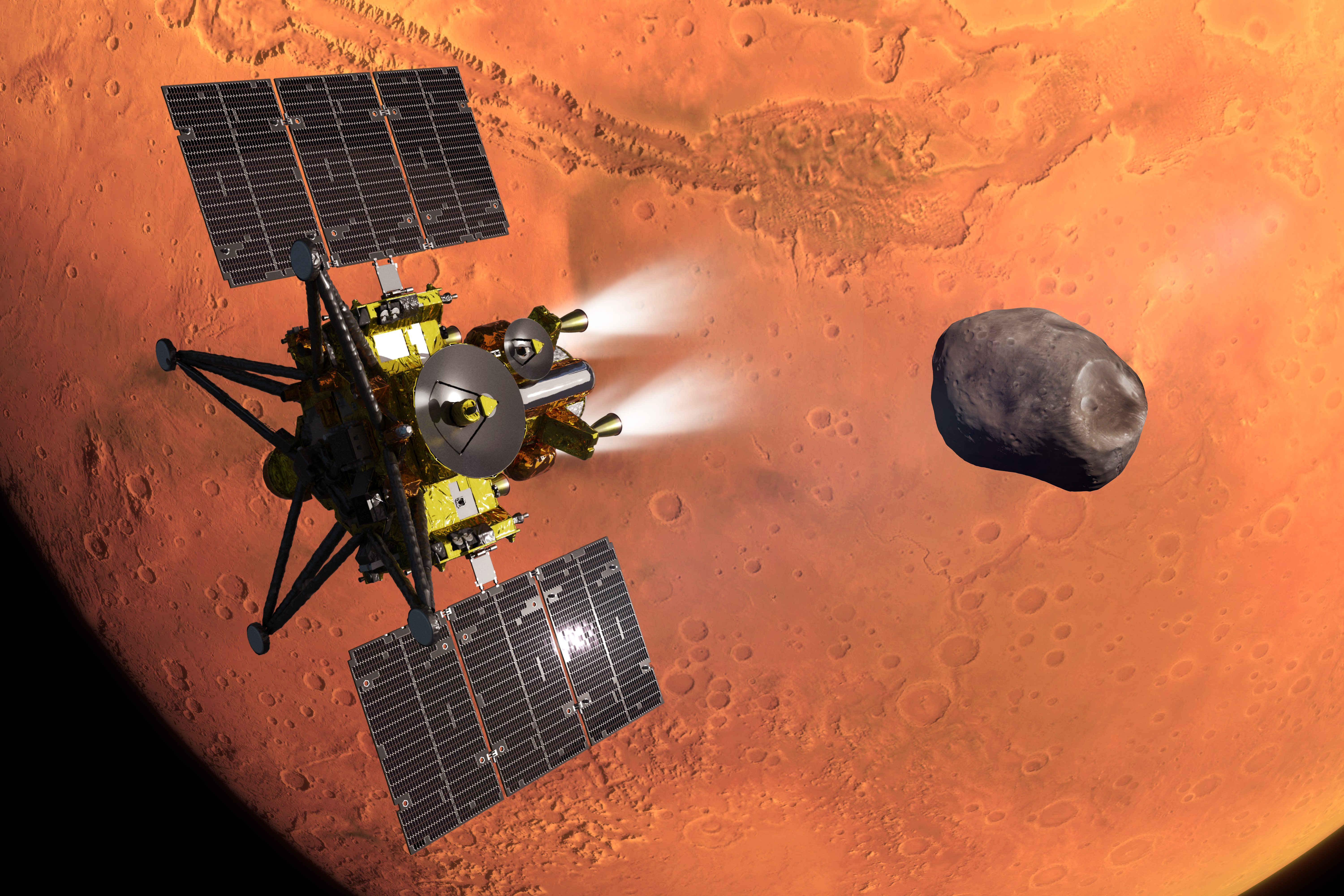
NASA is playing an important role in JAXA’s (Japan Aerospace Exploration Agency) MMX (Martian Moons eXploration) mission, to advance our understanding of Mars’ moons and build on the agency’s long history of exploring the Red Planet.
The mission aims to characterize and determine the origin of Mars’ moons Phobos and Deimos and deliver a sample of Phobos to Earth. The MMX spacecraft is targeting launch from JAXA’s Tanegashima Space Center in Japan at 3:41 p.m. EDT on Monday, Oct. 19 (4:41 a.m. JST on Tuesday, Oct. 20).
“The samples from MMX will bring forth paradigm-shifting science on the Mars system for generations to come, especially as NASA prepares to send the first humans to Mars,” said Nicky Fox, associate administrator, Science Mission Directorate, NASA Headquarters in Washington. “The NASA-JAXA sample curation partnership is extremely valuable, and I am proud that NASA Science is supporting MMX sample curation and will be sharing portions of these samples for study as we continue to expand humanity’s understanding of the universe for the benefit of all.”
NASA’s contributions to the mission include the Mars-moon Exploration with Gamma rays and Neutrons (MEGANE) spectrograph instrument, the Pneumatic Sampler (P-Sampler) technology demonstration, and communications and navigation support from the agency’s Deep Space Network, as well as funding United States scientists participating on the MMX science team.
Scientists have long debated the origin of Mars’ two moons. The data and samples collected by the MMX mission will help answer essential questions about the origins of these moons and the history of the solar system.
“Phobos and Deimos may be the remains of a massive impact on Mars that sent material into orbit around the planet, or they could be ancient asteroids that were captured by Mars’ gravity billions of years ago,” said Tom Statler, MMX program executive and program scientist at NASA Headquarters. “Having the answer will help illuminate that early era when Earth and the other inner planets may have been acquiring much of their water and organic compounds.”
The MEGANE (pronounced meh-GAH-nay, the Japanese word for eyeglasses) spectrograph will help scientists “see” what Phobos is made of by measuring neutrons and gamma rays emitted from the moon’s surface and determining its chemical elemental composition, which will provide important clues about its origin.
Mounted on one of the spacecraft’s landing legs, the P-Sampler is designed to collect a ground sample from Phobos. The system gathers surface material using bursts of high-pressure nitrogen gas, complementing JAXA’s C-Sampler, which will extract cores from a few inches deeper. NASA will obtain and curate about 15% of the total returned sample at the agency’s Johnson Space Center Astromaterials Lab in Houston, making it available for research for decades.
Another key part of NASA’s contribution to MMX is its scientific partnership with JAXA. NASA-supported researchers are working alongside international colleagues to help reveal the story of Phobos and will use mission data and returned samples to uncover new clues about the moon’s origin and the evolution of the Mars system.
The MMX spacecraft will arrive at Mars in August 2027 to begin its survey of the Red Planet’s two moons. After surveying Phobos in detail, the spacecraft will collect a sample of the moon’s surface no earlier than December 2028 and deliver it to Earth in 2031.
The MEGANE instrument was developed by the Johns Hopkins Applied Physics Laboratory. Honeybee Robotics, a Blue Origin company, developed the spacecraft’s pneumatic sampler mechanism. NASA’s contributions to the MMX mission were developed under the agency’s Discovery Program. The Discovery Program is managed by NASA’s Marshall Space Flight Center in Huntsville, Alabama, for the agency’s Science Mission Directorate in Washington.
For more information about the MMX mission, visit:
https://science.nasa.gov/mission/mmx
Karen Fox / Alana Johnson
Headquarters, Washington
240-285-5155 / 202-672-4780
karen.c.fox@nasa.gov / alana.r.johnson@nasa.gov
Explore More

 I Am Artemis: Allison Mjoen
October 16, 2026
I Am Artemis: Allison Mjoen
October 16, 2026
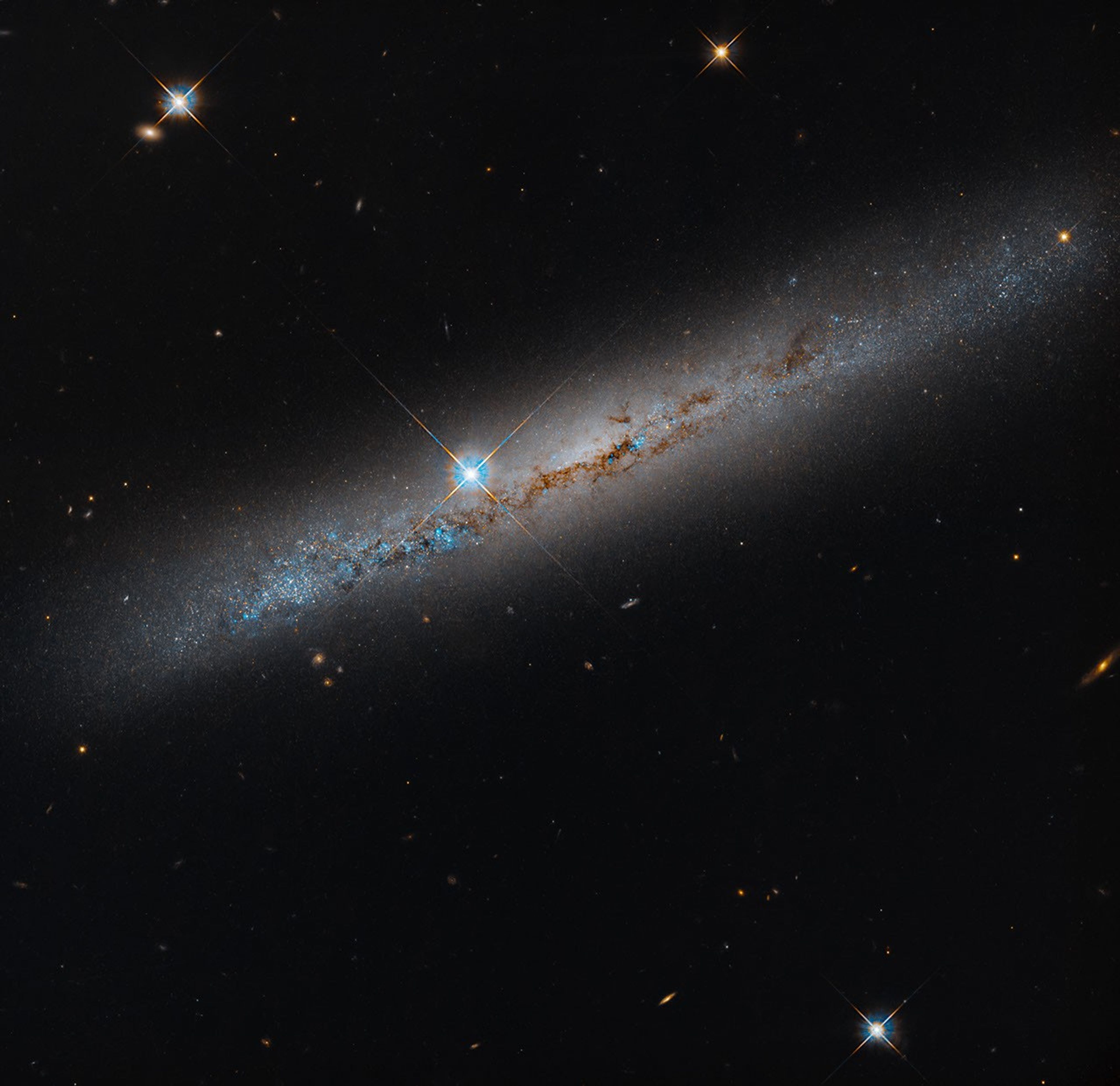
 NASA’s Hubble Spies Spiral’s Edge
October 16, 2026
NASA’s Hubble Spies Spiral’s Edge
October 16, 2026
 APOD: 2026 October 16 – Chasing the International Space Station
October 16, 2026
APOD: 2026 October 16 – Chasing the International Space Station
October 16, 2026
 Isaias Dims the Gulf Coast
October 16, 2026
Isaias Dims the Gulf Coast
October 16, 2026
 NASA Satellites Observe Historic 2026 El Niño
October 15, 2026
NASA Satellites Observe Historic 2026 El Niño
October 15, 2026
 Power Up: Roll Out Solar Arrays Boost Space Station Power Supply
October 15, 2026
Power Up: Roll Out Solar Arrays Boost Space Station Power Supply
October 15, 2026
 சௌதியில் மரண தண்டனை ரத்தான சிவராசா அனோஜனுக்கு அடுத்தது என்ன? இலங்கை அரசு தரப்பு புதிய தகவல்
October 16, 2026
சௌதியில் மரண தண்டனை ரத்தான சிவராசா அனோஜனுக்கு அடுத்தது என்ன? இலங்கை அரசு தரப்பு புதிய தகவல்
October 16, 2026
 Inside Ukrainian offensive pushing Russia back on front line where Starlink plays a key role
October 16, 2026
Inside Ukrainian offensive pushing Russia back on front line where Starlink plays a key role
October 16, 2026
 Zelensky says Ukraine has right to defend itself after Trump calls latest strikes a 'disgrace'
October 16, 2026
Zelensky says Ukraine has right to defend itself after Trump calls latest strikes a 'disgrace'
October 16, 2026
 Watch: Will Ukraine get the support needed as tensions with US rise?
October 16, 2026
Watch: Will Ukraine get the support needed as tensions with US rise?
October 16, 2026
 நேஹா போரா தடுத்து வைப்பு: அபிஜித் தீப்கே எங்கே? டெல்லி காவல்துறையிடம் சிஜேபி கேள்வி
October 16, 2026
‘Batman’ Writer Matt Fraction On The Impending Assassination Of Bruce Wayne
October 16, 2026
நேஹா போரா தடுத்து வைப்பு: அபிஜித் தீப்கே எங்கே? டெல்லி காவல்துறையிடம் சிஜேபி கேள்வி
October 16, 2026
‘Batman’ Writer Matt Fraction On The Impending Assassination Of Bruce Wayne
October 16, 2026