


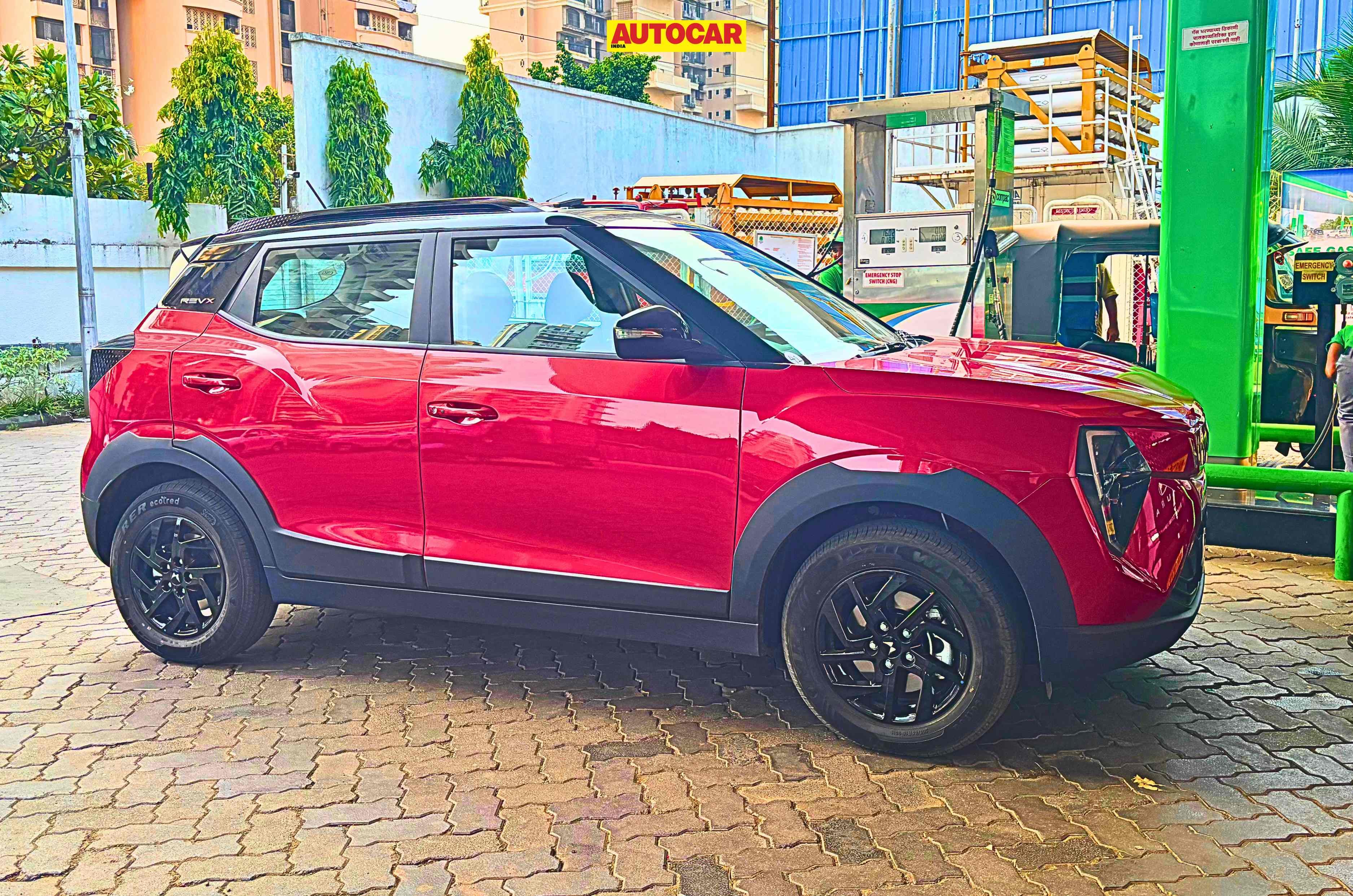
Mahindra recently introduced the XUV 3XO with the option of a factory-fitted CNG kit. Barring the KUV100 CNG, which was mainly fleet-focused, the Mahindra XUV 3XO CNG is the company’s first CNG vehicle aimed at private buyers. Priced between Rs 9.99 lakh and Rs 12.27 lakh (ex-showroom), the XUV 3XO CNG is available in four variants and costs roughly Rs 1 lakh to Rs 1.2 lakh more than its equivalent petrol offerings. We’ve subjected it to our real-world fuel efficiency tests.
- Gets twin CNG tanks underneath the boot floor
- Automatic stop-start feature is available, even in CNG mode
- ARAI claimed efficiency of 24.7km/kg
Mahindra XUV 3XO CNG real-world fuel efficiency explained
Powering the XUV 3XO CNG is the multi-point fuel injection (MPFi) turbo-petrol engine with a 10-bar CNG injection system, allowing it to produce the same 111hp and 200Nm in both petrol and CNG modes. It features a twin-cylinder CNG setup underneath the boot floor with a capacity of 60 litres, which doesn’t compromise boot space as much.
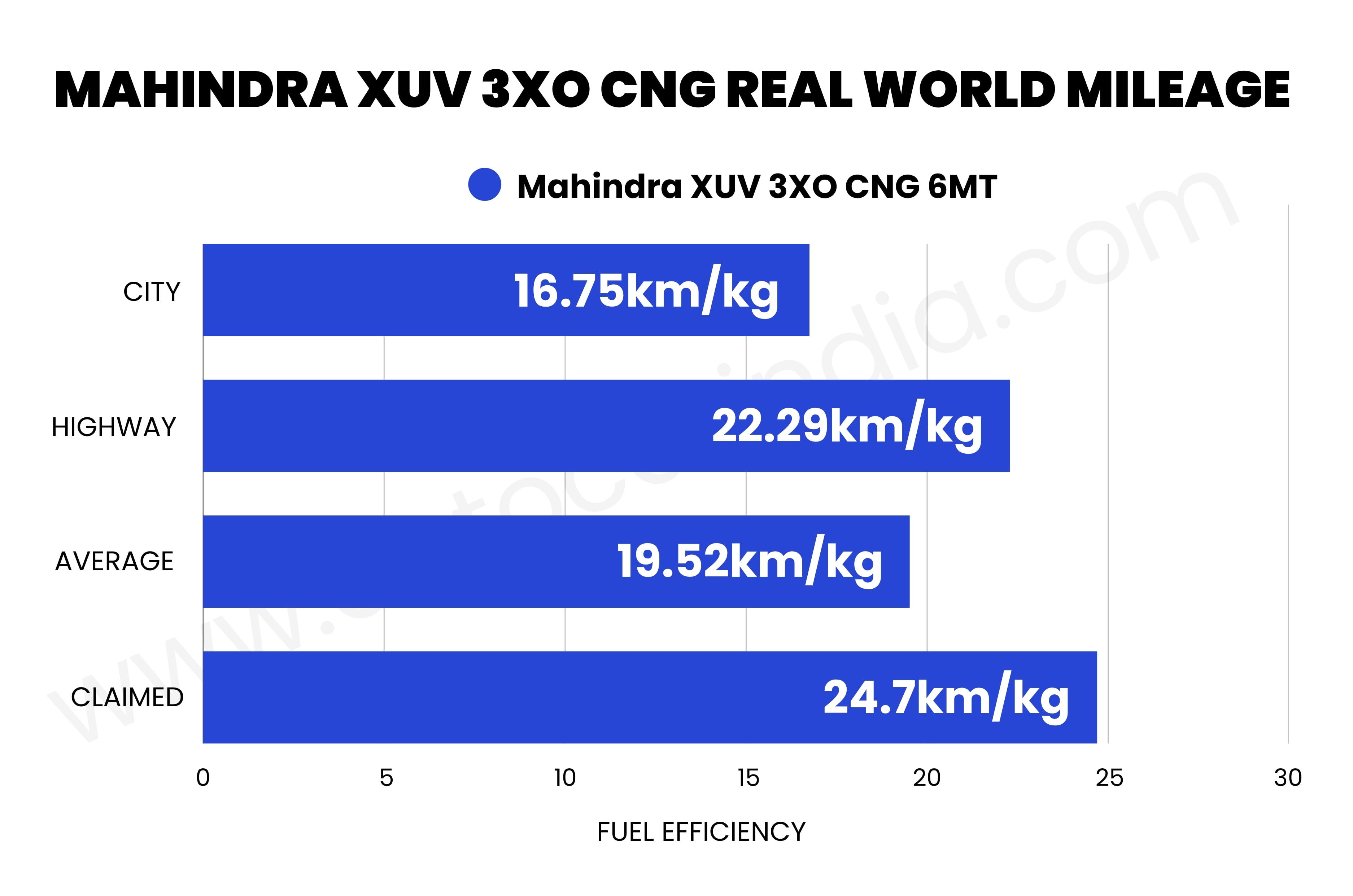
In our tests, the XUV 3XO CNG delivered 16.75km/kg in the city and 22.29km/kg on the highway for an overall real-world efficiency of 19.52km/kg. The highway efficiency is close to the ARAI-rated efficiency of 24.7km/kg, which is impressive.
The automatic stop-start feature definitely helps in improving efficiency in the city, as the car stays off until you press the clutch pedal. On the highway, the car cruised at 100kph with the engine spinning at a relatively conservative 2,300rpm, which again helps with the efficiency.
When refilled from empty, we managed to fill 7.94kg of CNG, although this can vary depending on the pump pressure and ambient temperature. With an overall average efficiency of 19.52km/kg, you can expect a range of 150-160km on a full tank of CNG.
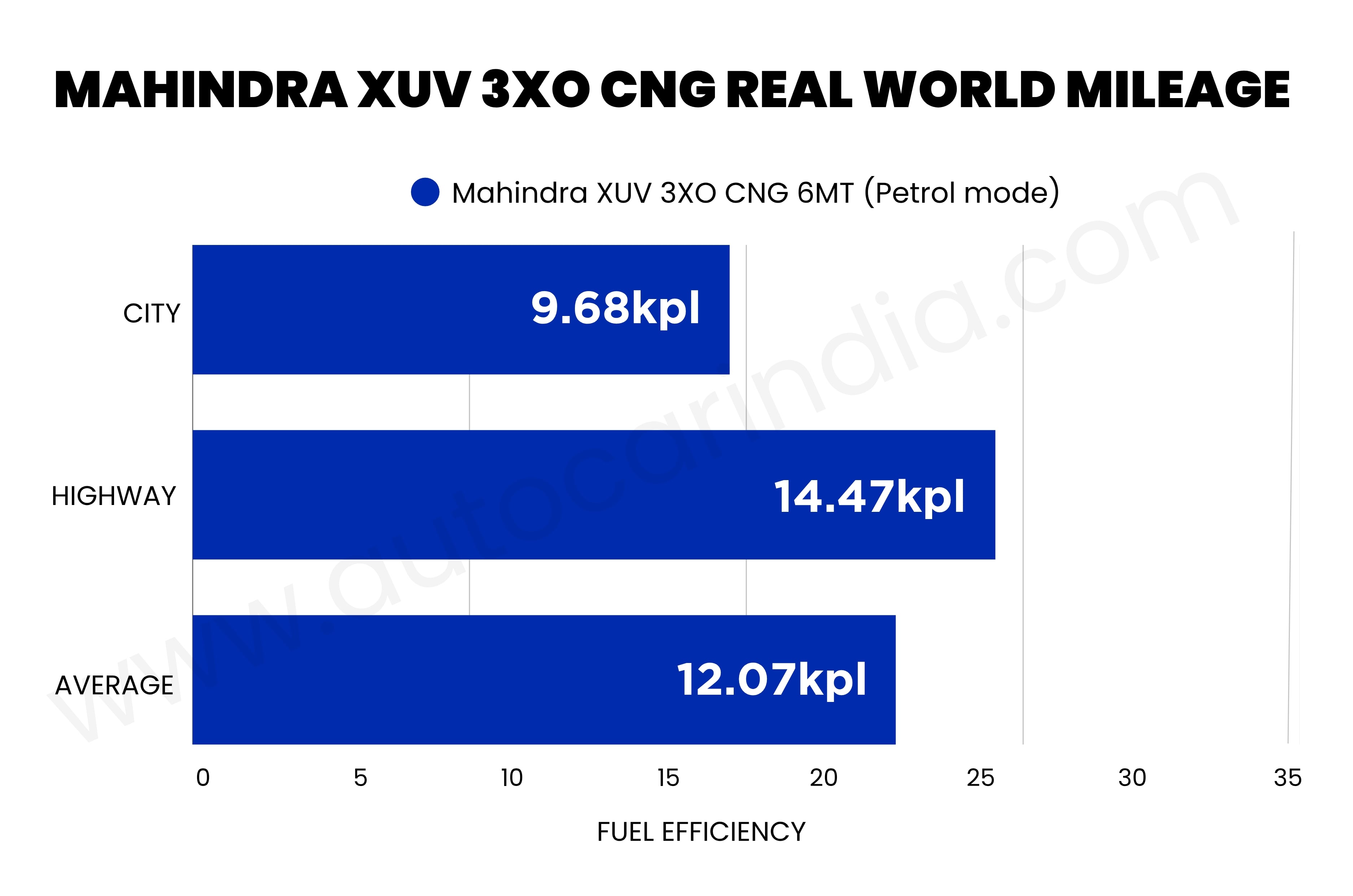
In petrol mode, the XUV 3XO CNG delivered an efficiency of 9.68kpl, whereas on the highway, it returned 14.47kpl for an overall efficiency of 12.07kpl. With its 42-litre fuel tank, you can expect a real-world range of around 500km. With petrol and CNG, expect a total driving range of around 650-660km.
Autocar India’s fuel-efficiency testing
Since CNG tanks are more difficult to fill consistently due to variables such as ambient temperature and pump pressure, we did not use our standard tankful-to-tankful methodology. Instead, for our real-world tests, we emptied the CNG tank and refilled it with 2kg of CNG. We then drove the vehicle in city conditions until the gas was exhausted. The same process was repeated for the highway run. Before our real-world fuel efficiency tests, we maintain tyre pressures based on the manufacturer’s recommendations. The cars are driven in fixed city and highway loops in and around Navi Mumbai, and we maintain certain average speeds. Throughout the tests, there is only one person in the car, and the aircon is set to 22deg C in full-auto mode. We operate other electricals, such as the audio system, indicators and wipers, just like a regular user would. Periodic driver swaps further neutralise variations in driver patterns.
 Which variant of the 2026 Hyundai Bayon should you buy?
October 26, 2026
 Hyundai Bayon image gallery
October 26, 2026
 Hyundai Bayon colours gallery
October 26, 2026
 Alpinestars Tech-Air 7X review
October 26, 2026
 KTM 200 Duke updated with quickshifter and ride modes
October 26, 2026
 Hyundai Bayon vs Creta: Does the Creta justify its premium?
October 26, 2026
 Theni: வலிப்பு வந்தது போல நடித்த கைதிகள்.. சிறையில் இருந்து தப்பியது எப்படி? ஐஜி விஜயேந்திர பிதாரி பேட்டி
October 26, 2026
 சிறை காவலர்களை தாக்கிவிட்டு.. தேனி சிறையில் இருந்து 17 கைதிகள் தப்பி ஓட்டம்.. நள்ளிரவில் ஷாக்!
October 26, 2026
 அன்பில் மகேஷ்க்கு நவம்பர் 6 ஆம் தேதி வரை நீதிமன்றக்காவல்.. புழல் சிறையில் அடைக்கப்படுகிறார்
October 26, 2026
Odisha, Andhra Pradesh On Alert As Severe Cyclonic Storm Arnab Approaches
October 26, 2026
Rahul Gandhi to Launch Congress' Mission 2027 from Bhagwant Mann's Home Turf
October 26, 2026