

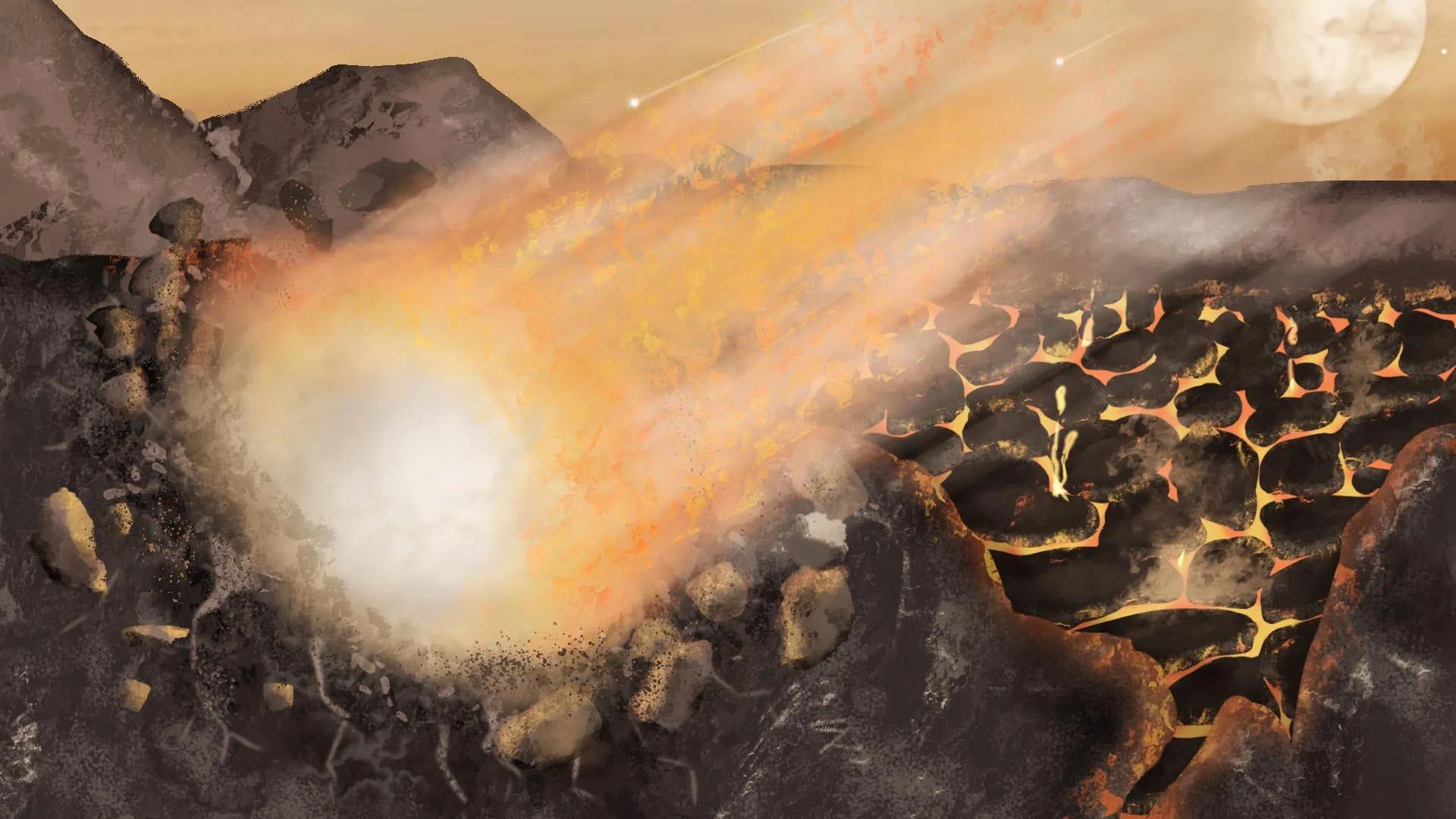
A century-old theory about the origins of life on Earth may be wrong. New research from the University of Cambridge suggests that comets traveled too fast and struck at unfavorable angles for the fragile molecules needed for life to survive, making successful delivery extraordinarily unlikely. Surprisingly, Mars may have had a better chance of receiving these cosmic ingredients, although even there the odds were slim. The findings point toward asteroids or chemical processes on Earth as more plausible sources of life’s building blocks.
More in Research
 Scientists discover why some mosquitoes love you and others don't
November 11, 2026
 Scientists discover a giant 66-pound rodent that lived 34 million years ago
November 11, 2026
 237-million-year-old fossils reveal a bizarre armored sea amphibian
November 11, 2026
 Astronomers discover hidden alien planet in James Webb images
November 10, 2026
 Eating less protein could slow aging, review of 350 studies finds
November 10, 2026
 A mysterious 93-billion-mile cosmic structure may be the wreckage of colliding worlds
November 10, 2026
Latest News
 Bid to restore rare Atlantic rainforest secures £6m lottery grant
November 11, 2026
 Artist creates world's biggest soil painting
November 11, 2026
 செம்ம டிமாண்ட்.. ரூ.3000 டிஸ்கவுண்ட்.. 6 மாதம் நோ-காஸ்ட் EMI.. 7 வருட ஓஎஸ் அப்டேட்.. Google பிக்சல் மாடல்!
November 11, 2026
"Emergency Brake Not Working": Video Captures Moment Train Derails In Assam
November 11, 2026
'Assurance Of Support That Never Came': Sonia Gandhi On 1999 Power Move
November 11, 2026
Married Woman, Teen Lover Kill Schoolboy For Threatening To Disclose Affair In Telangana
November 11, 2026