

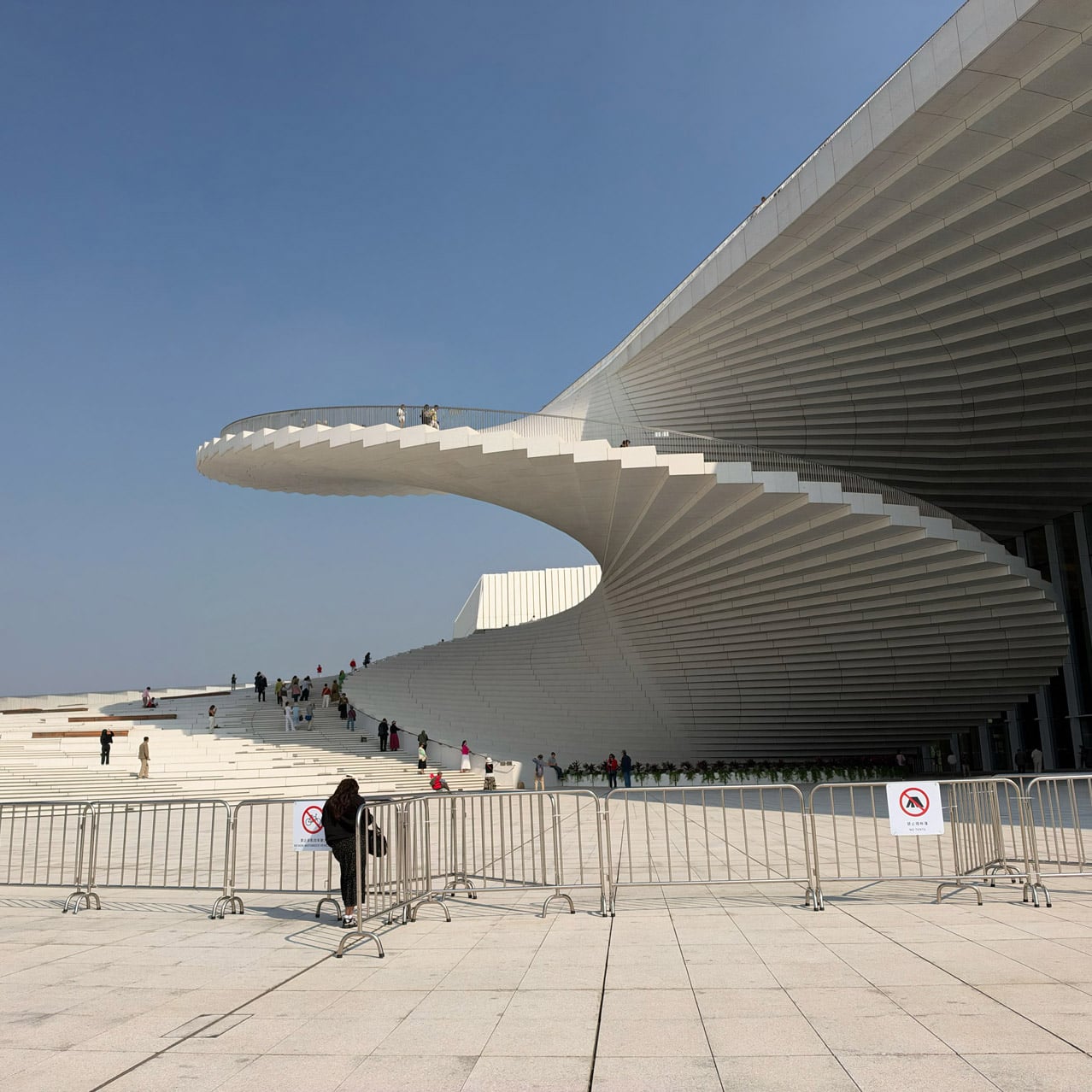
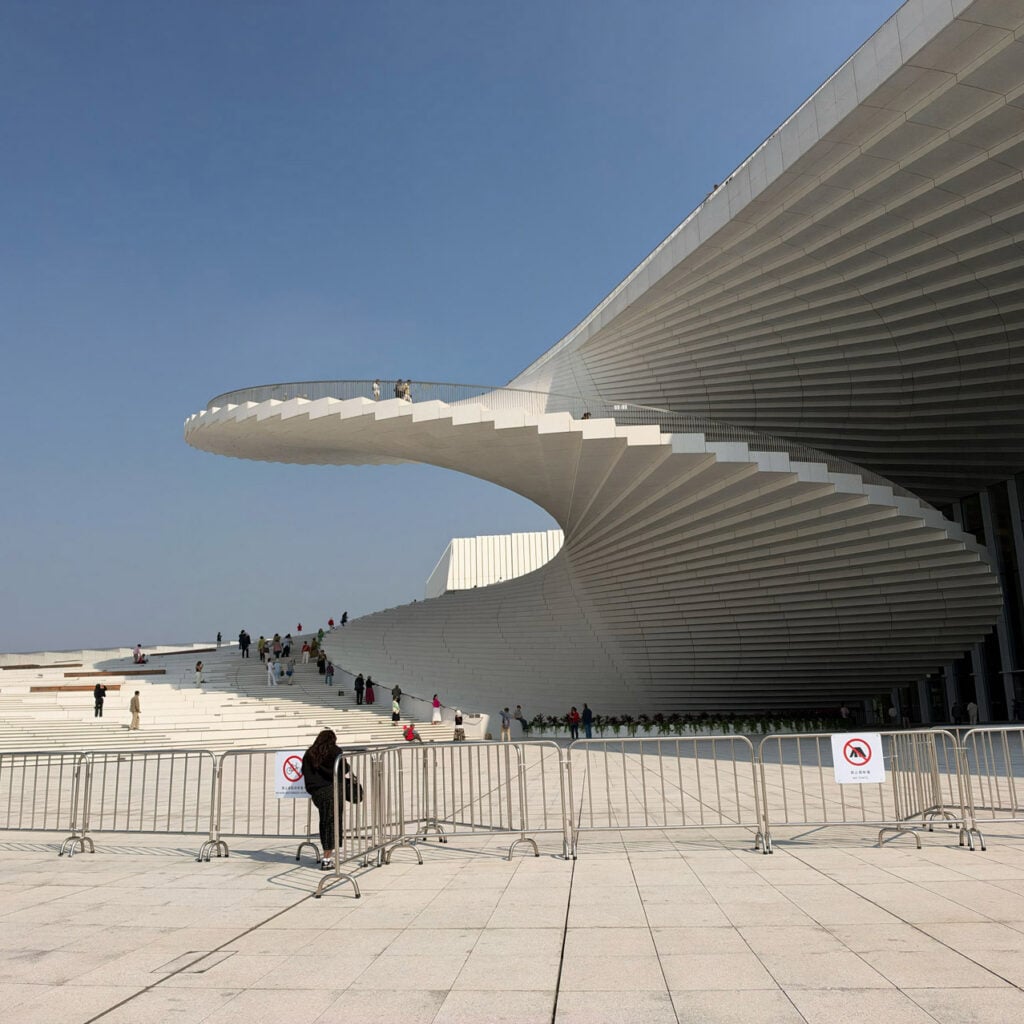
The Snøhetta-designed Shanghai Grand Opera House has introduced a paid ticketing system for visitors wanting to access the signature spiral staircase and rooftop viewing platform at the recently opened building in Shanghai.
When Dezeen visited the site, we observed a temporary barricade separating the free-to-access ground-level public space from the spiral staircase leading up to the roof. Access to the staircase and roof now costs 50 yuan (£5.60) per person.
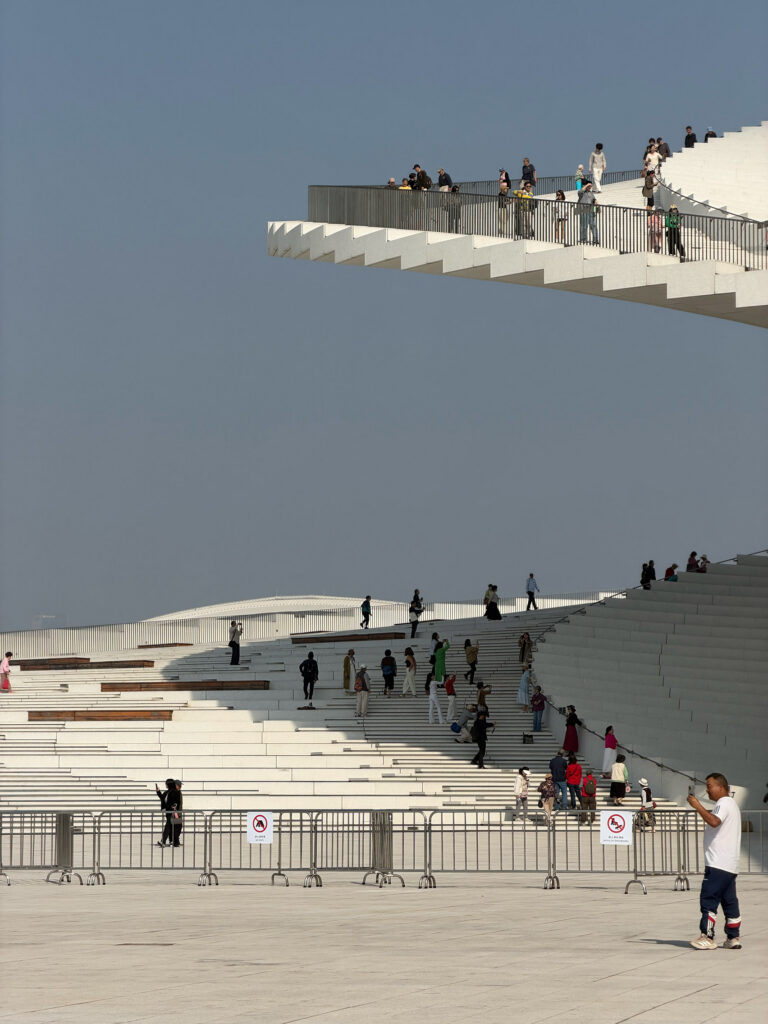
Since opening, access to the architectural feature has been restricted, with visitors now required to pre-book tickets online to access it between 10:30 am and 2:30 pm. According to the booking site, people with tickets to see a performance inside the opera house are still required to purchase a ticket, and the fee includes accident insurance.
Asked about the apparent change in access requirements, Snøhetta said that demand meant that “visitor management is necessary” and that “access arrangements will continue to develop”.
“As with any major cultural institution, operational procedures continue to evolve during the opening period as the Opera House team gains experience with visitor patterns, capacity needs, and the building’s day-to-day use,” the studio told Dezeen.
“Given the exceptional public interest and the limited capacity of the roof and public stairs, visitor management is necessary to ensure a safe and enjoyable experience for everyone,” it continued.
“Access arrangements will continue to develop with operational experience, but the intention remains the same: to create a building that can be widely enjoyed by the public while balancing accessibility, safety, and the visitor experience.”
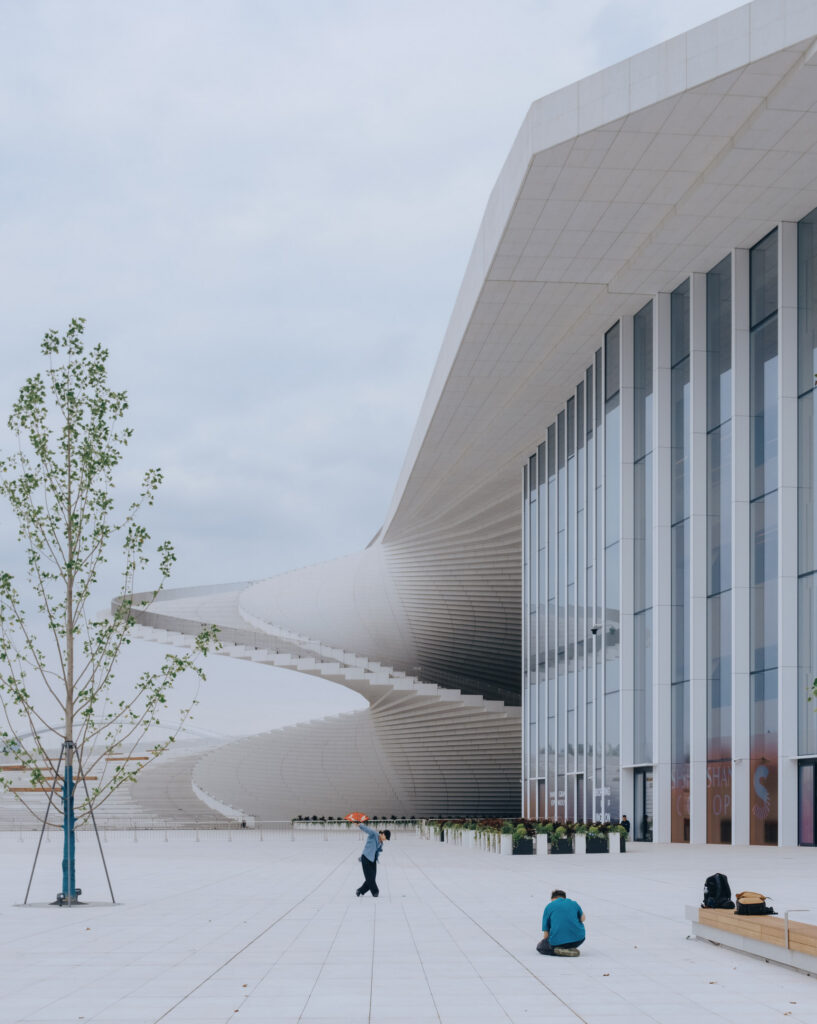
Following news that a fee had been introduced, the phrase “is it worth spending 50 yuan to visit Shanghai Grand Opera House” trended on Chinese social media.
Some commenters questioned whether charging to visit the attraction was justifiable, while others sympathised with the need for crowd control. Others shared tips on how to take the best photos of the building without paying the entrance fee.
Visitors Dezeen spoke to at the site were concerned about both the fee and the temporary barriers.
“I don’t think it’s worth the money,” Mr Qiu, who paid to climb the stairs, told Dezeen. “Basically you pay to climb a giant stair. If you want good photos of the stairs, best to take from afar, which you can do for free,”
Ms Ye, who didn’t pay the entry fee, told Dezeen that she was really disappointed that the barricade was in her photos.
“I don’t know what the point of the barricade is – to separate the paid and unpaid? Or for better crowd circulation? But at least they need to put some effort into designing it to match the beauty of the building,” she said.
“It really is an eyesore for the photos.”
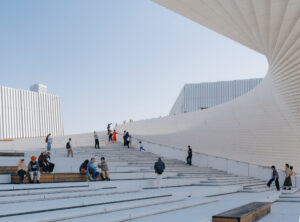
The building, and its accessible roof, are often compared to Oslo Opera House, which was also designed by Snøhetta and is topped with a walkable roof. According to the studio, both projects were designed to “reduce thresholds wherever possible”.
“Buildings like opera houses inevitably create thresholds through walls, doors, and ticketed programs,” said Snøhetta co-founder Kjetil Thorsen at the time of the Shanghai Grand Opera House opening.
“We see it as our responsibility to challenge those thresholds and make the building as much a civic destination as a performance venue. People should be able to enjoy the building without attending a performance. It should become part of everyday life, a place to spend time, meet others, and experience the city,” he continued.
“A successful landmark is not only recognised by visitors, it is also embraced by the people who live around it and make it part of their everyday lives.”
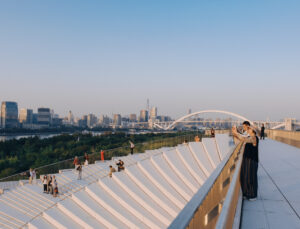
Several other cultural projects in China have been built with publicly accessible roofs. However, the accessibility presented in concepts has often been restricted when the buildings open.
Also in Shanghai, the Start Museum, designed by French architect Jean Nouvel and opened in 2022, features a public roof that can be used for displaying large-scale artwork. However, the space has rarely been used.
The Amateur Architecture Studio-designed Fuchun Cultural Museum Complex is defined by a continuous undulating roof to resemble the experience of climbing the local Fuchun Mountain. However, the roof didn’t open to the public for four years and is now only open to public visits for one hour a day, three days a week.
Kaia Wang contributed to the story.
 Finnegan Shannon installs conveyor belt for displaying art accessibly in Brooklyn
November 12, 2026
 Crosslam completes Brazil's tallest mass-timber tower
November 12, 2026
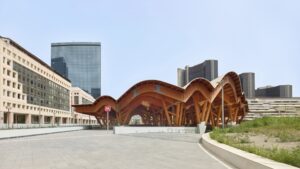 EMBT shelters Naples metro station beneath "natural and welcoming" vaulted timber roof
November 12, 2026
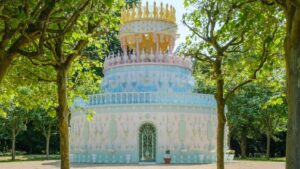 Faulty Wedding Cake pavilion to be dismantled at Waddesdon Manor
November 12, 2026
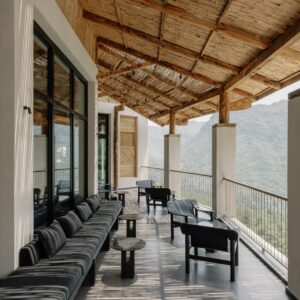 RooMoo transforms abandoned mountain cabins into hotel in China
November 12, 2026
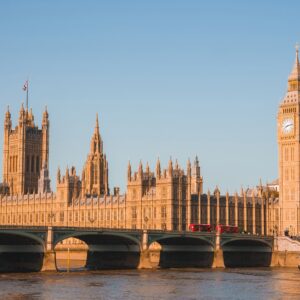 Renovation delays pose "Notre Dame-like" fire risk for Houses of Parliament
November 12, 2026
 Candy Crush Is Celebrating Xbox’s 25th Anniversary With Halo, Fallout, And Doom Crossovers, Including Remixed Music
November 12, 2026
 New Doom Game Seemingly Announced In The Weirdest Way After Half The Studio Was Laid Off
November 12, 2026
 My Trip Down Xbox Memory Lane Should Be Celebratory, But Instead It’s Just Depressing
November 12, 2026
 The 3.96lb Lenovo Yoga 7i 16" 2-in-1 Convertible Laptop and Tablet Hybrid Drops to $650 for Black Friday
November 12, 2026
 Valheim Is Getting a Comic Book Series, and It Looks Badass
November 12, 2026