

Only a few years ago, the Silent Hill name was considered a relic of the horror genre. Its best efforts were its earliest from 20 or more years ago, and it had since lost its way. Lately, though, it’s found its footing again, first with Bloober Team’s remarkable remake of Silent Hill 2 in 2024, then with 2025’s brilliantly rule-breaking Silent Hill f. Now, with Screen Burn’s Silent Hill: Townfall, the comeback feels complete. Townfall is the third memorable entry in as many years, reviving a legendary series for a new era.
Like Silent Hill f, Townfall defies tradition and takes the series outside the United States, this time to Scotland. There, an American man named Simon Ordell washes up on the shore of a blue-collar island town, St. Amelia. Right away, Townfall captures the all-important tone of a Silent Hill game. It’s more than the fog that’s become synonymous with the series: It’s the unsettling stillness, the sense of sadness lurking in every shop and down every alleyway that lingers like a harbinger of the dread that will certainly follow. Though it adheres to some of the series’ touchstones, it’s a fully standalone entry. It works just as well if this is your first Silent Hill game.
As you explore the town, it becomes clear early on that St. Amelia has suffered a tragedy so severe that the community was shuttered almost overnight. Heartfelt memorials in the town square dedicate pictures and words to loved ones taken too soon, and the displays are only matched in number and emotion by the many protest signs demanding accountability. The finer details, of course, aren’t yours to understand for a long while. Like the fog and its accompanying melancholy, Silent Hill also serves as the stage for startling truths that only emerge late in a character’s journey.
But if you think you know where it’s going, I bet you don’t. Screen Burn’s founder and Townfall’s writer Jon McKellan once ran a fansite dedicated to this series, and that sort of lifelong devotion is clear by the end of Townfall. He and his team understand what Silent Hill has been, but also–and more importantly–what it can be. The rules of this universe are played a bit fast and loose, and it’s better for it. Is Silent Hill a physical place, or an idea? Is everyone found there sent to suffer? While some themes re-emerge like somber notes on a mandolin, some of Townfall’s best parts are how it toys with expectations, twisting them into new shapes and sometimes rejecting them.
Townfall feels a lot like Silent Hill 2 early on. The original music, as great as it is in its own right, deliberately recalls the series’ heyday, and you’ll spend some early hours navigating through the roundabout corridors of a hospital and an apartment complex. But this is more than a “fan game” liberally reusing what’s worked before. Screen Burn makes it its own.
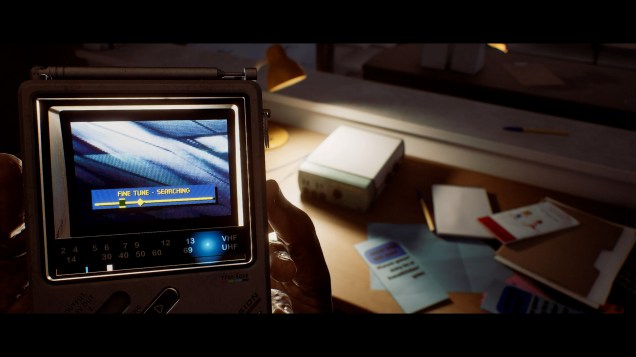
That’s most obvious in how it’s played. Townfall is presented in first-person, as few games in the series have been before it, and introduces a new gameplay element that relies on a handheld piece of analog tech–the sort of physical contraption this team made its name on with games like Stories Untold and Observation. Whereas many games in the series use a radio to passively alert you to nearby threats, Townfall’s CRTV is closer to Alien Isolation’s motion scanner and demands active participation.
With it, Simon can see hazy outlines of the fleshy monsters left shambling around the streets of St. Amelia. As the player, you’ll need to tune it often, picking up the signals of these creatures, then swapping between them to carefully track their movements and avoid their gaze. Early encounters made this tech feel like an afterthought, but once Simon is outnumbered three to one–or worse–it proves its usefulness. Combined with the way Simon can lean around corners and over cover, this is certainly the most stealth-driven game in the series.
You can also distract enemies by turning on radios or throwing objects before hiding in places like lockers, waiting for enemies to give you an opening. In some areas where enemies are especially numerous, I found these lockers to be too helpful, but because enemies were best avoided, I used them often, which made those semi-scripted moments lose their effect before long.

But such moments weren’t the norm. Much more often, you’ll need to carefully pick your openings to sneak past enemies, or else face them head-on. The music bears down on you in those close calls, creating urgency and the right kind of stress befitting any horror story, and when you do get spotted, facing them only piles on that tension. Despite being in first-person, combat in Townfall reminded me a lot of the Silent Hill 2 remake, because each encounter demands focus and well-timed attacks, and it’s best avoided whenever possible. It’s extremely tense.
Enemies eat a good chunk of your health with each hit, and though enemy design could be more varied, they do express some important differences that make controlling a crowd of even just two of them a breathless fight to the death. I spent more than half the game completely avoiding combat whenever I could, and about three-quarters of it never firing my gun, because doing so runs the risk of alerting more enemies.
Like the fog and its accompanying melancholy, Silent Hill also serves as the stage for startling truths that only emerge late in a character’s journey.
Townfall’s combat is usually soaked in desperation and had me bracing for bad outcomes in all the ways a horror game should. This changed in the latter third of the game, where I was handed more than enough resources in a few different instances, trivializing some encounters. But these moments of empowerment weren’t the norm, thankfully, and Townfall maintained its creepy vibe from start to finish.
Another benefit of the first-person view is how much detail it lets Screen Burn pack into Townfall. Approaching desks or shop windows, it’s almost always the case that you can read anything on those surfaces. You can find many notes to collect in a way that signifies they’re highly plot-relevant, and many even help you solve the game’s environmental puzzles, all of which feel right at home for a Silent Hill game, though they are never as convoluted as the series’ early era.
Even more abundant than these plot-relevant collectibles are the smaller details the game doesn’t call out. Noticing these details isn’t crucial to enjoying Townfall’s story, but they’re no less engaging, filling in the world’s history and teasing snippets of the game’s central mystery. Everything is purpose-built, from the particular hue of the Otherworld sections (this time called the “Different”) to the design of the monsters, which you can’t easily notice before you kill them. I was so worried about Simon’s place in the story that I found myself dodging combat not just to save on health kits, but to not earn the ire of the game’s hidden ending calculator, and that stemmed from the way this game invites you to take a proverbial microscope to it.

As is often the case with Silent Hill, it’s only when Townfall’s final cards are turned over that much will make sense, and even then you can be sure there are additional endings to chase down in subsequent playthroughs for added context. But even on a first pass, Townfall is able to stand out from the shadow of the series’ best games and earn its place beside them. While it doesn’t reach the peak this series has previously found, Townfall’s story gives me a familiar, welcome headache as I try to piece everything together.
Thematically, it does well to stand in two universes at once: feeling like an homage to the series’ best while still sharing a perspective that is painfully timeless. Townfall is set in 1996, but its expressions of cruelty are alive and well today. At the same time–and maybe this will sound strange once you’ve played it for yourself–it’s also one of the more hopeful entries in the series. It doesn’t trade discomfort for hope, by any means. It’s still a dark story that expresses some uncomfortable coldness the way this series is known to do, but it finds a way to let just a little light in without tearing out its jet-black heart.
Townfall, like Silent Hill f before it, expresses what I love most about the comeback. As the idea of Silent Hill is uprooted and moved all over the world, we’re seeing it through new cultural perspectives in a way we never have before. We spent nearly 30 years discussing and debating what Silent Hill was and is. Even the teams assigned the daunting task of replacing Team Silent seemed intent on doing their best impressions of the earliest and most beloved games. Townfall doesn’t just prove that studios like Screen Burn know where Silent Hill comes from; it shows us where Silent Hill can go.
 Disney+ to Allow Ads on All Plans Following Changes Detailed in Updated Subscriber Agreement
September 20, 2026
Disney+ to Allow Ads on All Plans Following Changes Detailed in Updated Subscriber Agreement
September 20, 2026
 Poppy Playtime Spinoff Escape from Playtime Gets Early Access Release Date
September 20, 2026
Dune: Awakening’s Massive New Update Is Perfect For Parents Or Single-Player Fans, And It’s At Its Lowest Price, Too
September 20, 2026
The Rabbit Haul Official Trailer
September 20, 2026
Poppy Playtime Spinoff Escape from Playtime Gets Early Access Release Date
September 20, 2026
Dune: Awakening’s Massive New Update Is Perfect For Parents Or Single-Player Fans, And It’s At Its Lowest Price, Too
September 20, 2026
The Rabbit Haul Official Trailer
September 20, 2026
 சீனா: சவப்பெட்டிக்குள் கேட்ட முனகல் சத்தம்.. திறந்து பார்த்ததுமே வெலவெலத்த குடும்பம்! என்ன நடந்தது
September 21, 2026
சீனா: சவப்பெட்டிக்குள் கேட்ட முனகல் சத்தம்.. திறந்து பார்த்ததுமே வெலவெலத்த குடும்பம்! என்ன நடந்தது
September 21, 2026
 'Other generations just buried it' – Youths share their mental health concerns
September 21, 2026
'Other generations just buried it' – Youths share their mental health concerns
September 21, 2026
 முஸ்லீம் வாக்குகள் யாருக்கு போனாலும் வெல்வது பாஜக தான்.. உபியில் சிக்கலாகும் இஸ்லாமியர் வாக்குகள்
September 21, 2026
AEW Dynamite Preview, Start Time, Key Matches For Sept. 23, 2026
September 21, 2026
Cardinals Cut Ties With 26-Year-Old Gold Glove Infielder After Brutal Season
September 21, 2026
முஸ்லீம் வாக்குகள் யாருக்கு போனாலும் வெல்வது பாஜக தான்.. உபியில் சிக்கலாகும் இஸ்லாமியர் வாக்குகள்
September 21, 2026
AEW Dynamite Preview, Start Time, Key Matches For Sept. 23, 2026
September 21, 2026
Cardinals Cut Ties With 26-Year-Old Gold Glove Infielder After Brutal Season
September 21, 2026
 Dhanusu: வேலையை விடலாமா? தொடரலாமா?.. தனுசு ராசிக்கு இந்த வாரம் நடக்கும் முக்கிய மாற்றம்
September 21, 2026
Dhanusu: வேலையை விடலாமா? தொடரலாமா?.. தனுசு ராசிக்கு இந்த வாரம் நடக்கும் முக்கிய மாற்றம்
September 21, 2026