

1 Min Read
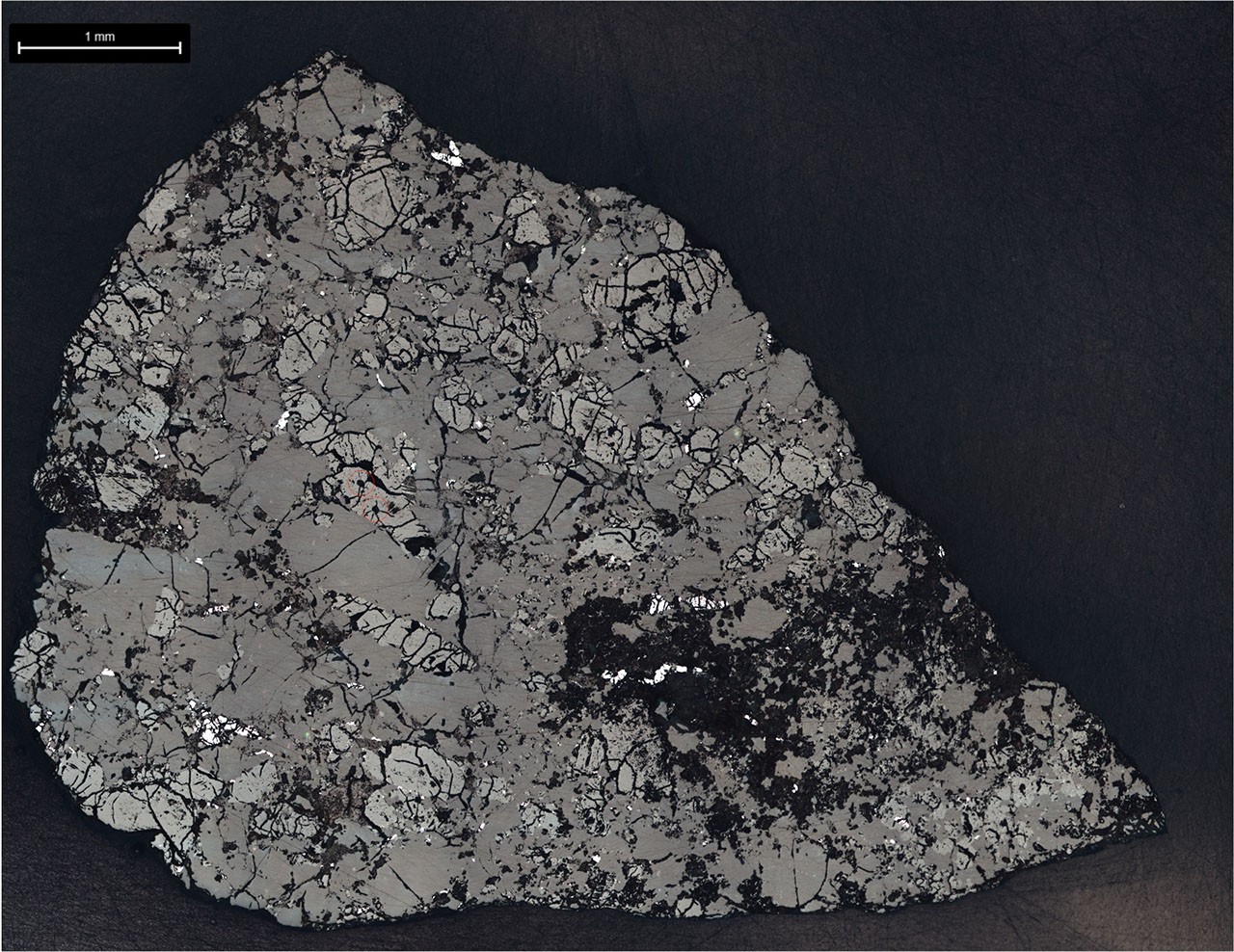
Slice of Martian Meteorite Teghaza 001

Credits:
NASA/JPL-Caltech
NASA/JPL-Caltech

Description
This slice of Teghaza 001, one of the most ancient Martian meteorites ever found on Earth, was used to determine the age of the rock. Reflected light images like these serve as a scientist’s road map, helping them find minerals of interest to analyze by different instruments.
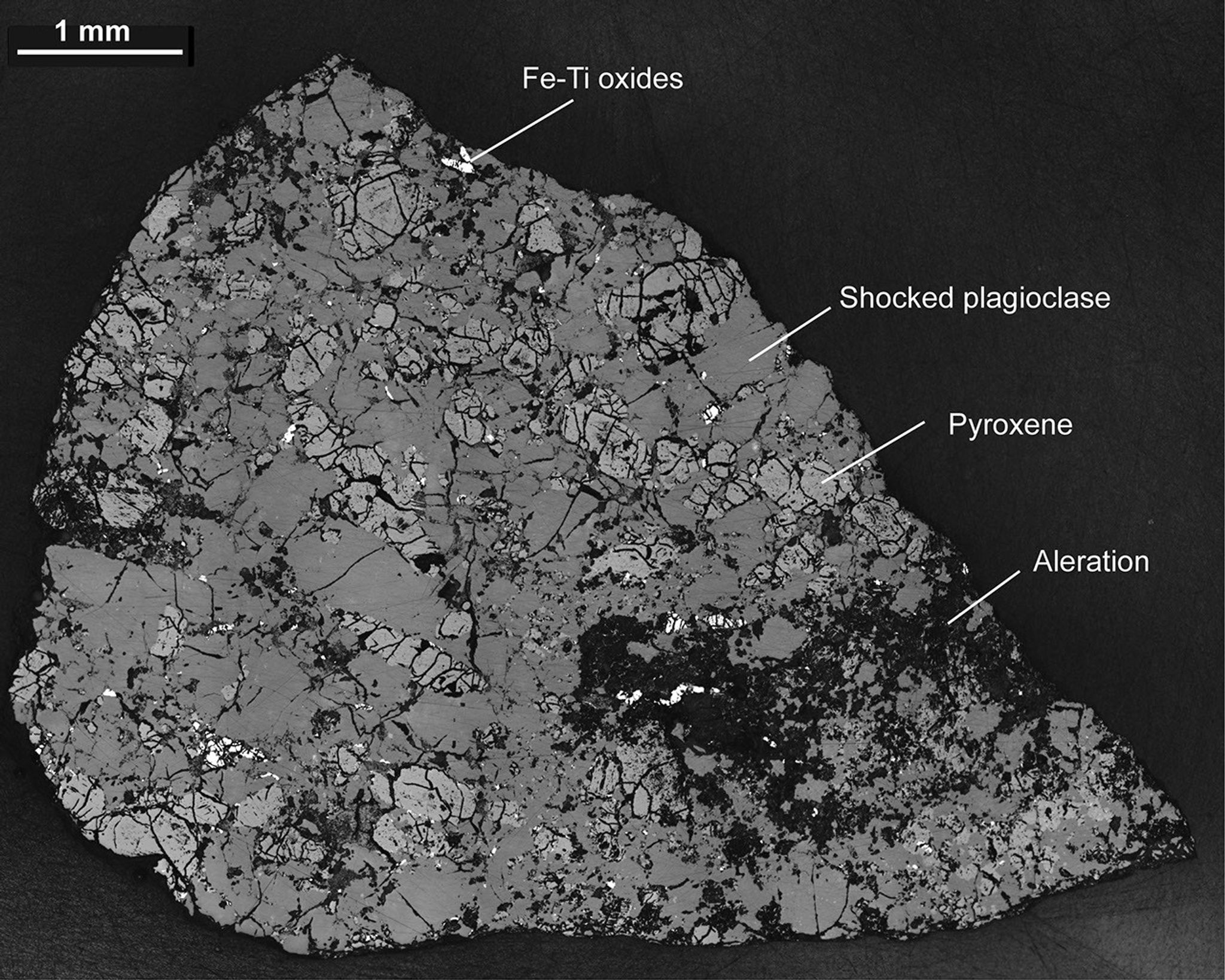
Figure A
Figure A is the same image with annotations showing minerals like iron-titanium oxides (brighter grains) and pyroxene (medium gray), both of which tell a story about the formation of Mars’ crust and mantle. Shocked plagioclase (darker gray) is created by extreme pressures during impacts, including the one that sent Teghaza 001 flying through space to Earth. The alteration represents fine grain carbonate, sulfate and clay minerals formed on Earth.
More in Space
 APOD: 2026 October 31 – Night on a Spooky Planet
October 31, 2026
 NASA Releases MAX POWER Key Events for Media, Participants
October 30, 2026
 NASA’s James Webb Space Telescope Captures Eerie Cat’s Head
October 30, 2026
 NASA Explores Potential Commercial Servicing for Hubble Telescope
October 30, 2026
 November’s Night Sky Notes: Light-Day Away
October 30, 2026
 APOD: 2026 October 30 – Haunting the Cepheus Flare
October 30, 2026
Latest News
 Petrol and diesel prices today, November 1: Check fuel rates in different cities across India
November 1, 2026
 Rahul Gandhi rally protest today, Nov 1: Check full traffic advisory, road diversions, railway, bus, metro routes here
November 1, 2026
 India readies a new soft power playbook
November 1, 2026
 How the downfall of Serbia's Vučiċ mirrored that of Hungary's Orbán
November 1, 2026
 India's opposition set to hold mega rally seeking election chief's resignation
November 1, 2026
Daniel Wilkerson's Funny Car explodes in massive fireball during NHRA qualifying; video emerges
October 31, 2026