

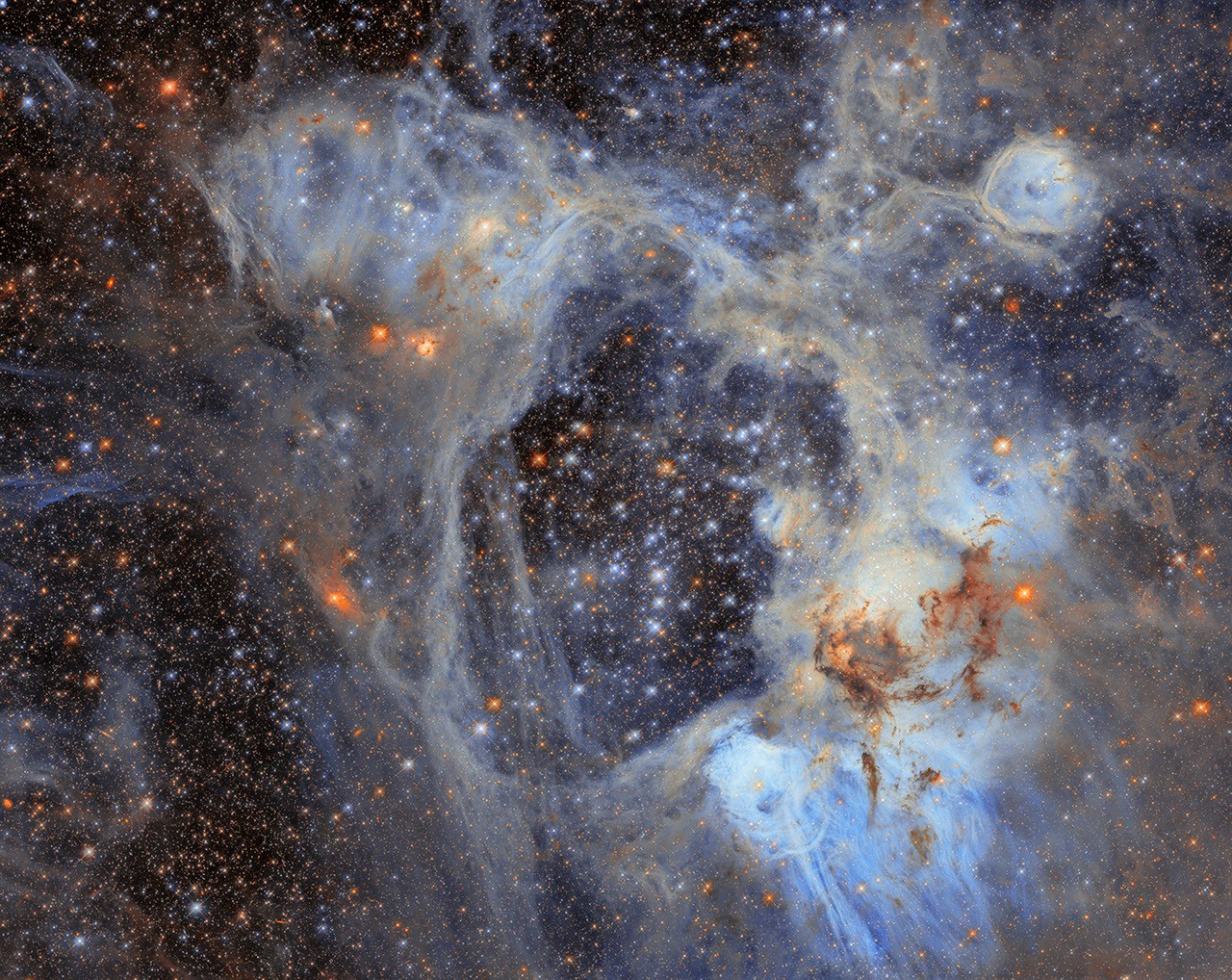
How do scientists studying space with data from a telescope hundreds of thousands of miles away know that what they are seeing is real? A new NASA project, Artifact InSPECtor, invites you to find out – and by doing so, to help missions like Euclid and NASA’s new Nancy Grace Roman Space Telescope answer fundamental questions about our universe.
“It’s really cool that we can help teach computers new skills,” said nine-year-old Maeve F. after trying out Artifact InSPECtor. Participants of all ages, including those as young as Maeve, can visit the project to learn how they can contribute to science by training artificial intelligence to remove errors in telescope data.
Here’s how it works.
The Euclid space telescope, a powerful observatory built by ESA (European Space Agency) with critical contributions from NASA, is collecting light from millions of distant galaxies across the universe. It will soon be joined by NASA’s Nancy Grace Roman Space Telescope, a complementary observatory that will capture a similar number of galaxies after it begins science operations, but at different distances and densities across the sky. Together, these telescopes promise to help scientists answer questions about the expansion of the universe and dark energy – the mysterious force causing this expansion.
To collect data to answer these questions, each telescope uses a special instrument called a spectrograph that works like a prism: it splits the light from each galaxy, even very distant ones, into a rainbow of colors. By studying these rainbow patterns, called spectra, scientists can figure out how far away each galaxy is, what kinds of stars it contains, and even information about the supermassive black holes at their centers.
But before that can happen, there’s a problem to solve.
Telescope data contains many “artifacts” – the general name scientists use for signals that come from things other than real astronomical objects like galaxies or stars. Artifacts can be created by light glinting off the telescope’s housing, cosmic rays striking the detector, quirks in the camera or electronics, or other sources. It’s a bit like when a smudge on your phone’s camera lens shows up in a photo, or when a glare from the Sun blocks part of your picture.
To find and remove these artifacts, astronomers have created artificial intelligence (AI) tools that learn to recognize them, similar to how your phone recognizes faces in photos. But recognizing artifacts in data from relatively new instruments is challenging work for the AI, which doesn’t always distinguish them accurately
That’s where you come in! As a volunteer with Artifact InSPECtor, you’ll look at real space telescope data from Euclid and, starting in early 2027, the Nancy Grace Roman Space Telescope. The project will teach you how to recognize artifacts in data from these telescopes. The work you do will then be used to improve the instructions guiding the AI tool. Working together, you, the AI, the scientists, and these powerful space telescopes will learn more than ever before about how our universe works.
If you want to teach computers new skills and help discover the mysteries of dark energy, use your smartphone, tablet, or computer to visit Artifact InSPECtor and begin today: https://go.nasa.gov/3Uyrguy.


 NASA’s Chandra Spots Galactic Gem
September 11, 2026
NASA’s Chandra Spots Galactic Gem
September 11, 2026
 NASA’s SpaceX Crew-12 to Discuss Station Mission, Upcoming Return
September 11, 2026
NASA’s SpaceX Crew-12 to Discuss Station Mission, Upcoming Return
September 11, 2026
 NASA Boosts Open Science, Data Sharing with Artemis Accords
September 11, 2026
NASA Boosts Open Science, Data Sharing with Artemis Accords
September 11, 2026
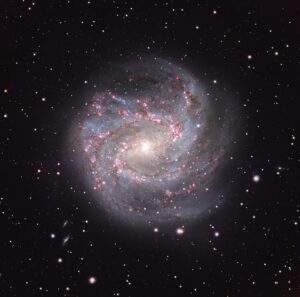 APOD: 2026 September 11 – M83: The Southern Pinwheel
September 11, 2026
APOD: 2026 September 11 – M83: The Southern Pinwheel
September 11, 2026
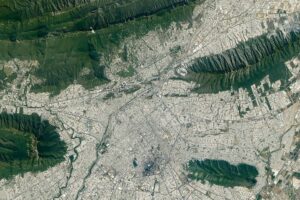 Monterrey Amid Mountains
September 11, 2026
Monterrey Amid Mountains
September 11, 2026
 NASA Invites Media to Djibouti Artemis Accords Signing Ceremony
September 10, 2026
NASA Invites Media to Djibouti Artemis Accords Signing Ceremony
September 10, 2026
 Ukraine Says Passenger Train Headed to Warsaw Hit by Drone
September 13, 2026
Ukraine Says Passenger Train Headed to Warsaw Hit by Drone
September 13, 2026
 இடைத்தேர்தல் 2026: நாம் தமிழர் கட்சியின் வேட்பாளர்களை அறிவித்த சீமான்! – யார் யார் தெரியுமா?
September 13, 2026
இடைத்தேர்தல் 2026: நாம் தமிழர் கட்சியின் வேட்பாளர்களை அறிவித்த சீமான்! – யார் யார் தெரியுமா?
September 13, 2026
 ‘Neither War, Nor Peace:’ UAE Residents Return to a New Normal
September 13, 2026
‘Neither War, Nor Peace:’ UAE Residents Return to a New Normal
September 13, 2026