

3 min read
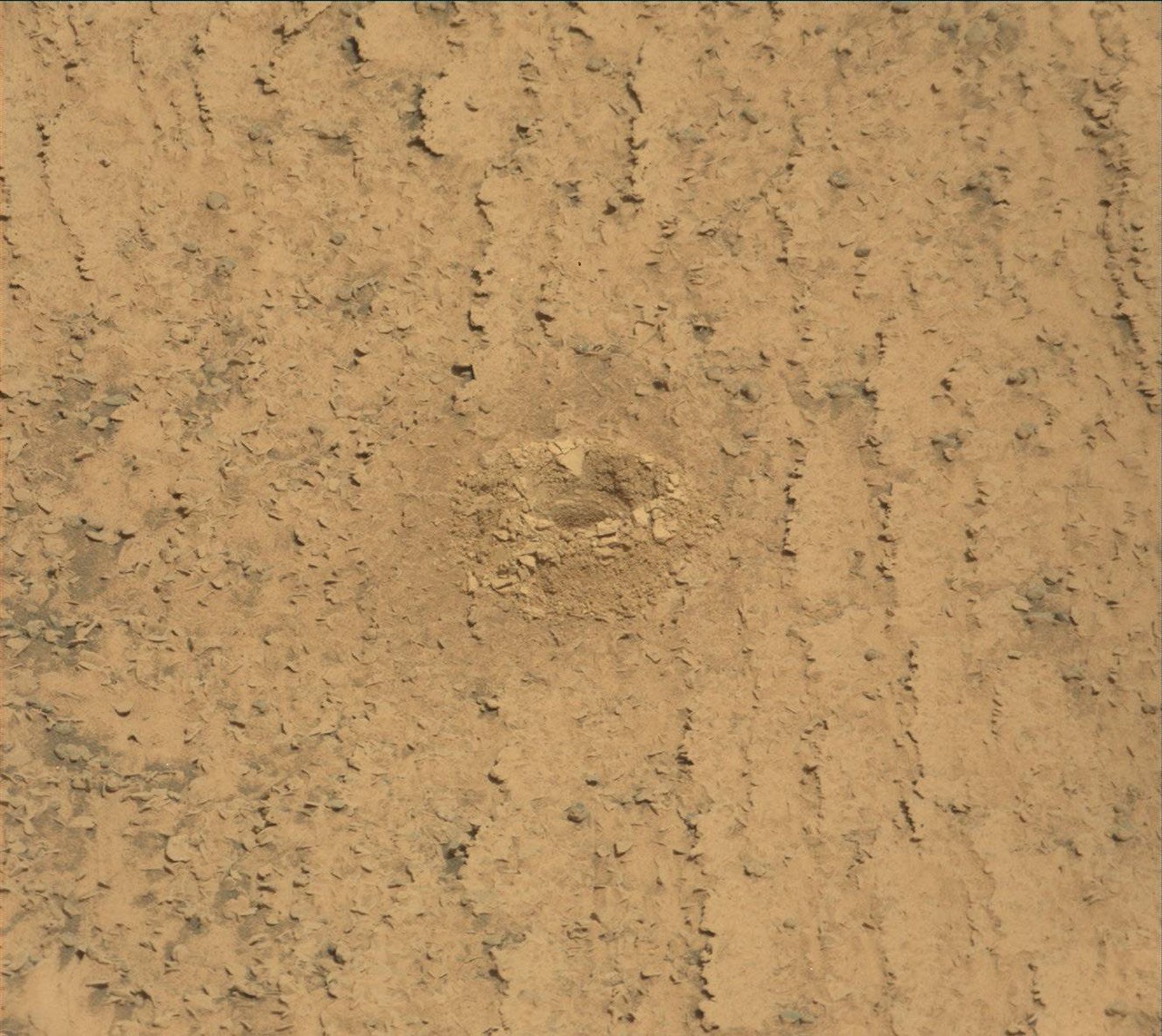
Curiosity Blog, Sols 5050-5055: It’s Nazca, Our 49th Drill Hole

Written by Susanne P. Schwenzer, Professor of Planetary Mineralogy at The Open University, UK
Earth planning date: Friday, Oct. 23, 2026
As regular readers of this blog will know, we returned to the area where we found disc shaped inclusions in the rocks, which we interpreted as potential crystals. If they are indeed crystals, and we compare them to Earth, they could be very interesting indicators of the environmental conditions. Hence, the excitement in the team is high that we found a good block to drill. Good means first and foremost that it contains abundant potential crystals, but of course there is more before we drill. We passed the rover’s stability test, as all wheels have to be on solid ground before we extend the arm. Then we passed the preload test, which tests the stability of the rock and the forces the arm experiences when the drill bit presses into the rock.
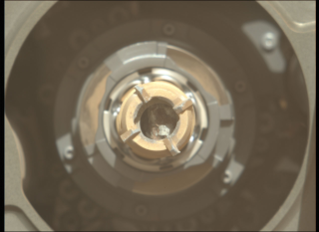
With all those tests passed, we successfully drilled our 49th drill hole, called “Nazca.”
The drill campaign comes with many investigations before and after the drilling itself. Before the drill, we investigated the block with APXS, MAHLI and ChemCam – all on the target Nazca. After drilling, the sample was dropped off to CheMin, with the results still making their way from Mars to Earth. They are eagerly anticipated to reach us over the coming weekend. ChemCam obtained both passive spectral and active LIBS of the tailings and a LIBS measurement down the drill hole wall.
Other ChemCam activities this week included a LIBS investigation of “Palpala,” which is a dark pebble. We are on the lookout for those pebbles for a while and find that not all of them have the same composition. To make sure we understand their origin, we are measuring them when there are some in reach that are big enough. If a pebble is too small, it can move when it is being hit by the laser. Hence, we need to look out for some that are big enough.
Another such pebble was the target “Puna” identified in Friday’s planning. ChemCam LIBS on the target “Llama” is to get another depth profile to check whether our observations in the first such depth profile are consistently observed or whether they vary between locations.
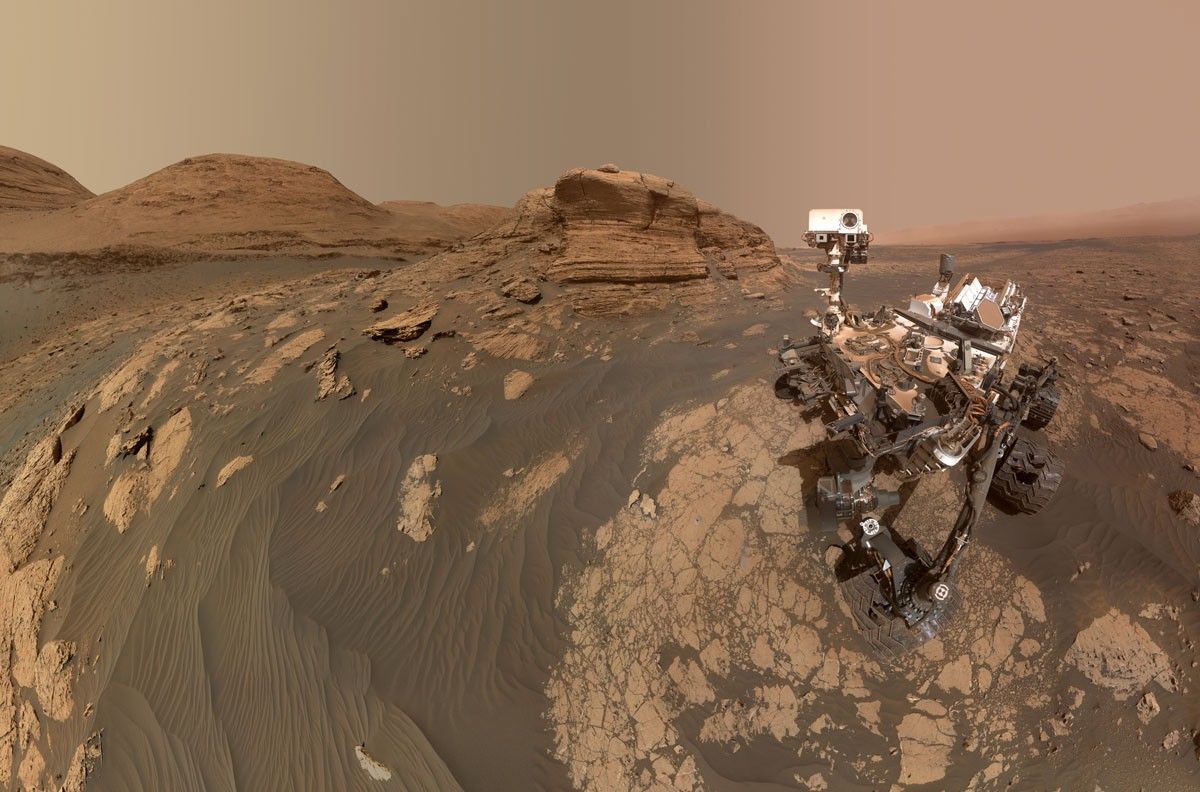
The target “Pacaya” is another measurement of the disc shaped forms that drew us back to this region. In addition to the LIBS measurements, ChemCam has several long distance RMIs in the plan. They are all focused on the two buttes that have drawn a long-standing interest of the team for the various sedimentary structures and textures they reveal: Mishe Mokwa and Cordillera.
Share
Details
Related Terms
Explore More
 NASA Invites Media, Public to Join Voyager 1 One-Light Day Activities
November 10, 2026
 NASA to Welcome Expedition 74 Astronauts Home at Space Center Houston
November 10, 2026
 NASA Scientists Show How Gravitational Waves Can Reveal New Worlds
November 10, 2026
 CHAPEA Crew Leaves a Mark
November 10, 2026
 APOD: 2026 November 10 – Saturn Behind the Moon
November 10, 2026
 Autumn Mornings Bring Valley Fog
November 10, 2026
 Meghan's father Thomas Markle back in federal custody after allegedly removing ankle monitor
November 10, 2026
 Nvidia hires major New York law firm to investigate Jensen Huang affair
November 10, 2026
Why Purpose-Led Companies Are Outperforming In Volatile Markets
November 10, 2026
‘Taken: Natalee Holloway’ Director Goes Inside Biggest Bombshells Revealed In Series
November 10, 2026
BOYNEXTDOOR: 6 Things To Expect On Their First North American Tour
November 10, 2026
How Rising CPI Could Affect Credit Card And HELOC Debt
November 10, 2026